
Table of Contents
Dairy farming is a cornerstone of global agriculture. It generates a large amount of waste and is facing pressure to achieve net-zero greenhouse gas (GHG) emissions by 2050. As the sector strives for ambitious net-zero goals, innovative waste processing solutions are essential. One such innovation is the 20 TPH industrial cow dung composting plant from LANE Heavy Industry. This organic fertilizer production plant is designed to transform raw cow dung into nutrient-rich compost efficiently.
Manure management is a critical barrier in dairy farming. Cow dung releases methane, a greenhouse gas 28–36 times more potent than CO₂. Large-scale dairies produce thousands of tons of manure yearly, which creates severe environmental risks and lost economic value. Traditional composting is slow, labor-intensive, and inconsistent. A 20 TPH industrial cow dung composting plant designed by LANE Heavy Industry can process waste at scale, close the carbon loop, and turn liability into climate action.
This article explores how a 20 TPH industrial cow dung composting plant operates, its role in reducing greenhouse gases, and why it is a cornerstone technology for net-zero dairy farming.
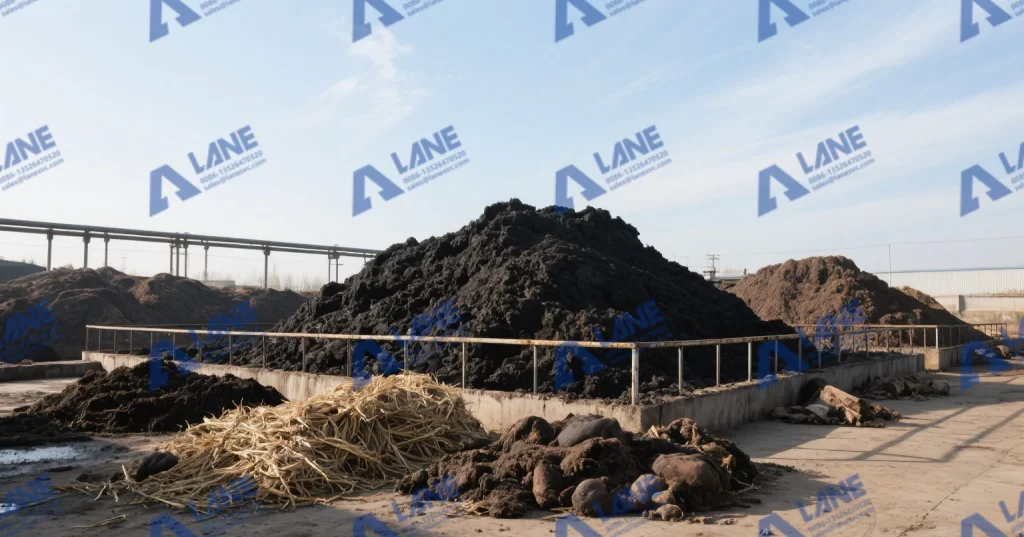
Dairy farms generate a huge amount of manure. When stored in land or spread untreated, this organic waste decomposes anaerobically, releasing methane. In many regions, manure management is the single largest source of on-farm emissions.
The solution lies in aerobic composting. Aerobic composting uses oxygen to break down organic matter. This process produces minimal methane, stabilizes nutrients, and eliminates pathogens. However, traditional composting methods are slow, labor-intensive, and difficult to scale. This is where a 20 TPH industrial cow dung composting plant by LANE changes the game.
A cow dung composting plant by LANE is a fully integrated production line designed to convert raw cattle manure into stable, nutrient-rich compost at industrial scale. “20 TPH” means the system processes 20 metric tons of raw material per hour. This is equivalent to the daily waste output of several thousand dairy cows.
An industrial 20 TPH industrial cow dung composting plant combines automated feeding, continuous turning, forced aeration, and precise environmental controls. The result is compost that is consistent, pathogen-free, and ready for use as organic fertilizer within weeks, not months. At LANE Heavy Industry, we design these plants with robust components, energy-efficient drives, and intelligent PLC automation.
LANE Heavy Industry Machinery Technology Co., Ltd. is a certified leader in the fertilizer equipment sector. We have experience in creating large-scale organic waste processing. Our 20 TPH industrial cow dung composting plant integrates several advanced technologies:
Every machine of the 20 TPH industrial cow dung composting plant from LANE is backed by CE and ISO certifications, a 5-year warranty, and comprehensive on-site installation and training services.
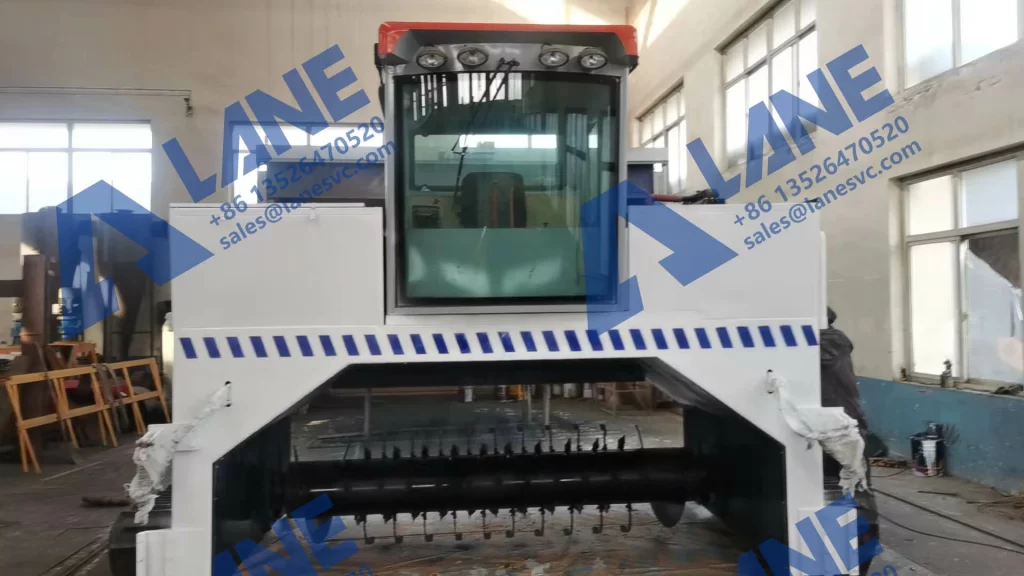
A 20 TPH industrial cow dung composting plant from LANE Heavy Industry follows a streamlined workflow:
Fresh cow dung is delivered to a dewatering system to adjust the moisture content. Then carbon-rich bulking agents like straw or sawdust are added to optimize the carbon-to-nitrogen ratio.
The raw material mixture enters the fermentation phase. This phase determines the quality of the 20 TPH industrial cow dung composting plant. Materials are processed in vertical fermentation tanks for rapid, controlled decomposition, or placed in long windrows turned regularly by turning machines. Forced aeration systems ensure continuous oxygen supply, suppressing methane formation.
After the active thermophilic phase (typically 7–15 days), the partially stabilized material moves to a maturation zone. Here, composting continues at lower temperatures, allowing beneficial microbes to finish the process. A well-designed industrial cow dung composting plant completes this cycle in 20–30 days.
Mature compost passes through a screening machine to remove oversized particles and contaminants. The final fraction can be sold directly as an organic soil amendment or further processed into granules.
The final product is either bagged for retail markets or loaded in bulk for agricultural applications. A complete 20 TPH industrial cow dung composting plant closes the loop from waste to valuable commodity.
Investors and manufacturers might ask the question, how does a 20 TPH industrial cow dung composting plant support net-zero dairy farming? The answer is through three primary mechanisms:
Aerobic composting virtually eliminates methane emissions. By keeping the composting mass oxygen-rich, this process eliminates anaerobic pockets where methanogenic bacteria thrive. This single change can reduce a dairy farm’s manure-related methane output by over 90%.
Finished compost applied to farmlands returns organic carbon to the soil. This improves soil structure, water retention, and fertility while storing carbon that would otherwise be released into the atmosphere. Soil carbon sequestration is recognized as a legitimate offset for residual farm emissions.
Compost from a 20 TPH industrial cow dung composting plant contains nitrogen, phosphorus, and potassium in slow-release forms. This replaces synthetic fertilizers with compost and avoids the significant carbon footprint associated with fertilizer manufacturing and transport.
Research confirms that implementing advanced manure management practices can reduce total farm GHG emissions by 19% or more. A 20 TPH industrial cow dung composting plant scales these benefits to industrial levels, making net-zero targets achievable for large dairies and cooperative farming clusters.
Economic and Operational Benefits
Beyond environmental gains, a 20 TPH industrial cow dung composting plant delivers compelling financial returns:
For a 20 t/h powder cow dung composting plant, equipment investment typically ranges from $90,000 to $250,000, with full production lines tailored to customer specifications. LANE Heavy Industry provides flexible configurations, from basic fermentation units to complete turnkey plants including granulation systems for pellet production.
Q1: What does “20 TPH” mean in a cow dung composting plant?
A: “TPH” stands for tons per hour. A 20 TPH industrial cow dung composting plant processes 20 metric tons of raw cow dung every hour.
Q2: How does a 20 TPH industrial cow dung composting plant reduce methane emissions?
A: By maintaining aerobic conditions throughout the composting process, it prevents the anaerobic decomposition that produces methane. This is the key environmental advantage of a 20 TPH industrial cow dung composting plant.
Q3: Can a 20 TPH industrial cow dung composting plant handle other organic wastes?
A: Yes. Our 20 TPH industrial cow dung composting plant can process poultry manure, pig manure, crop residues, food waste, and more, often blended with cow dung for optimal C:N ratios.
Q4: What is the typical return on investment for a 20 TPH industrial cow dung composting plant?
A: ROI depends on local compost prices, labor costs, and carbon credit values. Many customers achieve payback within 2–4 years through a combination of compost sales and waste disposal savings.
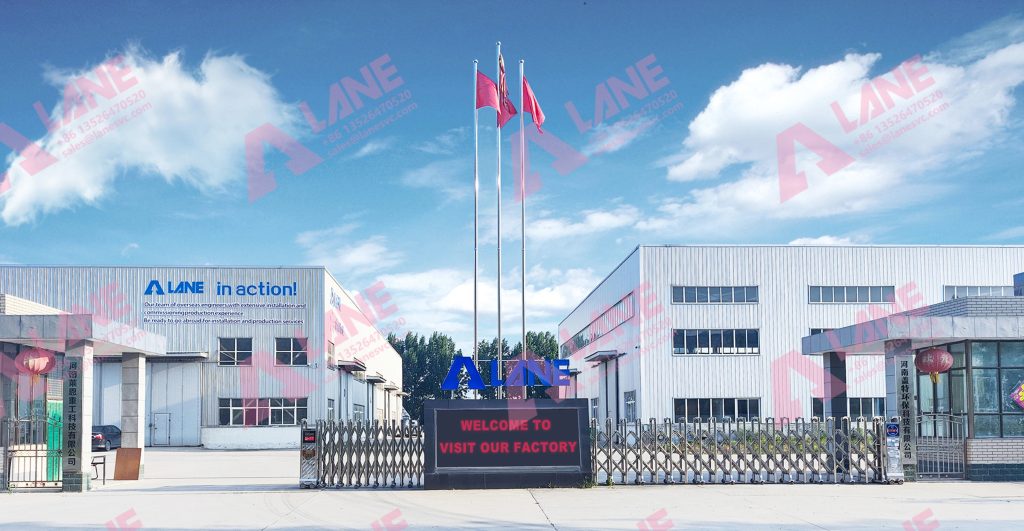
Henan Lane Heavy Industry Machinery Technology Co., Ltd.
Email: sales@lanesvc.com
Contact number: +86 13526470520
Whatsapp: +86 13526470520