
Côte d’Ivoire is the world’s largest cocoa producer. It contributes nearly 40% of the global cocoa supply. Around 75% of a cocoa fruit is waste, so for every ton of cocoa there are several tons of waste. These cocoa wastes often end up discarded or burned. If they are left to rot in the fields, the husks can harbor pathogens for black pod disease. Cocoa waste organic fertilizer production in Côte d’Ivoire offers a sustainable solution. It transforms cocoa wastes into nutrient-rich organic fertilizer. This production line addresses both waste management challenges and the need for affordable, eco-friendly soil amendments for cocoa farms.
Cocoa wastes, especially pod husks, are rich in nitrogen, phosphorus, and potassium. This makes them ideal for organic fertilizer production. By investing in cocoa waste organic fertilizer production in Côte d’Ivoire, farmers can reduce their reliance on expensive chemical fertilizers, improve soil fertility, and enhance cocoa yields. LANE Heavy Industry, a leading manufacturer of organic fertilizer machinery, provides tailored production lines that simplify and optimize cocoa waste organic fertilizer production in Côte d’Ivoire, making it accessible for both small-scale and large-scale cocoa farmers.
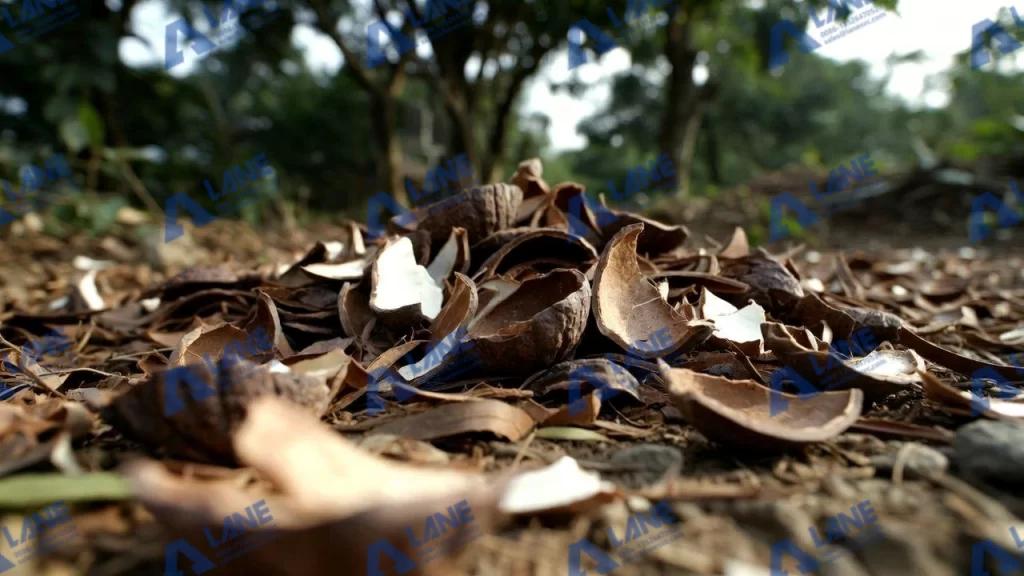
Table of Contents
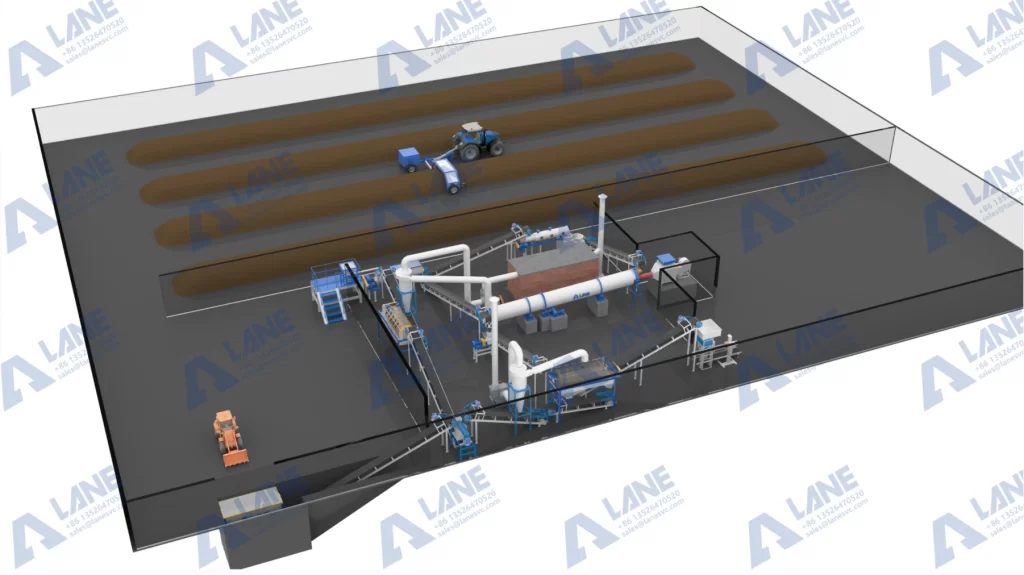
The logic for cocoa waste organic fertilizer production in Côte d’Ivoire is simple. The nutrients extracted from the soil by cocoa trees are stored in the husk. By processing these husks into fertilizer, these nutrients are returned to the earth. LANE Heavy Industry provides the specialized state-of-the-art machinery to create cocoa waste organic fertilizer production in Côte d’Ivoire.
The first step of production is gathering the cocoa pod husks, seed coats, and pulp. Once collected, the wastes are bulky and contain high moisture levels. They might need to be dried before entering production.
LANE Heavy Industry’s cocoa waste crusher is the first piece of vital equipment. It shreds large, tough cocoa pods into smaller fragments (3–5mm). This increased surface area is essential for the microbial activity that occurs during the next stage.
Fermentation is the main process of cocoa waste organic fertilizer production in Côte d’Ivoire. This process determines the final nutrient quality of the organic fertilizer. The cocoa husks are often mixed with animal manure (poultry or cattle) to balance the nutrients according to the C/N (carbon-to-nitrogen) ratio.
LANE Heavy Industry’s Windrow Crawler Compost Turner is used here to:
After fermentation, the compost may still contain clumps. To ensure proper granulation and a premium product, the material passes through a Semi-Wet Material Crusher. LANE Heavy Industry’s Semi-Wet Material Crusher is designed to handle up to 40% moisture levels without clogging.
Once crushed, additional minerals or NPK boosters can be added in a Horizontal Mixer to create your own custom formulation. You can tailor custom organic fertilizer for specific Ivorian soil types.
While powdered fertilizer is functional, it can cause health and environmental risks. Granulated fertilizer is the industry standard for ease of transport and mechanical spreading. This is the most critical stage of cocoa waste organic fertilizer production in Côte d’Ivoire.
LANE Heavy Industry offers many granulation options:
Freshly formed granules are moist and soft. To prevent them from crumbling or molding, they must pass through a Rotary Drum Dryer and then a Rotary Cooler.
LANE’s drying systems are energy efficient. After drying, a Rotary Screening Machine separates the granules. On-size granules are separated from fines and over-sized granules. Over-sized and under-sized particles are sent back to the crusher, ensuring that every bag of fertilizer contains uniform, high-quality pellets.
The final step in the cocoa waste organic fertilizer production in Côte d’Ivoire line is the Automatic Packing Scale. This system weighs, fills, and sews the bags with precision. 25kg and 50kg bags are the standard for local cooperatives and large-scale plantations in the Ivorian market.
Investing in a LANE Heavy Industry production line offers several advantages:
The cocoa waste organic fertilizer production in Côte d’Ivoire isn’t just a business opportunity; it’s also a necessity for the long-term viability of the cocoa sector.
Q: How much cocoa waste is needed to start a production line?
A: A small-scale line typically starts at 1 ton per hour. Considering that husks make up 70–80% of the cocoa fruit weight, even a medium-sized cooperative has enough raw material for cocoa waste organic fertilizer production in Côte d’Ivoire.
Q: Can LANE Heavy Industry machines handle other agricultural waste?
A: Absolutely. Our machinery is versatile and can process oil palm EFB (Empty Fruit Bunches), coffee husks, and sugar cane bagasse alongside cocoa waste.
Q: Is the granulated fertilizer better than the powder form?
A: Yes. Granules have a slower release of nutrients, are less dusty, and are much easier to store and transport across the varying climates of Côte d’Ivoire.
Q: What is the ROI (Return on Investment) for a production line?
A: Depending on the scale, many Ivorian investors see a return within 18 to 24 months, driven by the high local demand for affordable organic inputs.
Q: Does LANE Heavy Industry provide installation support?
A: Yes, we provide full technical layouts, installation guidance, and overseas after-sales support to ensure your cocoa waste organic fertilizer production in Côte d’Ivoire runs smoothly.
Henan Lane Heavy Industry Machinery Technology Co., Ltd.
Email: sales@lanesvc.com
Contact number: +86 13526470520
Whatsapp: +86 13526470520