
Nigeria is one of the world’s top cocoa producers. It generates around 350,000 metric tons of cocoa annually. But a large part of the cocoa fruit ends up as waste, primarily cocoa husks and bean shells, which amount to 0.8 to 1.0 million metric tons each year. The husks are discarded as waste and left to rot or burn. This contributes to environmental pollution and the spread of diseases like Black Pod.
As Nigeria’s Federal Ministry of Agriculture and Rural Development prioritizes cocoa as a key target commodity for economic growth, the need for sustainable waste management solutions for cocoa husk has never been higher. This is where the Cocoa husk organic fertilizer line in Nigeria, developed by LANE Heavy Industry, emerges as a game-changer.
The Cocoa husk organic fertilizer line in Nigeria converts cocoa waste into nutrient-rich organic fertilizer. This addresses waste management challenges while fueling agro-industrial development. Establishing a cocoa husk organic fertilizer line in Nigeria is an economic opportunity for agro-industrial development. By partnering with global leaders like LANE Heavy Industry, Nigerian entrepreneurs can access advanced machinery designed to process this high-fiber material.
A dedicated Cocoa husk organic fertilizer line in Nigeria is not just a waste management tool; it’s a multipurpose economic initiative that addresses multiple national priorities:
With the help of a Cocoa husk organic fertilizer line in Nigeria, cocoa pod waste is no longer a burden but a resource. Businesses can turn this industrial byproduct into profitable, eco-friendly fertilizer.
Implementing a successful cocoa husk organic fertilizer line in Nigeria requires advanced equipment capable of handling tough fibrous material. LANE Heavy Industry offers a complete turnkey system designed for durability and efficiency.
Stage 1: Pre-Treatment & Crushing
Cocoa pods can jam standard crushers. In a Cocoa husk organic fertilizer line in Nigeria, LANE provides high-torque industrial shredders designed to break down cocoa pod husks into uniform fragments. This is critical to accelerate the decomposition process in the next stage.
Stage 2: Fermentation & Composting
Raw husks cannot be applied directly to soil as they harbor diseases and rob the soil of nitrogen during decomposition. LANE provides compost turning machines and closed aerobic fermenters to manage this composting process. These systems ensure optimal aeration, temperature, and moisture control and convert the organic raw materials into stable, pathogen-free humus. For large-scale Nigerian operations, windrow composting systems are often the most cost-effective choice.
Stage 3: Granulation & Formulation
To make fertilizers easy to transport and apply, the composted humus is pelletized. After fermentation, the compost is sent to a LANE semi-wet crusher or vertical crusher. The compost chunks are made into fine powder for effective granulation. The compost powder is then sent to LANE granulators for granulation. LANE granulators include disk granulators for small-scale operations, stirring pin granulators for small to medium-scale operations, and rotary drum granulators for industrial output. They produce uniform, slow-release pellets. These can be customized and even fortified with other organic amendments like rock phosphate or neem to meet specific crop needs.
Stage 4: Drying, Cooling & Packaging
After granulation, the wet granules are soft and can cause caking. LANE uses rotary dryers and coolers to ensure that the final moisture content meets international standards. This prevents mold during storage. LANE rotary screening systems separate on-size granules from oversized granules and fines. They are sent back to the crusher for recycling and re-enter the granulation process. Finally, automated packaging systems weigh and bag the product. The organic fertilizer is now ready for distribution to farms across Nigeria.
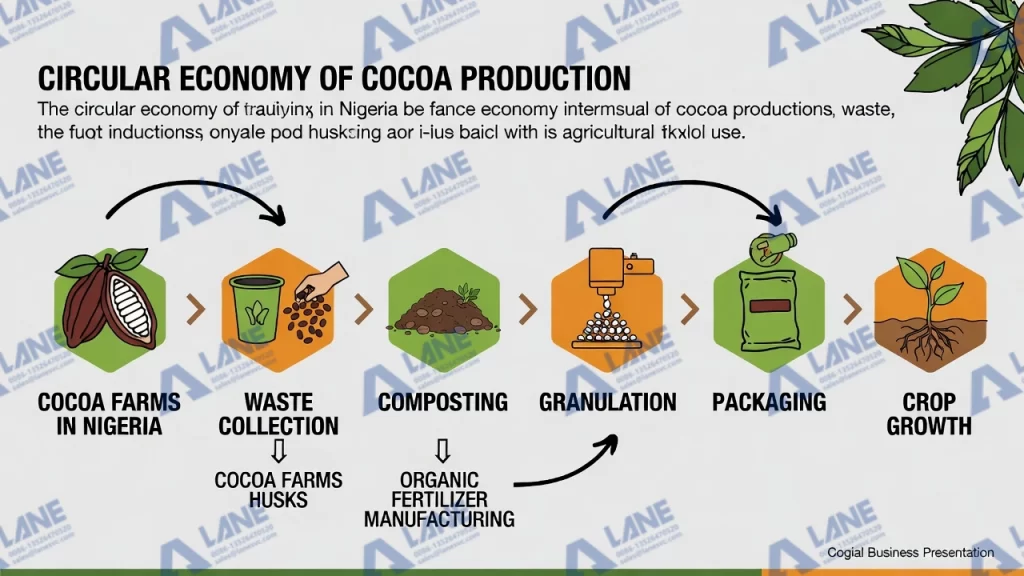
Deploying a Cocoa husk organic fertilizer line in Nigeria using LANE technology delivers several economic and environmental benefits:
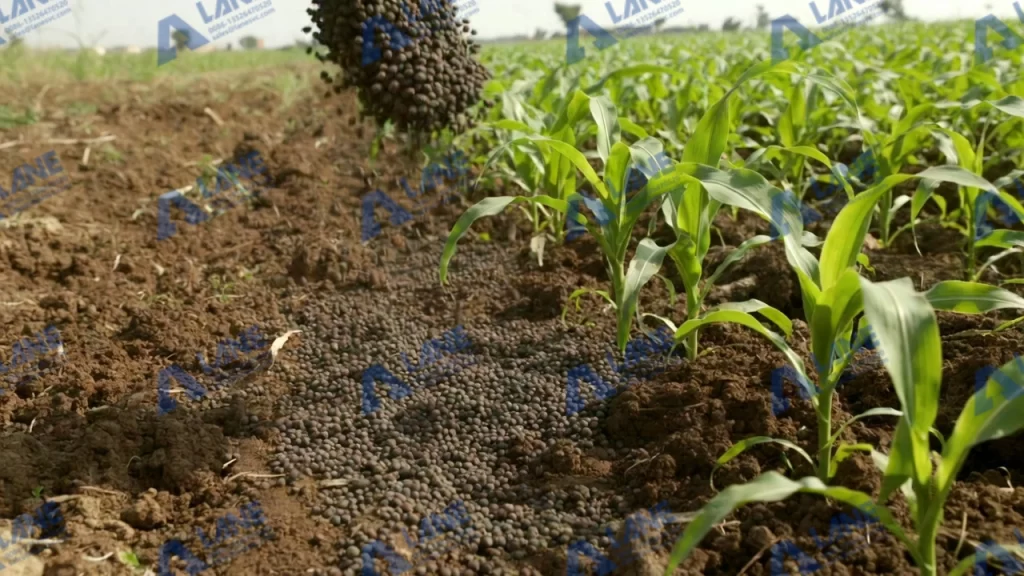
Ready to build your cocoa husk organic fertilizer line in Nigeria? Here is a simple roadmap:
LANE Heavy Industry provides turnkey solutions. This means we will handle everything from design to commissioning. Our machinery for the cocoa husk organic fertilizer line in Nigeria features:
Nigeria’s cocoa industry holds immense potential for agro-industrial development. By investing in a high-quality cocoa husk organic fertilizer line in Nigeria from LANE Heavy Industry, entrepreneurs can drive sustainable development, enhance food security, and build a profitable enterprise. LANE Heavy Industry’s tailored solution addresses the dual challenges of cocoa waste management and soil fertility depletion. Our system creates a sustainable circular economy that benefits farmers, the environment, and the nation.
Q1: Why is a specialized production line necessary for cocoa husks?
A: Cocoa husks are highly fibrous and contain anti-nutritional compounds. A standard line cannot process them efficiently. LANE’s specialized cocoa husk organic fertilizer line in Nigeria includes heavy-duty crushers and controlled fermenters to handle these unique challenges, ensuring the final product is safe and effective.
Q2: How long does it take to set up a cocoa husk fertilizer line?
A: The timeline depends on the scale and customization of the Cocoa husk organic fertilizer line in Nigeria. However, as a turnkey provider, LANE can typically manufacture and ship equipment within 30–60 days, with installation and commissioning taking an additional 2–4 weeks on-site.
Q3: Can the fertilizer be used on crops other than cocoa?
A: Absolutely. While it is excellent for cocoa, the organic matter and potassium-rich content make it ideal for vegetables, maize, oil palm, and other tree crops. It improves soil structure universally.
Q4: What is the expected return on investment?
A: ROI varies based on scale and local market prices for fertilizer. However, by converting a free waste material into a high-value product, producers often recoup their investment within 12–24 months, especially given the rising demand for organic inputs in Nigeria.
Q5: Does LANE provide support after the machine is installed?
A: Yes, LANE Heavy Industry is known for its durable, energy-saving designs and offers end-to-end support, including after-sales service and spare parts supply.
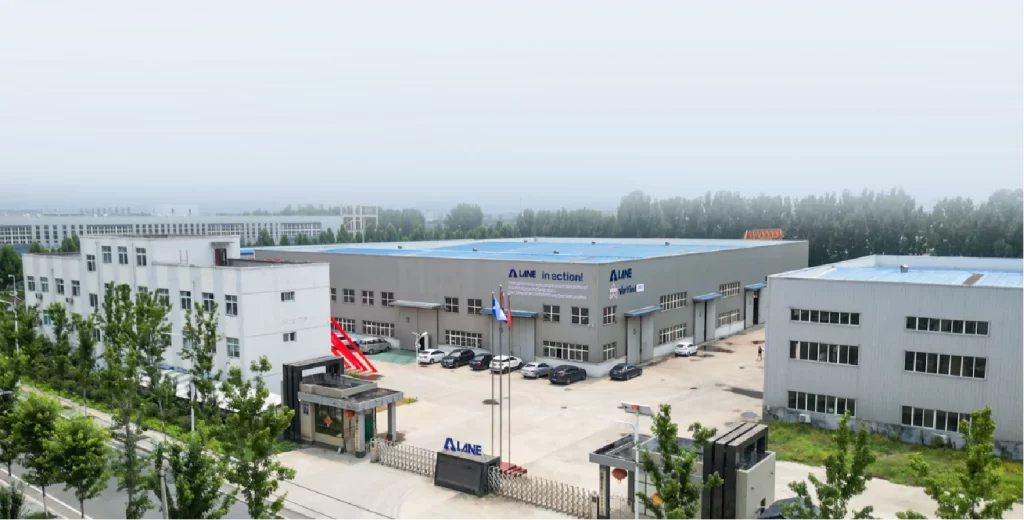
Henan Lane Heavy Industry Machinery Technology Co., Ltd.
Email: sales@lanesvc.com
Contact number: +86 13526470520
Whatsapp: +86 13526470520