
Ghana’s Cocoa Pod Composting plays a key role in solving agricultural waste problems and supporting sustainable farming development. Ghana is one of the world’s largest cocoa producers. In most years, national cocoa bean production reaches between 800,000 and 1,000,000 metric tons. Cocoa farming contributes significantly to rural income and export revenue.
However, cocoa bean production generates a large amount of agricultural waste. For every 1 ton of cocoa beans harvested, approximately 10 tons of cocoa pod husks are produced. This means more than 8 million tons of cocoa pod waste can be generated annually across the country.
Traditionally, these cocoa pod husks are left in the fields. Many smallholder farms in Ghana are between 2 and 5 hectares in size. After harvesting, farmers often break the pods, remove the beans, and leave the husks scattered on the ground. Natural decomposition usually takes 6 to 8 months under tropical conditions.
During this period, several problems appear:
These issues directly affect yield and long-term soil health.
Ghana’s Cocoa Pod Composting offers a clear solution. Instead of leaving pods to rot slowly, farmers and cooperatives collect them and process them into organic fertilizer. This turns waste into value.
This approach is simple.
It is practical.
And it works at scale.
More importantly, Ghana’s Cocoa Pod Composting supports national goals of sustainable agriculture, soil restoration, and reduced dependence on imported chemical fertilizers.
The technical system behind Ghana’s Cocoa Pod Composting is based on controlled windrow composting combined with mechanical processing. The process is systematic and can be scaled from small cooperative level to industrial level.
The main stages include:
Each stage is designed to ensure stable fermentation and consistent fertilizer quality.
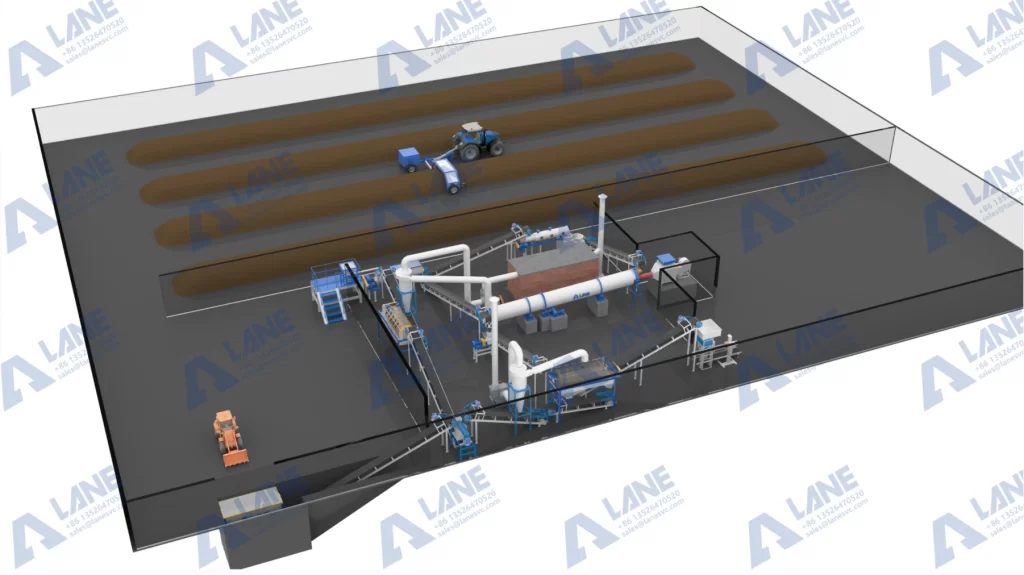
Fresh cocoa pod husks typically have a moisture content of 60–70%. Their fibrous structure makes direct composting slow. Therefore, size reduction is necessary.
Pods are crushed using a chain crusher or hammer crusher to reduce particle size to 30 mm or smaller. Smaller particles improve microbial contact and speed up decomposition.
Because cocoa pods are high in carbon but relatively low in nitrogen, poultry manure or cow dung is added. This adjusts the carbon-to-nitrogen ratio to 25–30:1, which is ideal for aerobic composting.
Microbial inoculants may also be added at a rate of 1–2 kg per ton of raw material to accelerate fermentation.
After mixing, the materials are formed into windrows.
Windrow dimensions are carefully designed:
Each windrow can handle approximately 150–200 tons of raw materials per composting cycle.
The core equipment in Ghana’s Cocoa Pod Composting is the windrow compost turner.
Typical parameters for a medium-scale turner include:
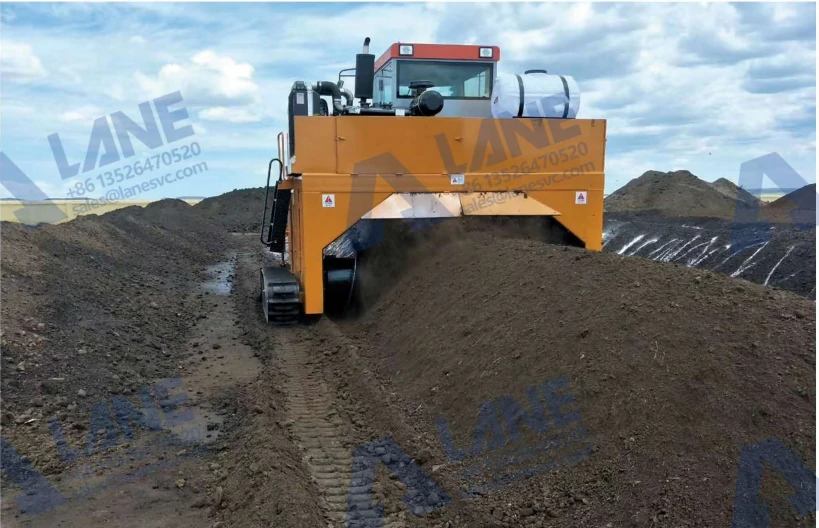
The turning schedule is critical. In the first two weeks, turning is carried out every 2–3 days. After the thermophilic stage stabilizes, turning frequency reduces to once per week.
Within 3–5 days, compost temperature rises to 55–65°C. This temperature is maintained for at least 5–7 days to kill pathogens, insect larvae, and weed seeds.
The total fermentation cycle usually takes 30–45 days depending on weather and material composition.
Moisture is carefully controlled at 50–60%. If moisture drops below 45%, water is added using a spray system mounted on the compost turner or through manual irrigation.
This controlled fermentation ensures mature compost with stable organic matter.
After the fermentation phase, the compost becomes dark brown and odorless. However, further processing improves market value.
The material is first processed through a semi-wet material crusher to break remaining lumps. Then it enters a rotary screening machine with mesh size between 4–6 mm.
Fine powder passes through as finished compost. Oversized particles are returned for re-crushing.
At this stage, powder organic fertilizer can already be sold.
However, many Ghana’s Cocoa Pod Composting projects choose to add a granulation line for higher market competitiveness.
The granulation system may include:
Granule size is typically 3–5 mm. Finished moisture after drying is controlled below 10%. Production capacity of a medium-scale line is 3–10 tons per hour.
Granulated fertilizer improves storage stability, reduces dust, and makes mechanical spreading easier.
A medium-scale Ghana’s Cocoa Pod Composting facility requires between 8,000 and 15,000 square meters of land.
Land allocation is usually:
Annual organic fertilizer output can reach 20,000–30,000 tons.
To achieve this, approximately 60,000 tons of cocoa pod raw material are processed each year.
Initial investment depends on configuration level.
Basic powder fertilizer plant investment ranges from 250,000 to 300,000 USD. If a full granulation production line is included, total investment may reach 350,000 to 400,000 USD.
Operating cost per ton generally ranges between 35 and 60 USD. This includes:
Market selling price of organic fertilizer in Ghana typically ranges from 80 to 150 USD per ton depending on nutrient content and packaging.
Based on these figures, payback period is approximately 2.5 to 3 years.
This shows strong financial feasibility.
In 2023, a Ghana’s Cocoa Pod Composting project was established in the Western Region on a 12,000 m² site.
The plant operates 6 windrows using a 3.5-meter working width windrow compost turner.
Key data:
After one year of operation, measurable improvements were recorded:
Farmer income increased due to lower input cost
The facility also created 18 direct jobs and additional seasonal employment opportunities.
This demonstrates that Ghana’s Cocoa Pod Composting delivers environmental, economic, and social benefits.
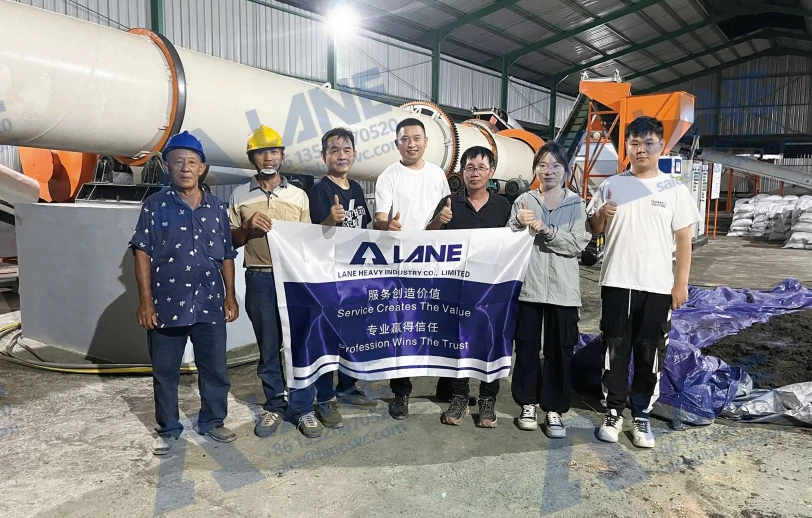
Choosing suitable equipment is essential for the success of Ghana’s Cocoa Pod Composting.
Cocoa pod husks are fibrous, high in moisture, and sometimes mixed with soil. Equipment must be durable and adaptable.
As a company with over 20 years of experience in fertilizer machinery manufacturing, we specialize in customized organic fertilizer production lines.
We design solutions specifically for cocoa pod composting conditions.
Our systems include:
We provide ISO9001 and CE-certified equipment to ensure international quality standards.
We offer complete layout design based on customer land size.
We provide installation and on-site commissioning services.
We train local operators for daily operation and maintenance.
We supply spare parts and remote technical support.
Our optimized production layout can reduce land use by up to 15%.
Energy-efficient motor configuration reduces electricity consumption by 10–20%.
We do not only supply machines.
We build complete fertilizer production systems adapted to real agricultural conditions.
For Ghana’s Cocoa Pod Composting investors, stable operation and long-term support are critical. That is where our experience brings value.
The demand for organic fertilizer in Africa is growing at 8–10% annually. Soil degradation and rising chemical fertilizer prices are driving farmers to seek alternatives.
Governments are encouraging sustainable farming, waste recycling, and local fertilizer production.
Ghana’s Cocoa Pod Composting aligns perfectly with these trends.
In the next five years, increased mechanization, better training, and digital monitoring systems may improve production efficiency by 20–30%.
With standardized management, more cocoa cooperatives can adopt this model.
The concept can also be expanded to other cocoa-producing countries in West Africa.
Ghana’s Cocoa Pod Composting is not just a waste treatment project. It is a long-term agricultural development strategy.
By converting millions of tons of cocoa pod waste into high-quality organic fertilizer, Ghana strengthens soil health, reduces pollution, increases farmer income, and builds a circular agricultural economy.
The model is proven.
The technology is mature.
The opportunity is real.
For more details, please feel free to contact us.
Henan Lane Heavy Industry Machinery Technology Co., Ltd.
Email: sales@lanesvc.com
Contact number: +86 13526470520
Whatsapp: +86 13526470520