
Table of Contents
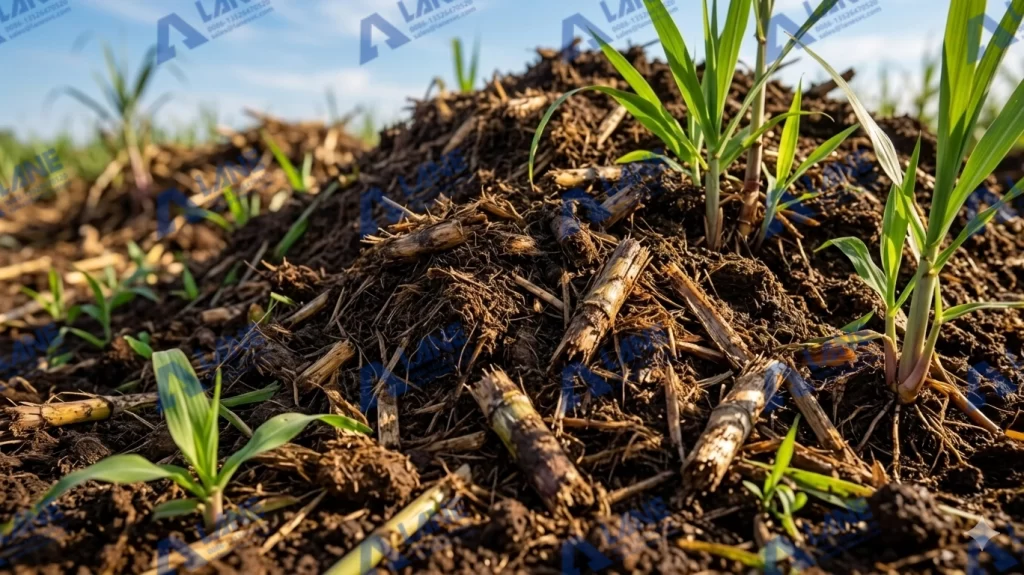
Sugarcane bagasse is the fibrous residue left after juice extraction and is a byproduct of sugarcane processing. Every year, sugar mills worldwide generate millions of tons of sugarcane bagasse. It is treated as waste or burned as low-efficiency fuel. But this byproduct is also a high-carbon, nutrient-rich feedstock for premium organic fertilizer. Learning how to use sugarcane bagasse as organic fertilizer represents a critical step toward sustainable agriculture and a circular economy.
LANE Heavy Industry, a leader in fertilizer industry machinery, has created advanced industrial machinery which can transform this valuable waste into valuable organic soil fertilizer. This article explores why and how to use sugarcane bagasse as organic fertilizer and highlights how LANE Heavy Industry’s machinery can simplify the production process.
The benefits of using bagasse-based fertilizer are well-documented with research across the globe. How to use sugarcane bagasse as organic fertilizer begins with understanding its inherent advantages:
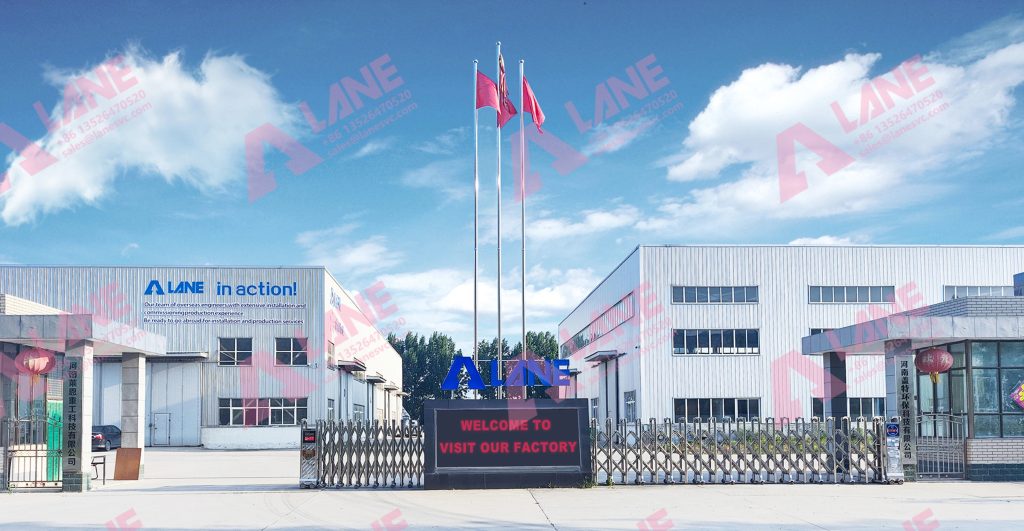
Henan LANE Heavy Industry Machinery Technology Co., Ltd. stands as a leader in the global fertilizer equipment sector. We serve as the machinery supplier for Africa’s national fertilizer project with an annual output of 100,000 tons. Our modern organic fertilizer production line solutions, with experience in working with different climate and soil conditions in South America, Africa, Europe, and Asia, give us an edge in production advantages for these conditions. We also offer a five-year warranty and overseas engineer installation services.
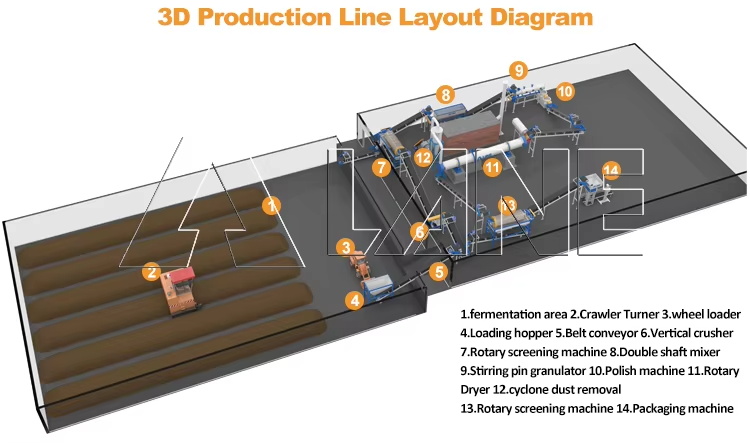
LANE’s certified organic fertilizer production line operates as a continuous, integrated system that functions like a water stream. Every machine is designed to be part of a cohesive ecosystem where each production phase is calibrated to work with the others. This eliminates bottlenecks and ensures seamless operation.
For those seeking to understand how to use sugarcane bagasse as organic fertilizer at an industrial scale, LANE’s sugar residue organic fertilizer production line provides the complete answer.
The production requires following a six-stage production process. Here’s the foundational method of how to use sugarcane bagasse as organic fertilizer.
Stage 1: Raw Material Collection and Pretreatment
Fresh sugar residue and bagasse are transported from the sugar mill to the organic fertilizer production facility. The sugarcane raw materials include bagasse, press mud, and filter cake. They are gathered and prepared for the fermentation process. They are shredded and mixed with nitrogen-rich organic materials at a 25-30:1 ratio.
Stage 2: Composting and Fermentation
To speed up production, fermentation bacteria are introduced. The material is arranged in elongated windrows or placed in fermentation tanks. LANE compost turners regularly aerate and mix the piles to accelerate microbial decomposition. This fermentation stage is critical for converting fibrous bagasse into nutrient-rich organic matter.
Stage 3: Crushing and Grinding
Following fermentation, the material forms clumps or aggregates. A high-efficiency crusher grinds the fermented bagasse into fine powder, preparing it for the subsequent granulation phase. Proper particle size reduction is essential; it directly impacts pellet quality.
Stage 4: Mixing and Granulation
The powdered organic material is properly mixed with additional nutrients, binding agents, or complementary organic matter such as active carbon. In this stage, manufacturers can create their own custom formulations. LANE offers multiple granulation options including rotary drum granulators (5–30 T/H), stirring tooth granulators (4–12 T/H), and double-roller granulators (1–8 T/H) for dry powder compression without drying. Granules are easy to spread and store.
Freshly formed pellets retain significant moisture content. A rotary drum dryer reduces moisture to optimal levels, followed by a cooling system that hardens the pellets and strengthens them for storage and transport.
Stage 6: Screening and Automatic Packaging
Cooled pellets pass through a drum screening machine for size grading. Correctly sized granules proceed to the automatic packaging system, where accurate weighing, fast bagging, and clean sealing processes prepare the finished product for shipment. Oversized and fine granules return to the crusher.
Mastering how to use sugarcane bagasse as organic fertilizer in this systematic, mechanized way ensures you can produce consistent product quality with maximum production efficiency.
LANE Heavy Industry’s production lines are engineered for reliability, scalability, and global compatibility. Understanding how to use sugarcane bagasse as organic fertilizer with LANE machinery means working with equipment that offers:
We provide guidance and training to technicians on how to use sugarcane bagasse as organic fertilizer. Producers can start with essential equipment and expand capacity over time, by integrating additional crushers, dryers, or packaging units as production demands grow.
These international deployments demonstrate that mastering how to use sugarcane bagasse as organic fertilizer with LANE machinery is not merely theoretical; it is a proven, scalable business model that works across diverse agricultural economies.
Q1: What is the best method for learning how to use sugarcane bagasse as organic fertilizer?
A: The most effective industrial approach involves a complete production line: composting fermentation with microbial agents, crushing fermented material into powder, mixing with complementary organic matter, granulating into pellets, drying and cooling, and finally screening and packaging. LANE Heavy Industry provides turnkey solutions covering every stage.
Q2: How much does a sugarcane bagasse organic fertilizer production line cost?
A: Investment varies based on capacity and configuration. Single granulator units start around USD 7,900 for small-scale orders, while complete 5–6 T/H processing lines with full equipment suites range from USD 180,000 to 430,000 depending on customization requirements. LANE offers tailored quotations based on specific raw material types and production targets.
Q3: How long does the bagasse composting process take?
A: The fermentation period depends on the method and microbial agents used. Traditional composting requires at least three months for full decomposition of organic matter in sugar residue. However, with specialized bacterial inoculants and mechanical turning equipment, this timeline can be significantly reduced.
Q4: What raw materials can be combined with bagasse in fertilizer production?
A: Sugarcane bagasse works exceptionally well when blended with chicken manure, cattle manure, press mud (filter cake), rice husks, corn stalks, and molasses. These additives improve nutrient balance and enhance pellet binding during granulation.
Q5: Does LANE provide installation and training support?
A: Yes. LANE engineers provide on-site guidance for machine installation, workshop construction, production line testing, and comprehensive worker training to ensure customers fully understand how to use sugarcane bagasse as organic fertilizer equipment properly
Henan Lane Heavy Industry Machinery Technology Co., Ltd.
Email: sales@lanesvc.com
Contact number: +86 13526470520
Whatsapp: +86 13526470520