
Table of Contents
Raised bed gardening has become popular among home gardeners, small-scale farmers, and commercial growers. It can improve soil drainage, reduce weed growth, and create a controlled growing environment. Gardeners seek organic fertilizer for raised bed gardens that can deliver essential nutrients while improving soil structure and supporting sustainable growing practices. Synthetic fertilizers can harm soil health over time while organic fertilizer for raised bed gardens works in harmony with nature, enhancing soil structure and fertility for long-term garden success.
LANE Heavy Industry Machinery Technology Co., Ltd. offers commercial-scale production solutions to manufacture high-quality organic fertilizer for raised bed gardens. This article explores how LANE’s machinery enables efficient, high-quality commercial production of organic fertilizer for raised bed gardens which meets the needs of growers.
Raised bed gardening is expanding rapidly among homeowners, community gardens, and commercial vegetable growers. This system requires regular nutrient inputs to maintain soil fertility and support healthy plant development. Raised beds benefit more from high-quality organic amendments than traditional gardens. It can:
The ideal organic fertilizer for raised bed gardens combines balanced nutrition of NPK with high organic matter content. The product must be uniform in size for even application. It must be free from pathogens and weed seeds, and consistent in nutrient analysis.
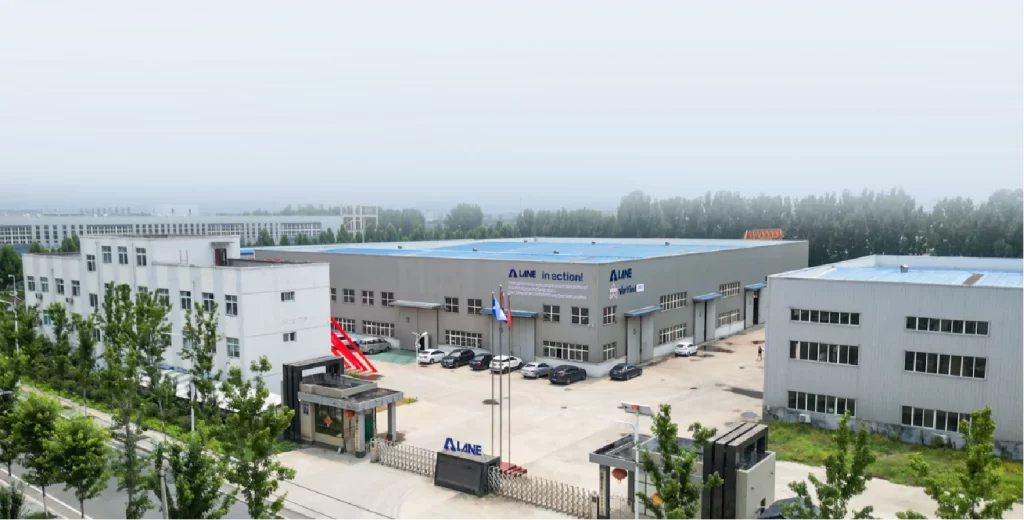
Henan LANE Heavy Industry Machinery Technology Co., Ltd. has established itself as a premier manufacturer of fertilizer production equipment. With over 20 years of experience in fertilizer manufacturing, the company has an experienced management and R&D team. We integrate research, development, production, sales, and after-sales service. We serve customers across global markets including Africa, Southeast Asia, and beyond.
LANE’s philosophy centers on “serving customers with dedication, establishing reputation with quality, and seeking development with technology.”
For manufacturers who are targeting the raised bed gardening market, LANE offers complete production lines that can be customized for specific raw materials, climate conditions, and production capacities.
Complete Production Line Overview
LANE’s commercial-scale production system for organic fertilizer for raised bed gardens encompasses all necessary equipment from initial raw material processing through finished product packaging. A typical line includes:
| Production Stage | Equipment | Function |
| Pre-treatment | Crusher, Mixer | Size reduction, ingredient blending |
| Fermentation | Compost Turner, Fermenter | Biological decomposition, pathogen elimination |
| Processing | Granulator, Dryer, Cooler | Particle formation, moisture control |
| Finishing | Screener, Coater, Packager | Quality grading, product enhancement, bagging |
Production capacities range from 3,000 to 250,000 tons per year, with equipment configurations tailored to client requirements. The line utilizes one-step molding technology that streamlines production while maintaining product quality.
The production journey begins with raw material collection and preparation. LANE provides crushers and shredders that can handle diverse organic inputs. The materials are first reduced to uniform particle size. When processing material with high fiber content, our modified equipment prevents clogging and ensures smooth material flow.
Proper fermentation is critical for producing safe, stable organic fertilizer for raised bed gardens. LANE’s compost turner can accelerate decomposition while ensuring complete pathogen elimination.
The fermentation process:
LANE has experience working with diverse raw materials. We ensure that fermentation equipment can be optimized for specific raw material characteristics.
After fermentation, the composted materials are sent to a crusher to achieve the fine particle size necessary for effective granulation. Uniform size ensures consistent nutrient distribution in the final fertilizer.
A horizontal mixer then blends the crushed materials with additional nutrients or additives. This stage allows manufacturers to formulate custom organic fertilizer for raised bed gardens by changing N-P-K ratios and adding trace elements tailored to raised bed gardening requirements. For example, formulations can be adjusted for:
Granulation transforms the blended compost into uniform granules for home gardener application. LANE’s advanced granulation technology includes:
The Stirring Pin Granulator, with granulation rates exceeding 97%, produces consistently sized particles that gardeners find easy to apply. These machines feature reinforced construction and flexible belt drives that ensure smooth operation and longevity.
After granulation, the excess moisture in the granules can cause caking. The excess moisture must be removed for stable screening and storage. LANE’s rotary dryers utilize efficient heat transfer to reduce moisture content to target levels. After drying, rotary coolers use ambient air to reduce temperature and harden the granules.
Rotary screening machines separate finished granules from oversize and undersize material. Qualified product moves to packaging, while off-specification material returns to the production stream for reprocessing. This minimizes waste and maximizes yield.
Automatic packaging machines fill and seal bags with precise weights. They prepare the finished organic fertilizer for raised bed gardens for distribution. They can handle various bag sizes suitable for retail garden centers.
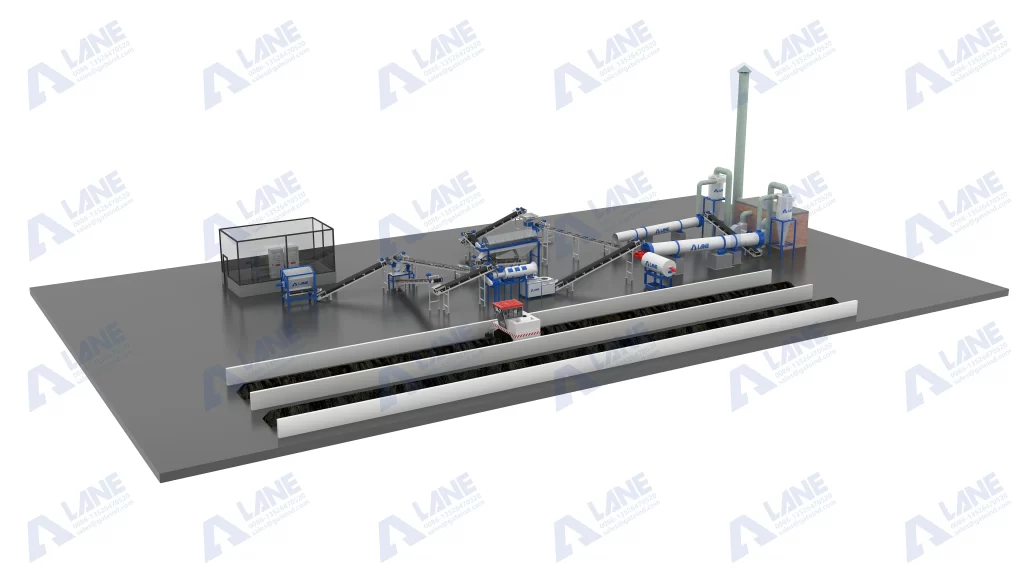
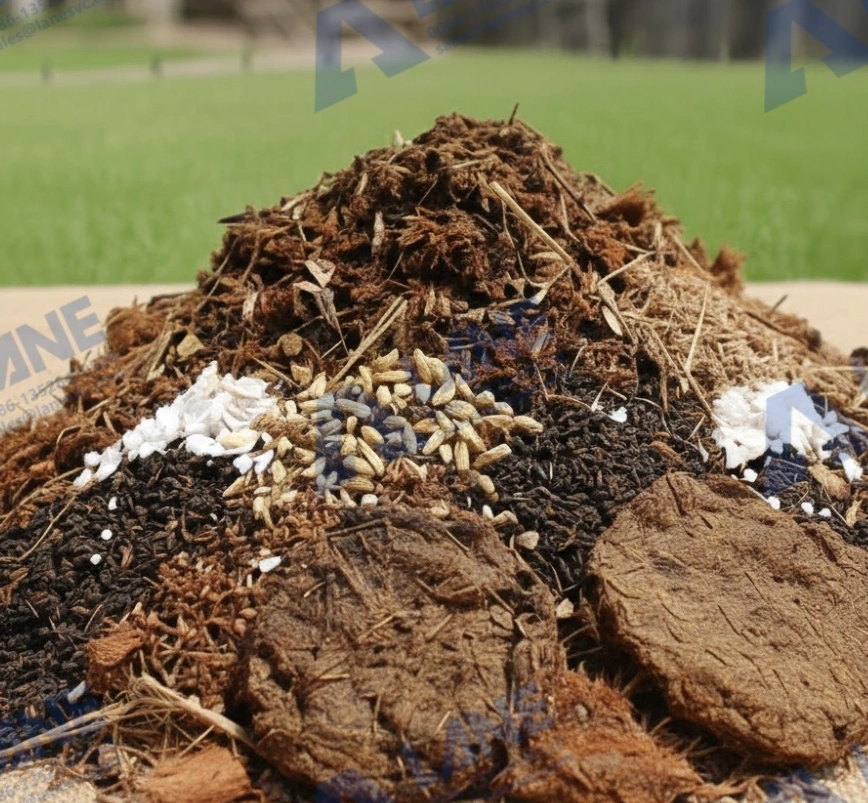
LANE’s production line can be customizable and can accommodate diverse raw materials. This allows manufacturers to source locally available inputs and reduce costs. Suitable materials for producing organic fertilizer for raised bed gardens includes:
| Material Category | Examples |
| Animal Manure | Chicken, cattle, pig, sheep manure |
| Agricultural Waste | Straw, rice bran, crop residues |
| Industrial Byproducts | Vinasse, sugar residue, soybean dregs |
| Household Waste | Kitchen waste, vegetable market waste |
| Municipal Sludge | River silt, sewage sludge (properly treated) |
Our experience with non-traditional raw materials including a recent project converting soybean dregs to liquid fertilizer, demonstrates our capability to develop customized solution.
Applications and Market Potential
The organic fertilizer for raised bed gardens produced by LANE systems serves multiple market segments:
The market for specialty organic fertilizers will increase day by day as more households embrace food gardening. Manufacturers equipped with LANE production technology position themselves to capture this growing demand.
Q: What production capacities are available for organic fertilizer lines?
A: LANE offers complete production lines ranging from 3,000 to 200,000 tons per year, with equipment configurations scaled to match your business requirements.
Q: Can the production line handle multiple raw material types?
A: Yes. LANE’s equipment is designed for flexible raw material compatibility, processing animal manures, agricultural wastes, industrial byproducts, and other organic inputs.
Q: How do I ensure my organic fertilizer for raised bed gardens meets quality standards?
A: LANE’s production lines incorporate screening, monitoring, and quality control systems that ensure uniform particle size, proper nutrient content, and freedom from contaminants.
Q: What is the typical ROI period for a commercial fertilizer production line?
A: While ROI varies based on local market conditions, LANE’s Indonesian retrofit project achieved a 2.1-year payback period, including government incentives.
Q: Do you provide installation and training?
A: Yes. LANE offers comprehensive after-sales support including overseas installation, operator training, and ongoing technical assistance.
Q: Can I test my raw materials before purchasing equipment?
A: LANE can conduct extraction tests and provide videos and test reports to verify your raw materials’ suitability for producing high-quality organic fertilizer for raised bed gardens.
Q: What payment terms are available?
A: Common payment methods include T/T and L/C, with terms depending on order value and cooperation conditions.
Q: How long is the equipment warranty?
A: Standard warranty period is one year, with spare parts available at cost after warranty expiration.
Henan Lane Heavy Industry Machinery Technology Co., Ltd.
Email: sales@lanesvc.com
Contact number: +86 13526470520
Whatsapp: +86 13526470520