
Table of Contents
Shrimp is one of the most popular seafood in the world. To meet the demand, the industry produces and captures around 6–6.1 million tons of fish every year. The shrimp processing industry generates massive amounts of shrimp shells from processing. These wastes often end up in landfills and seas. This often causes environmental pollution and resource waste. Organic fertilizer production from shrimp shell offers a sustainable solution. This production system turns this waste into a high-value agricultural input. The shrimp shells are rich in chitin, calcium, nitrogen, and other essential nutrients that enrich soil and boost plant immunity.
However, transforming this raw material into a stable, premium quality fertilizer requires specialized equipment and strict adherence to industrial standards. LANE Heavy Industry has developed a customized production line that streamlines organic fertilizer production from shrimp shell. Our production line ensures quality, scalability, and ease of application.
Before investing in organic fertilizer production from shrimp shell, it is essential to understand why organic fertilizer production from shrimp shell has gained such momentum. Shrimp shells contain 15–30% chitin. Chitin is a natural polymer that stimulates beneficial soil microorganisms. When processed into organic fertilizer, chitin breaks down into chitosan. Chitosan acts as a biopesticide and growth promoter. Additionally, the shells provide calcium carbonate, phosphorus, and nitrogen; these nutrients are essential for root development and fruit quality. By converting seafood waste into a valuable nutrient for plants, organic fertilizer production from shrimp shell also supports circular economy principles.
To ensure safety, efficacy, and market acceptance, organic fertilizer production from shrimp shell must comply with strict industrial standards. Key parameters include:
To meet these standards, you will need a wellengineered production line capable of precise control. LANE Heavy Industry offers a customized production line that will give you full control over drying, crushing, mixing, granulation, and curing.
LANE Heavy Industry has over 20 years of experience in heavy industry machinery manufacturing. We have established ourselves as a global leader in fertilizer equipment by offering customized solutions. We offer customized organic fertilizer production from shrimp shell that integrates several core modules:
Our equipment is modular, which allows producers to scale organic fertilizer production from shrimp shell from small pilot lines to largecapacity commercial facilities.
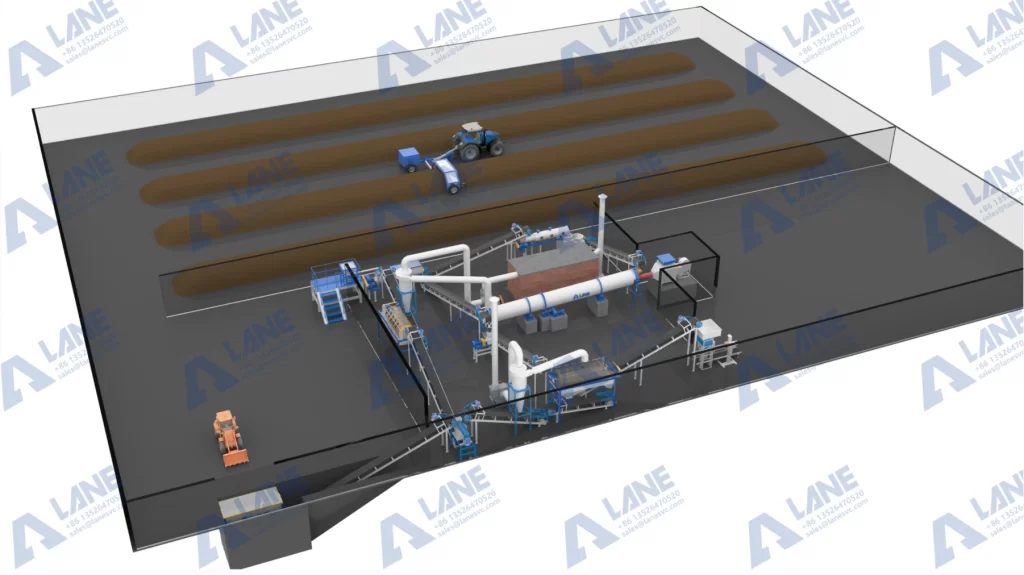
LANE Heavy Industry’s equipment is engineered to handle the unique challenges of shrimpshell raw materials. The main components include:
By using LANE Heavy Industry’s machinery, producers can achieve a yield rate of over 95% and maintain continuous operation with minimal downtime. This makes organic fertilizer production from shrimp shell both profitable and reliable.
Optimizing organic fertilizer production from shrimp shell involves fine-tuning both process parameters and equipment settings. LANE Heavy Industry recommends the following best practices:
By implementing these optimizations, producers can lower energy consumption and save costs while producing premium organic fertilizer.
The fertilizer made from organic fertilizer production from shrimp shell is a slowrelease, soilconditioning fertilizer suitable for a wide range of crops. Proper usage maximizes its benefits:
Adhering to industrial standards requires rigorous quality control at every stage. LANE Heavy Industry’s production line includes integrated sampling ports and inline sensors that enable real-time testing. Key quality checkpoints for organic fertilizer production from shrimp shell include:
Q1: Why is shrimp shell considered a valuable material for organic fertilizer?
Shrimp shells are rich in chitin, calcium, and trace elements. When processed correctly through organic fertilizer production from shrimp shell, they improve soil structure, enhance beneficial microbes, and provide longterm nutrient release.
Q2: What industrial standards apply to organic fertilizer from shrimp shell?
Standards vary by region but generally include limits on heavy metals, pathogen content, moisture (≤20%), and organic matter (≥45%). LANE Heavy Industry’s production line helps producers meet these requirements consistently.
Q3: Can LANE Heavy Industry’s machinery handle highsalt raw materials?
Yes. LANE’s pretreatment section includes saltremoval washers and corrosionresistant components, ensuring that organic fertilizer production from shrimp shell proceeds smoothly even with highsalt feedstocks.
Henan Lane Heavy Industry Machinery Technology Co., Ltd.
Email: sales@lanesvc.com
Contact number: +86 13526470520
Whatsapp: +86 13526470520