
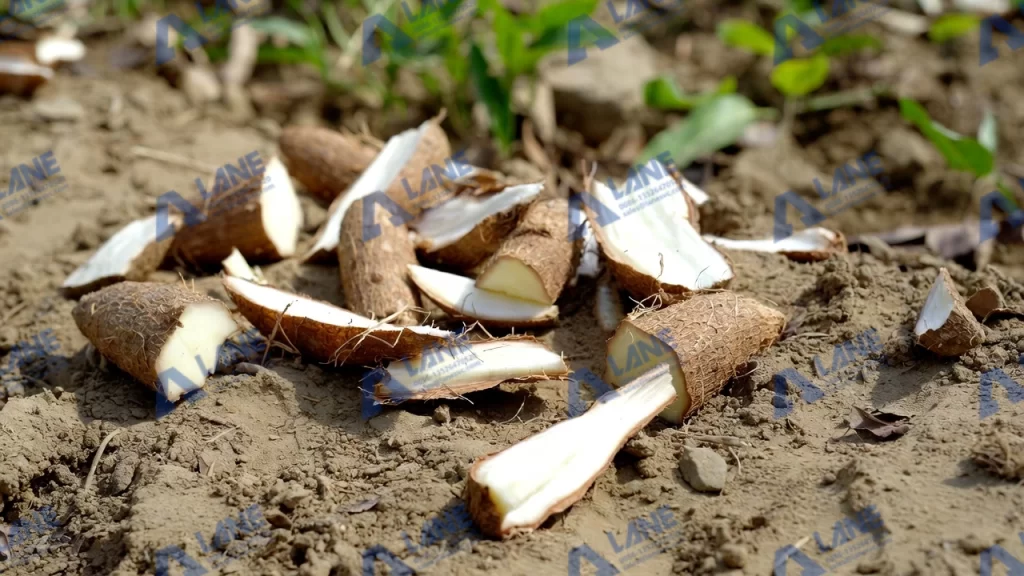
Cassava is a staple crop in West Africa. Countries like Nigeria, Ghana, and Côte d’Ivoire harvest millions of tons of cassava annually. It supports the food security and livelihoods of millions of farmers. However, over-reliance on chemical fertilizers has reduced cassava yields and soil health in West Africa. An efficient organic fertilizer production line for West Africa is the solution. It turns local organic wastes such as cassava peels, livestock manure, and crop residues into nutrient-rich organic fertilizer.
LANE Heavy Industry, a leading manufacturer of fertilizer machinery with over 20 years of industry experience, has engineered customized equipment to configure a high-efficiency organic fertilizer production line for West Africa. Our efficient machinery helps farmers and agri-businesses lower costs, improve soil fertility, and boost yields. By investing in a dedicated organic fertilizer production line for West Africa, you can transform this abundant agricultural waste into a high-demand soil amendment.
You must understand your raw materials before you start your production. Cassava residues differ from standard livestock manure. Cassava is characterized by high fiber content, high moisture (often exceeding 60%), and high starch levels. This means your organic fertilizer production line for West Africa must have the capability of handling fibrous materials and managing moisture fluctuations. The best results often come from combining cassava waste with animal manure (poultry, cattle, or pig manure) to balance the carbon-to-nitrogen ratio.
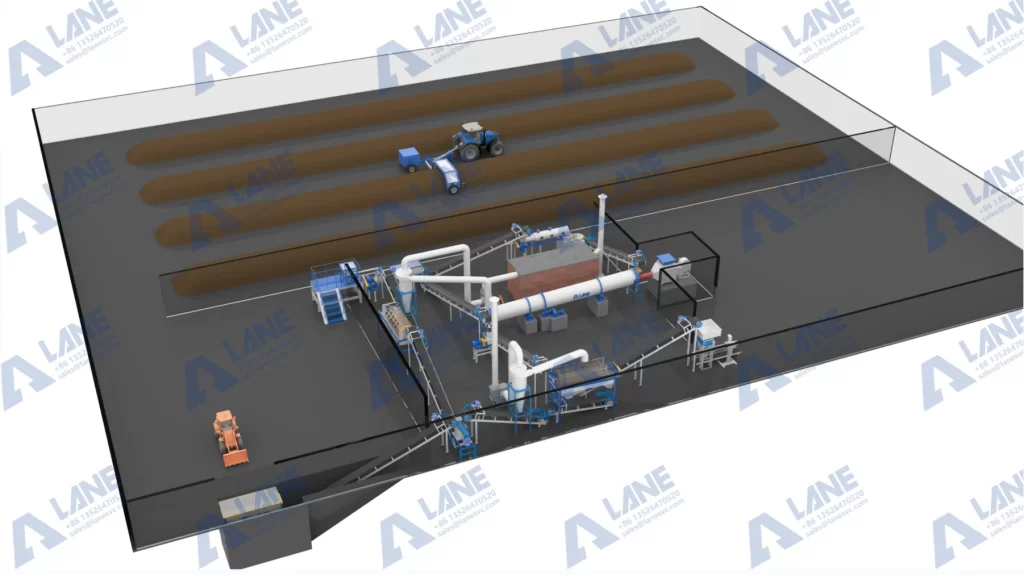
Configuring a high-efficiency line requires the right machines at each stage of the production process.
Phase 1: Pre-Treatment & Composting
The raw materials first go through a fermentation process. In this process, raw materials get stabilized and become humus. The process begins with a LANE compost turner or fermentation tank. These compost turners are available in groove, crawler types, self-propelled, and tow-behind types. They are essential for aerobic fermentation. By regularly turning the windrow, you ensure even decomposition, kill pathogens, and reduce the high moisture content of the fresh waste.
Phase 2: Crushing & Mixing
After composting, raw materials often form lumps. A LANE semi-wet crusher/vertical crusher is used to break down these clumps into a uniform fine powder. After crushing, these materials enter a horizontal mixer. In the mixer, you can blend in additional nutrients like phosphate rock or potassium humate to enrich the final product. This customization ability allows you to produce fertilizer that meets the specific needs of West African soils.
Phase 3: Granulation (The Core of the Line)
Granulation turns the powdery organic fertilizer into granules. For the fibrous nature of cassava waste, LANE offers advanced solutions like the Rotary Drum Granulator or Stirring Pin Granulator. These machines use agglomeration and rotation to form uniform, dense granules. These steps add significant value to your fertilizer. Granular fertilizer is easier to store, transport, and apply with machines than powdered fertilizer.
Phase 4: Drying, Cooling & Screening
West Africa has tropical humidity. Freshly granulated fertilizers are wet and need to be stabilized. A LANE Rotary Dryer reduces the moisture content to safe levels. It prevents mold during storage. The material then passes through a cooler to bring down the temperature before entering a rotary screener. The screener separates oversized and undersized pellets, which are recycled back into the process. This ensures consistent high-quality granules move forward.
Finally, the granules are conveyed to an automatic packing machine. LANE’s packing solutions ensure accurate weighing and sealing. It prepares the final product for distribution to local farms or export markets.
Partnering with the right manufacturer for an organic fertilizer production line for West Africa is the key to long-term success. LANE Heavy Industry provides:
Q1: What is the ideal capacity for an organic fertilizer production line for West Africa starting out?
A: For small to medium enterprises, a line producing 3–5 tons per hour is a great start. This scale efficiently processes waste from local cassava processing communities without requiring overwhelming capital investment.
Q2: Can LANE machinery handle the high moisture of cassava peels?
A: Yes. LANE equipment, particularly their heavy-duty compost turners and specialized dryers, are built to handle the high moisture content typical of cassava waste, ensuring efficient processing where standard equipment might fail.
Q3: Besides cassava peels, what other raw materials can be used?
A: A well-configured organic fertilizer production line for West Africa can process a variety of inputs. You can mix cassava waste with poultry manure, cattle manure, cocoa husks, shea butter residue, and even straw to create a balanced, nutrient-rich product.
Q4: How does using an organic fertilizer production line benefit the environment?
A: It directly addresses pollution by diverting agricultural waste from open dumps and waterways. Furthermore, it reduces reliance on imported chemical fertilizers, lowering the carbon footprint associated with agriculture and promoting a circular economy.
Q5: What after-sales support does LANE offer in West Africa?
A: LANE Heavy Industry emphasizes strong after-sales service, including installation guidance, commissioning, and technical support to ensure your organic fertilizer production line for West Africa operates at peak efficiency.
The potential for organic fertilizer production in West Africa is immense. It is driven by abundant waste streams and a critical need for soil regeneration. Configuring a high-efficiency organic fertilizer production line for West African cassava farms requires careful preparation, suitable equipment, process optimization, and local adaptation.
Cassava farmers or entrepreneurs can build a sustainable organic fertilizer production line for West Africa that improves soil health, boosts yields, and supports long-term agricultural development.
Henan Lane Heavy Industry Machinery Technology Co., Ltd.
Email: sales@lanesvc.com
Contact number: +86 13526470520
Whatsapp: +86 13526470520