
Table of Contents
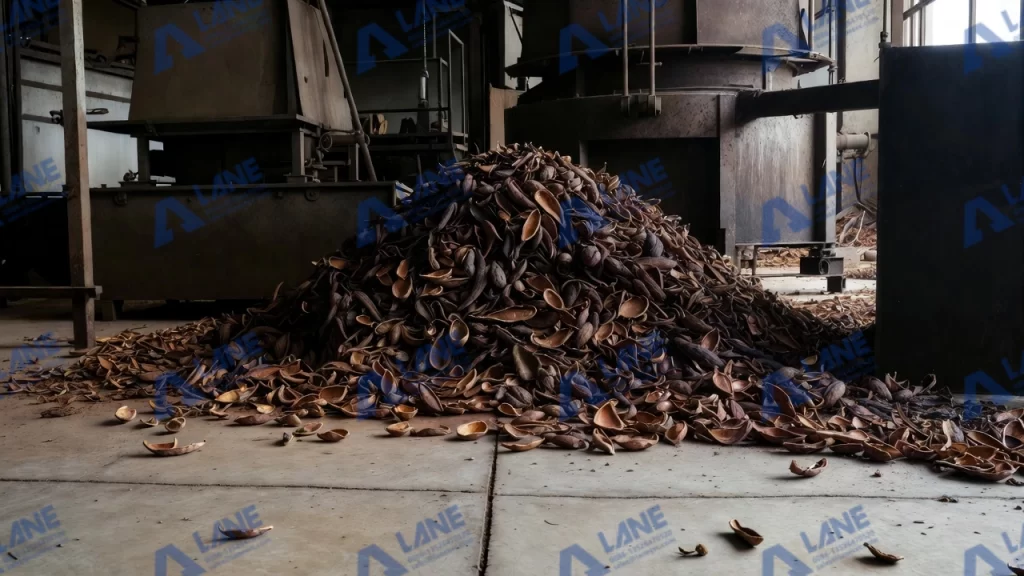
The cocoa processing industry generates massive waste annually, including cocoa pod husks, pulp, and bean shells. For every ton of dry cocoa beans, ten tons of cocoa pod husks are discarded. These products are seen as a disposal headache and are sent to landfills or burned. This creates environmental and biological hazards. However, these wastes are rich in potassium, nitrogen, phosphorus, and organic matter. This makes cocoa wastes an ideal raw material for organic fertilizer and creates an opportunity for local farmers and agribusinesses to create an organic fertilizer production line from cocoa processing waste.
By implementing a professional organic fertilizer production line from cocoa processing waste, manufacturers can turn liabilities into agricultural inputs and create a profitable business. This technical guide explores how LANE Heavy Industry’s advanced machinery enables efficient, scalable, and certified conversion of cocoa waste into high-quality organic fertilizer.
LANE Heavy Industry Machinery Technology Co., Ltd. has over 20 years of experience in the fertilizer machinery manufacturing industry. We specialize in designing and manufacturing custom fertilizer production solutions tailored to specific raw material characteristics. LANE offers:
When you invest in an organic fertilizer production line from cocoa processing waste from LANE, you are not just buying machinery; you are acquiring a proven system designed for certification, efficiency, and profitability.
The first challenge in processing cocoa waste is its fibrous, tough structure. This waste needs specialized size reduction equipment before fermentation can begin.
LANE Equipment Solutions
Heavy-Duty Cocoa Pod Shredders
LANE’s high-torque shredders feature corrosion-resistant blades designed specifically for agricultural waste. They break whole cocoa pods into uniform fragments (10–30mm), which accelerates decomposition and ensures consistent fermentation.
For dried cocoa waste, LANE’s horizontal crushers further refine particle size, preparing material for efficient microbial activity.
Technical Considerations
A well-designed pre-treatment stage is essential for any successful organic fertilizer production line from cocoa processing waste.
Fermentation transforms raw cocoa waste into stable, pathogen-free organic matter. This is a biological process and requires careful control of temperature, oxygen, and moisture.
LANE Equipment Solutions
Windrow Compost Turners
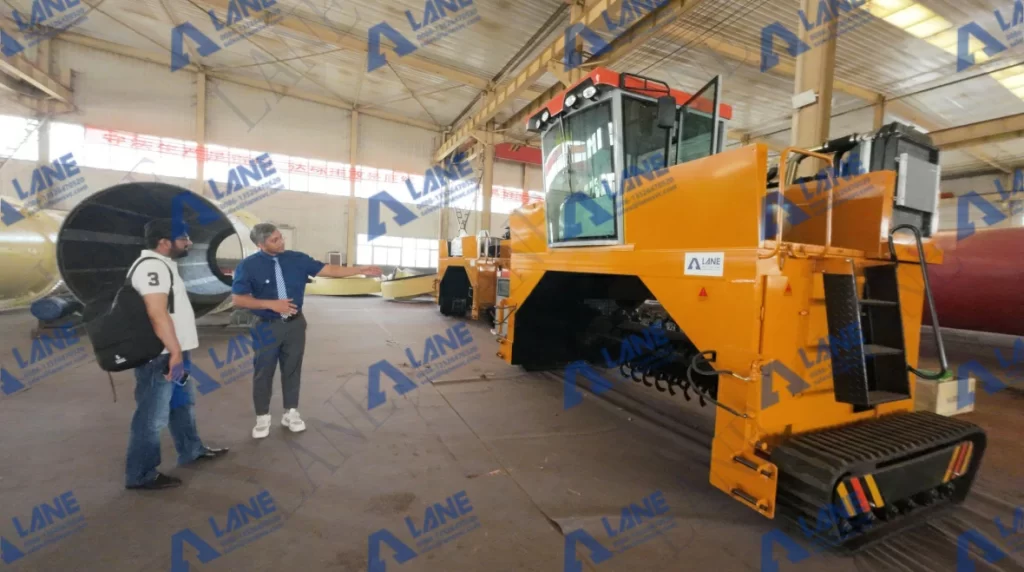
For large-scale operations, LANE offers crawler compost turners and tractor-mounted compost turners. These machines regularly turn the composting pile, injecting oxygen and maintaining optimal temperatures (55–65°C) for rapid decomposition.
Closed Aerobic Fermenters
For operations requiring odor control and faster processing (7–10 days vs. 30–45 days), LANE’s enclosed fermenters provide:
Monitoring and Control
LANE’s SCADA-compatible system logs all fermentation parameters. It is essential for organic certification and quality assurance.
Best Practices for Cocoa Waste
Proper fermentation determines the product quality and nutrient availability of organic fertilizer produced in an organic fertilizer production line from cocoa processing waste.
Granulation converts composted cocoa waste into uniform, easy-to-apply fertilizer pellets. This stage adds value by improving handling, storage, and application efficiency, especially within an organic fertilizer production line from cocoa processing waste designed for sustainable and large-scale agricultural use.
LANE Equipment Solutions
Disc Granulators
Ideal for small-scale operations (1–5 t/h), disc granulators produce spherical pellets through a tumbling action. The angle and speed are adjustable for different formulations.
Ideal for industrial-scale production (10 t/h+), LANE drum granulators offer:
Stirring Pin Granulators
This is the best granulator to handle organic raw material, especially fibrous raw materials. It provides intensive mixing and agglomeration.
Formulation Options
The granulation stage increases the commercial value of your organic fertilizer. LANE’s granulators are specifically designed to handle the fibrous nature of composted cocoa waste. Our granulator ensures consistent pellet quality in your organic fertilizer production line from cocoa processing waste.
This stage ensures product stability, extends shelf life, and prepares fertilizer for market distribution.
LANE Equipment Solutions
Rotary Dryers
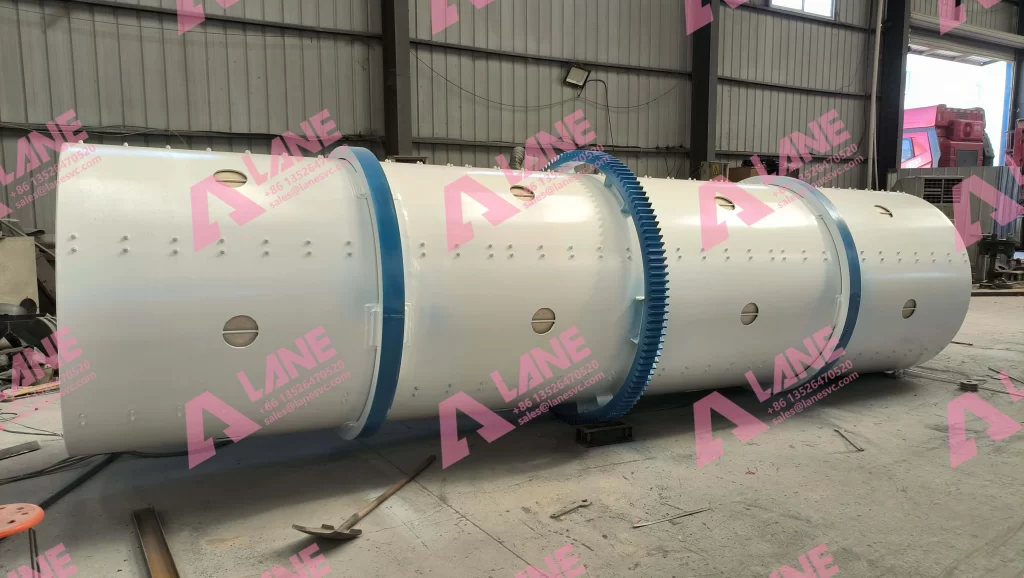
Fresh granules contain 15–20% moisture, which is too high for safe storage. LANE’s rotary dryers use hot air to reduce moisture to 10–12% while safely preserving nutrient content. They are available in direct and indirect heating configurations.
Rotary Coolers
After drying, granules are hot and require cooling to prevent caking during storage. LANE’s counter-flow coolers reduce product temperature using ambient air.
Vibrating Screens
Screening separates on-size granules (2–5mm) from oversized and undersize granules. LANE’s rotary screening machine separates these fractions. Oversized and undersize granules are crushed and re-enter the granulator.
LANE’s bagging machines feature:
Quality Control
Complete post-processing ensures your organic fertilizer production line from cocoa processing waste delivers a premium, market-ready product.
LANE offers fully customizable organic fertilizer production lines from cocoa processing waste to match your specific requirements.
Standard Specifications
| Parameter | Small-Scale Line | Medium-Scale Line | Large-Scale Line |
| Capacity | 1-3 t/h | 3-10 t/h | 10+ t/h |
| Power Supply | 220V/380V, 50Hz | 380V, 50Hz | 380V/660V, 50Hz |
| Granule Size | 2-5 mm | 2-5 mm | 2-5 mm |
| Control System | Manual/Semi-Auto | PLC Automatic | PLC with SCADA |
| Equipment Material | Carbon Steel | Carbon Steel/Stainless | Carbon Steel/Stainless |
| Warranty | 5 years | 5 years | 5 years |
Customization Options
Q1: What types of cocoa processing waste can be used in the production line?
A: Your organic fertilizer production line from cocoa processing waste can process cocoa pod husks, seed coats, bean embryos, and even rejected cocoa beans. Pod husks constitute the largest volume and are richest in potassium, making them ideal for fertilizer production.
Q2: How long does it take to set up a complete production line?
A: LANE typically delivers and installs an organic fertilizer production line from cocoa processing waste within 60-90 days of order, depending on line complexity and customization requirements. Site preparation should begin beforehand.
Q3: Do I need special permits to operate this type of facility?
A: Requirements vary by location, but most regions require environmental permits for waste processing facilities. LANE’s certified production lines are designed to meet international standards for emissions, odor control, and worker safety, facilitating permit approval.
Q4: What is the minimum investment required?
A: A basic small-scale organic fertilizer production line from cocoa processing waste (1-3 t/h) starts at approximately $70,000-$100,000, including core equipment. Full turnkey solutions with buildings and infrastructure range higher. Contact LANE for a detailed quote based on your specific needs.
Q5: Can I add other organic materials to my cocoa waste line?
A: Absolutely. LANE’s production lines are designed for material flexibility. You can co-process cocoa waste with animal manure, crop residues, or other agricultural byproducts to optimize nutrient content and volume.
Q6: How do I ensure my final product meets organic certification standards?
A: LANE’s certified production lines include documented processes, temperature monitoring, and traceability systems that satisfy organic certification requirements. We recommend working with a local certifying body from the planning stage.
Q7: What after-sales support does LANE provide?
A: Every organic fertilizer production line from cocoa processing waste from LANE includes:
Henan Lane Heavy Industry Machinery Technology Co., Ltd.
Email: sales@lanesvc.com
Contact number: +86 13526470520
Whatsapp: +86 13526470520