
Table of Contents
Organic Sugarcane Bagasse Compost is a premium organic fertilizer made from sugarcane bagasse. Sugarcane bagasse is the fibrous residue left after sugarcane juice extraction and is rich in cellulose, hemicellulose, and organic matter. Sugar mills generate massive volumes of bagasse. Instead of being discarded or used as low-value fuel, sugarcane bagasse can be transformed into high-quality compost which can enhance soil fertility, improve crop yields, and promote sustainable agriculture. Organic Sugarcane Bagasse Compost is eco-friendly, biodegradable, and free of harmful additives, making it ideal for organic agriculture, horticulture, and soil remediation.
The demand for organic fertilizer is increasing and Organic Sugarcane Bagasse Compost has gained attention from farmers and agricultural industries worldwide. Using advanced machinery from LANE Heavy Industry, producing this compost efficiently has become more accessible than ever. This complete guide details every aspect of Organic Sugarcane Bagasse Compost production using LANE Heavy Industry’s state-of-the-art production line.
There are multiple advantages of using Organic Sugarcane Bagasse Compost. They are:
By choosing Organic Sugarcane Bagasse Compost, farmers not only improve crop health but also contribute to a sustainable agricultural ecosystem.
LANE Heavy Industry is a global leader in manufacturing composting machinery. Our production line for Organic Sugarcane Bagasse Compost combines automation, precision, and efficiency. Our designed and manufactured equipment ensures uniform compost quality while minimizing manual labor. Key highlights of LANE’s machinery include:
This production line is designed to produce high-quality Organic Sugarcane Bagasse Compost at industrial scales while maintaining eco-friendly operations.
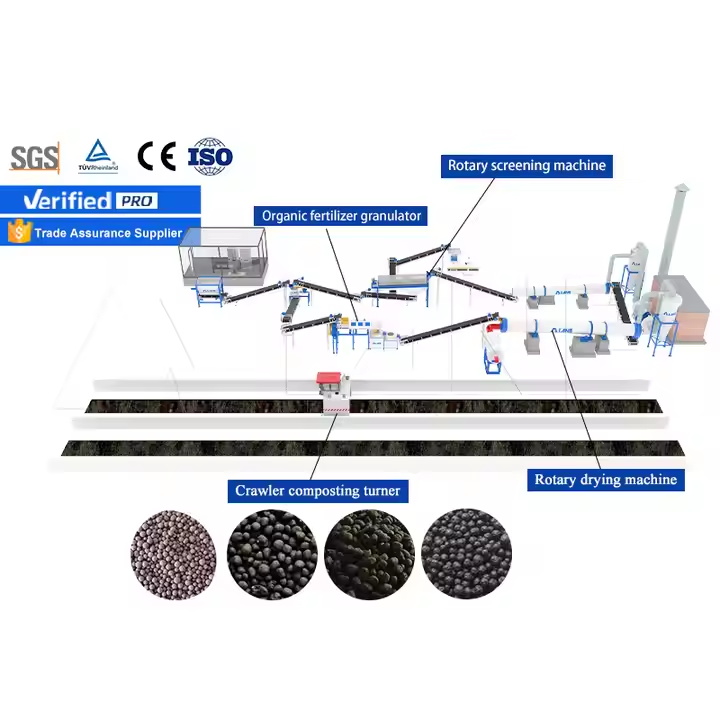
4.1 Collection and Preparation of Sugarcane Bagasse
The process starts with collecting fresh sugarcane bagasse directly from sugar mills. Proper storage is essential to prevent spoilage or contamination. The raw material storage area should be separated from the composting area. Bagasse is often sun-dried or mechanically dehydrated to reduce moisture content to an optimal level for composting.
4.2 Grinding and Mixing
The bagasse is fed into shredders or grinders from LANE Heavy Industry. These machines break down fibers to improve microbial accessibility during composting. After grinding, the bagasse is mixed with other organic materials such as manure, crop residues, or bio-waste to balance carbon-to-nitrogen ratios (25–30:1 is optimal).
4.3 Composting Process
The mixed material is first placed in a composting unit or in windrow formation where aerobic decomposition occurs. LANE Heavy Industry provides aerated compost turners, which:
During this stage, microbes break down organic matter and transform sugarcane bagasse into nutrient-rich Organic Sugarcane Bagasse Compost.
4.4 Screening and Packaging
After composting, the material is screened using LANE’s vibrating screener to remove impurities and pebbles. The finished compost is then packaged for distribution. LANE also provides a granulation production line. The manufacturer can use the granulation production line to create granules and custom formulations. Granulated fertilizer has higher revenue.
LANE Heavy Industry offers specialized machinery for each step in the production of Organic Sugarcane Bagasse Compost:
Each machine is designed to optimize efficiency, reduce labor costs, and maintain the high quality of Organic Sugarcane Bagasse Compost.
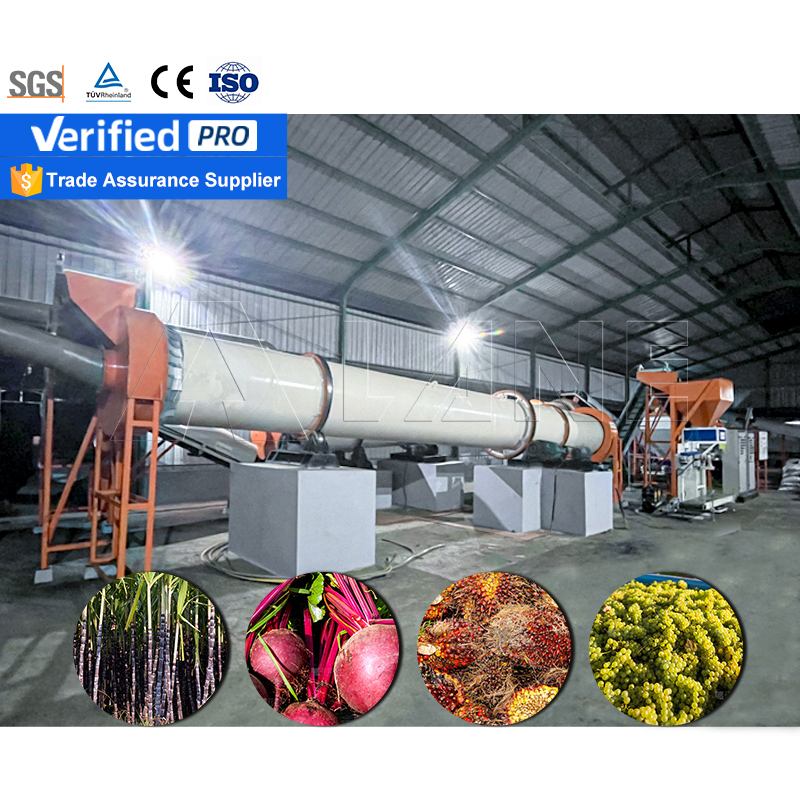
Producing high-grade Organic Sugarcane Bagasse Compost requires consistent quality control. Key measures include:
LANE Heavy Industry provides compost testing kits for monitoring composting systems to allow real-time adjustments to improve compost quality.
Organic compost production offers multiple benefits:
By adopting LANE Heavy Industry’s machinery, producers can maximize both environmental and economic gains while supplying top-quality Organic Sugarcane Bagasse Compost to the agricultural market.
While producing Organic Sugarcane Bagasse Compost is rewarding, it comes with challenges:
LANE Heavy Industry provides solutions through advanced machinery and process guidance to overcome these challenges efficiently.
Q1: What is Organic Sugarcane Bagasse Compost used for?
It is used as a natural fertilizer to improve soil fertility, water retention, and crop yields.
Q2: How long does the composting process take?
With LANE Heavy Industry’s machinery, composting typically takes 2–4 weeks.
Q3: Can other organic materials be added?
Yes, mixing with manure, crop residues, or bio-waste enhances nutrient balance.
Q4: What makes LANE Heavy Industry’s production line unique?
LANE provides automated, high-capacity machinery ensuring consistent, high-quality Organic Sugarcane Bagasse Compost production.

Henan Lane Heavy Industry Machinery Technology Co., Ltd.
Email: sales@lanesvc.com
Contact number: +86 13526470520
Whatsapp: +86 13526470520