
Plant-based organic fertilizers are made from agricultural wastes like straw, corn stalks, soybean residue, and mushroom substrate. This type of organic fertilizer nourishes soil, enhances microbial activity, and promotes long-term crop productivity. As farmers and manufacturers move away from chemical inputs, the demand for plant-based organic fertilizer production is skyrocketing. To achieve efficient, consistent, and high-quality plant-based organic fertilizer production, manufacturers need advanced specialized machinery.
LANE Heavy Industry, a leading manufacturer of fertilizer production equipment, offers a complete, tailored production line designed to streamline every stage of plant-based organic fertilizer production. This article explores the essential equipment required for a successful production line, showcasing how LANE’s technology drives the future of plant-based organic fertilizer production.
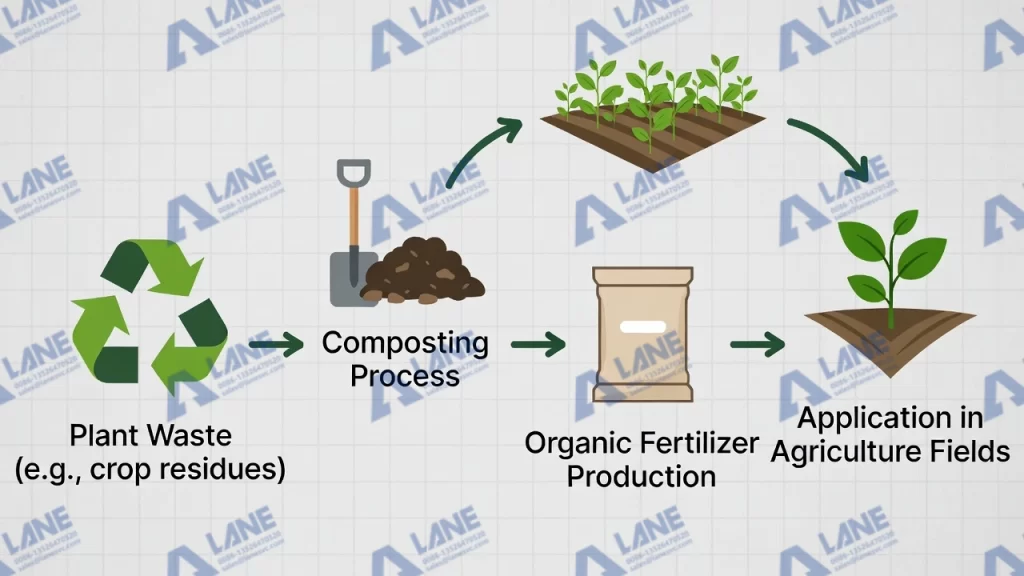
Table of Content
The first step of the production is the raw material preparation. In plant-based organic fertilizer production, inputs can range from straw and rice husks to soybean meal and grass clippings. These materials arrive in inconsistent sizes and moisture levels and need processing.
The first essential station is the crushing/shredding system. LANE Heavy Industry offers high-efficiency crushers specifically designed to handle fibrous plant material. It reduces the raw materials to a uniform size. By doing this, it increases the surface area and increases microbial activity during fermentation.
The transformation of raw plant matter into a stable, nutrient-rich organic fertilizer depends on controlled decomposition. This is the most important stage of plant-based organic fertilizer production. Improper fermentation can leave pathogens and weed seeds or fail to stabilize the nitrogen content of the compost.
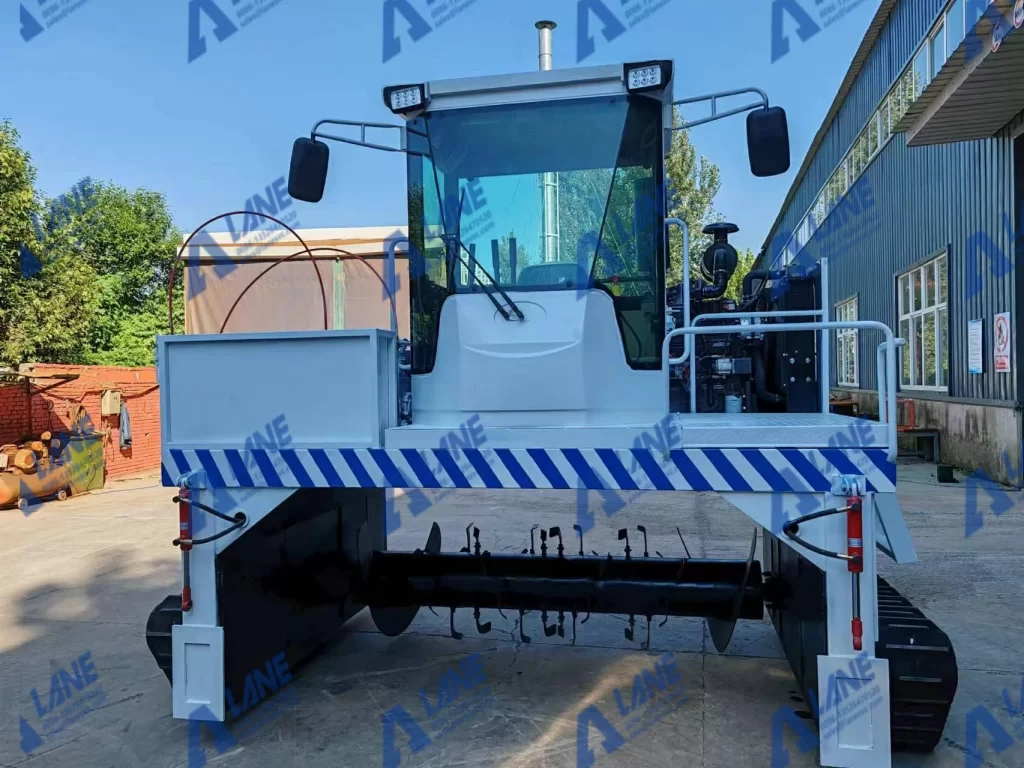
For operations with ample space, LANE’s Crawler Compost Turner represents the pinnacle of efficiency. This machine integrates turning, crushing, and water spraying functions. It reduces the composting time from 6–12 months to weeks. For producers who handle thousands of tons annually, this technology ensures that the plant-based organic fertilizer production process is both environmentally compliant and nutrient-preserving.
For producers with limited space or strict environmental requirements, LANE provides Aerobic Fermentation Tanks. These vertical or horizontal closed vessels accelerate the decomposition process from weeks to days. You can fully control temperature, oxygen, and humidity in these systems. These tanks ensure that the plant-based material is fully pasteurized and stabilized, ready for the next stage of production.
Once the compost is mature, producers can directly sell it. But it will fetch a lower price as compost clumps are dusty and hard to spread using modern technology. Granulation is the way to move forward. Granulation turns fine, dusty powder into easy-to-handle, uniform granules. This step adds significant value to plant-based organic fertilizer production.
The compost is first conveyed to the vertical crusher or semi-wet crusher. There the composts are turned into fine powder. This is necessary for uniform granulation.
LANE Heavy Industry’s flagship innovation in this area is the Stirring Pin Granulator. This machine is vital for plant-based inputs, which can vary in fiber content and adhesion properties. The internal pins or blades refine the shape and ensure uniformity of the granules. Our granulators have up to 97% granulation rate.
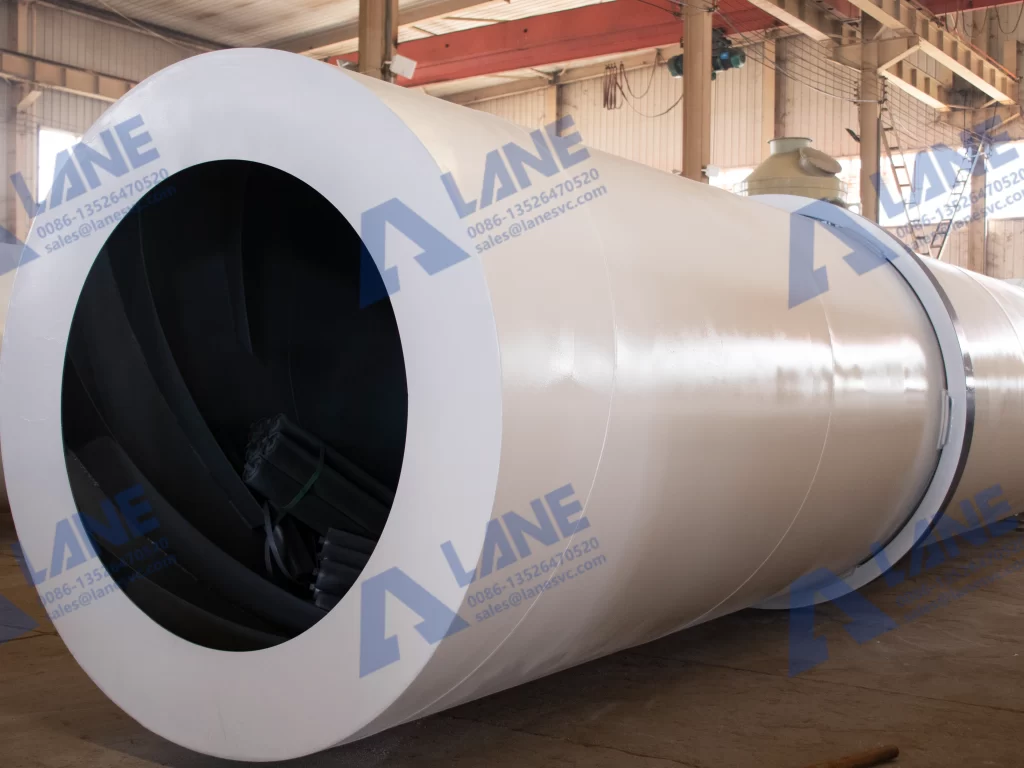
After granulation, the soft granules must be hardened for storage and transport. The granules are conveyed to the Rotary Dryer and Rotary Cooler. They are essential components in this phase of plant-based organic fertilizer production. These drums are created for optimal airflow that reduces moisture content and cools the granules without scorching the organic matter.
Following thermal treatment, the granules are moved to a Rotary Screening Machine. This equipment separates on-size product from oversize lumps and undersize fines. LANE production line is a closed-loop system. We send the off-spec material back to the crusher to re-enter the production, ensuring zero waste in the production cycle.
Automation and Precision: The Control Hub
Modern plant-based organic fertilizer production is all about the proper integration of the whole system. LANE offers centralized PLC Control Systems that monitor the entire process from the control room. These systems provide technical data to operators and allow them to modify and control the production line from a single point.
Modern plant-based organic fertilizer production requires specialized, efficient machinery to convert plant waste into high-quality, market-ready fertilizer, and LANE Heavy Industry delivers exactly that. Investing in LANE plant-based organic fertilizer production is an investment in the future of farming. From the initial crushing of crop residues to the final packaging of uniform granules, LANE Heavy Industry provides the machinery required to turn green waste into gold.
Whether you are a small-scale farmer or a large enterprise, LANE’s tailored solutions, advanced technology, and reliable after-sales support make it the ideal partner for your plant-based organic fertilizer production journey. By integrating advanced fermentation tanks, versatile Stirring Pin Granulators, and precision screening systems, LANE ensures that producers can meet the growing global demand for sustainable soil solutions.
Q: What types of plant-based raw materials can LANE equipment process?
A: LANE production lines are highly versatile. They can process a wide range of materials including crop residues (straw, stalks), oilseed meals (soybean meal, castor bean meal), grass clippings, leaves, and processing wastes like wine grains or bagasse. The system is designed to handle fibrous and high-cellulose content common in plant-based organic fertilizer production.
Q: How long does it take to set up a complete production line from LANE?
A: For a complete plant-based organic fertilizer production line, the manufacturing lead time at the LANE factory is typically no more than 30 days. After shipping, LANE engineers can provide on-site installation guidance and worker training to ensure the line is operational quickly.
Q: What is the advantage of the “Film-Covered” compost turner over open-air composting?
A: The LANE Film-Covered Compost Turner allows for turning the pile without removing the membrane. This significantly reduces odor emissions (by over 90%) and nutrient loss through nitrogen volatilization. It also allows for year-round operation regardless of weather, making plant-based organic fertilizer production more consistent and environmentally friendly.
Q: Can I produce different granule sizes with the same line?
A: Yes. LANE granulators, particularly the Two-in-One model, allow for adjustments in granule size. For machines like the pellet mill or granulator, changing the ring die or adjusting the rotor speed can produce different particle diameters to meet specific crop or market requirements.
Q: What after-sales support does LANE provide?
A: LANE Heavy Industry offers comprehensive support including a 5-year warranty on equipment, online video instruction, and the availability of engineers for overseas service. They also provide free raw material testing to determine the best machine configuration for your specific plant-based inputs.
Henan Lane Heavy Industry Machinery Technology Co., Ltd.
Email: sales@lanesvc.com
Contact number: +86 13526470520
Whatsapp: +86 13526470520