
Table of Contents
Every year, millions of tons of animal manure are generated by the livestock industry. This manure, if not properly treated, can become a major environmental burden. These manures can pollute soil, water, and air if not properly handled. However, this organic waste holds potential to be raw material for organic fertilizer. The production of organic fertilizer from animal manure is a waste management solution which bridges the gap between waste and resource by turning animal manure into nutrient-rich fertilizer that nourishes soil and boosts crop yields.
LANE Heavy Industry, a leader in agricultural machinery, has mastered the art of the production of organic fertilizer from animal manure. We offer a complete, automated production line that makes this transformation efficient, cost-effective, and eco-friendly.
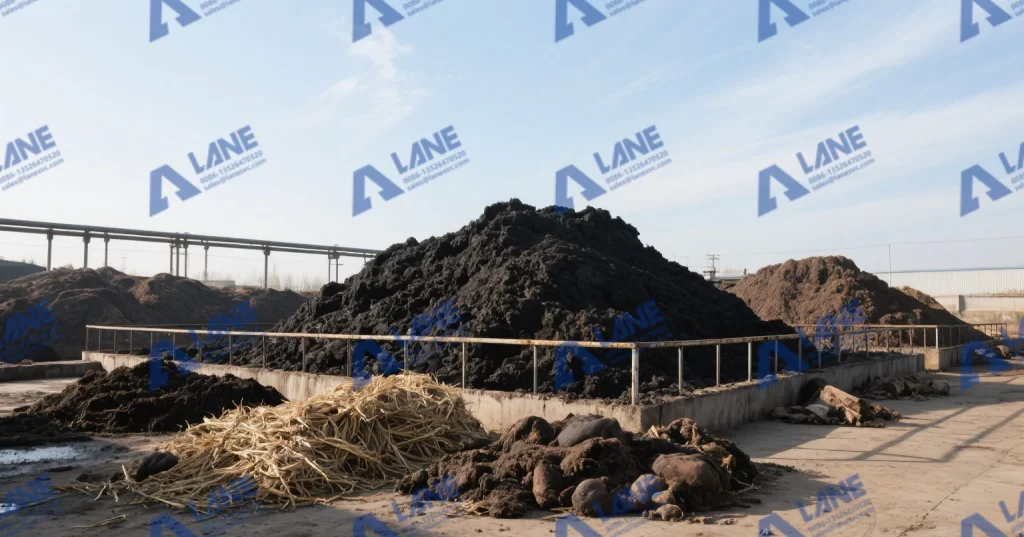
Organic fertilizer helps maintain soil fertility, improves crop yields, and promotes sustainable farming. Organic fertilizer made from animal waste provides a balanced mix of nutrients, beneficial microorganisms, and organic matter that enhance soil structure and long-term productivity. The production of organic fertilizer from animal manure ensures a natural cycle of nutrient replenishment.
Animal manure is one of the most abundant and nutrient-dense raw materials available for organic fertilizer production. It contains essential nutrients like nitrogen, phosphorus, and potassium, which are critical for plant growth. Through the production of organic fertilizer from animal manure, these nutrients are stabilized and made readily available for crops, reducing environmental pollution caused by raw manure runoff.
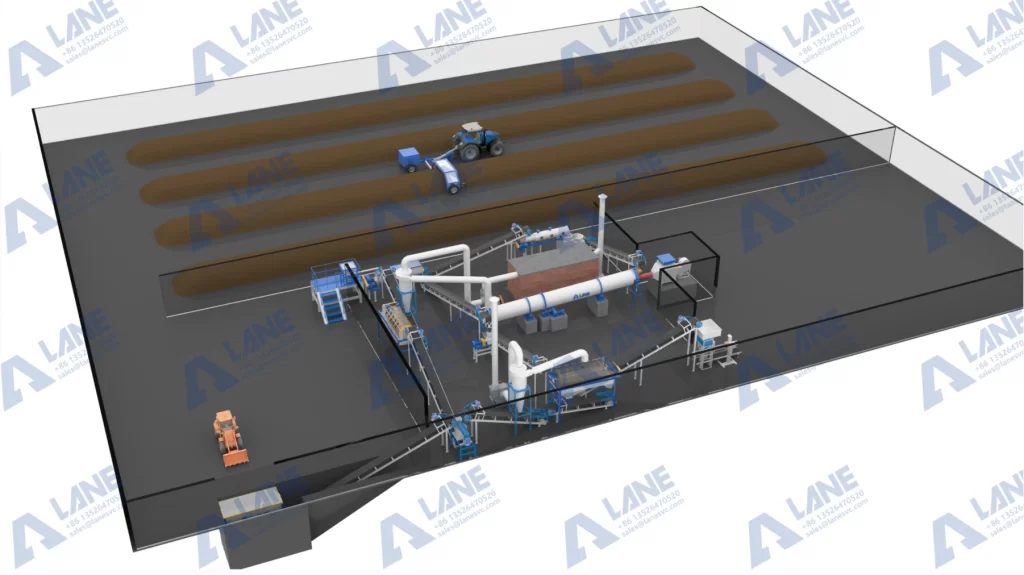
LANE Heavy Industry has developed a full line of machinery to streamline the production of organic fertilizer from animal manure. Our equipment ensures efficiency, scalability, and quality control at every stage of the production process. From composting machines to granulators, dryers, and packaging units, LANE’s machinery is designed for performance and energy efficiency.
5.1 Collection and Preprocessing
The first step in the production of organic fertilizer from animal manure involves collecting manure from livestock farms. These raw materials may include cow dung, chicken litter, pig manure, and other organic residues. Preprocessing includes removing impurities and adjusting moisture content to prepare the material for composting. LANE’s preprocessing equipment ensures uniformity and prevents clogging during subsequent steps.
Composting is a crucial step where microorganisms break down organic matter, killing pathogens and stabilizing nutrients. LANE Heavy Industry offers turning machines and composting machines that maintain optimal temperature, moisture, and aeration levels. This step determines the final quality of the fertilizer. The production of organic fertilizer relies on controlled composting for final product quality to ensure the compost is safe, nutrient-rich, and odor-free.
After composting, the raw material is ready for granulation. Granulation converts loose compost into uniform, easy-to-handle round granules. LANE’s granulators use advanced technology to produce granules of consistent size, enhancing storage, transportation, and application efficiency. Granulation is a defining step in the production of organic fertilizer from animal manure, making the fertilizer more marketable.
Moisture content in fertilizer affects storage life and nutrient stability. LANE’s rotary drum dryers and coolers efficiently reduce moisture while maintaining nutrient integrity. Drying and cooling prevent caking, microbial growth, and nutrient loss of the organic fertilizer.
The cooled granules are then conveyed to the screening machine to remove oversized granules and fines from on-size granules. They are then sent to a crushing machine to be recycled back into the production line. Packaging machinery then prepares the final product for distribution. LANE’s automated systems optimize the production of organic fertilizer from animal manure, enabling large-scale operations with minimal labor input.
The production of organic fertilizer from animal manure offers many benefits:
The production of organic fertilizer from animal manure addresses the challenge of waste management and soil degradation. Properly processed animal manure reduces greenhouse gas emissions and prevents water pollution. Economically, farmers benefit from lower input costs and potential sales of organic fertilizer. LANE Heavy Industry’s machinery makes this process scalable, reliable, and cost-effective.
Future Trends in Fertilizer Production
With growing global demand for sustainable agriculture caused by environmental policy and the growing demand for organically produced food, the production of organic fertilizer from animal manure is set to expand. Future trends include:
LANE Heavy Industry is at the forefront of these innovations. Our engineered machines can handle a large type of raw material and we provide fully automatic modular production lines.
The production of organic fertilizer from animal manure is a waste management solution and a vital step toward sustainable agriculture and environmental protection. It represents a vital intersection of agriculture, sustainability, and innovation. With LANE Heavy Industry’s advanced machinery, farms can transform waste into wealth, protect the environment, and foster long-term soil fertility. Our optimized production line is accessible, efficient, and cost-effective for farmers and businesses worldwide.
Turning animal manure into nutrient-rich fertilizer is not just a technical process—it’s a commitment to a cleaner, greener, and more sustainable future. LANE is helping farmers and agribusinesses turn the tide on waste, reduce environmental pollution, and support the growth of healthy, sustainable agriculture.
Q1: What types of animal manure can be used?
A: Cow dung, chicken litter, pig manure, and other livestock residues are suitable for the production of organic fertilizer from animal manure.
Q2: How long does the production process take?
A: Depending on the composting and drying stages, the process may take 15–30 days for complete nutrient stabilization.
Q3: Is this fertilizer safe for crops?
A: Yes. Properly processed fertilizer from animal manure is free from pathogens and safe for all types of crops.
Q4: Can LANE machinery handle large-scale operations?
A: Absolutely. LANE Heavy Industry designs machinery for both small-scale and industrial-scale production of organic fertilizer from animal manure.
Henan Lane Heavy Industry Machinery Technology Co., Ltd.
Email: sales@lanesvc.com
Contact number: +86 13526470520
Whatsapp: +86 13526470520