
Table of Contents
Every day, around 90 million tons of agricultural waste is generated worldwide. Among them, around 50% are burned, landfilled, or abandoned. Agricultural waste, such as crop straw, livestock manure, and fruit and vegetable residues, is raw material for organic fertilizer. Soil amendment from agricultural waste offers a transformative solution. By converting these agricultural wastes into high-value soil conditioners, we can improve soil structure, enhance soil fertility, and promote sustainable agricultural development.
Soil amendment from agricultural waste increases water retention by 15–20% and locks away carbon in the soil. This improves crop yields by 9–11% on average. LANE Heavy Industry Machinery Technology Co., Ltd. stands at the forefront of this green revolution. We provide solutions for producing soil amendment from agricultural waste.
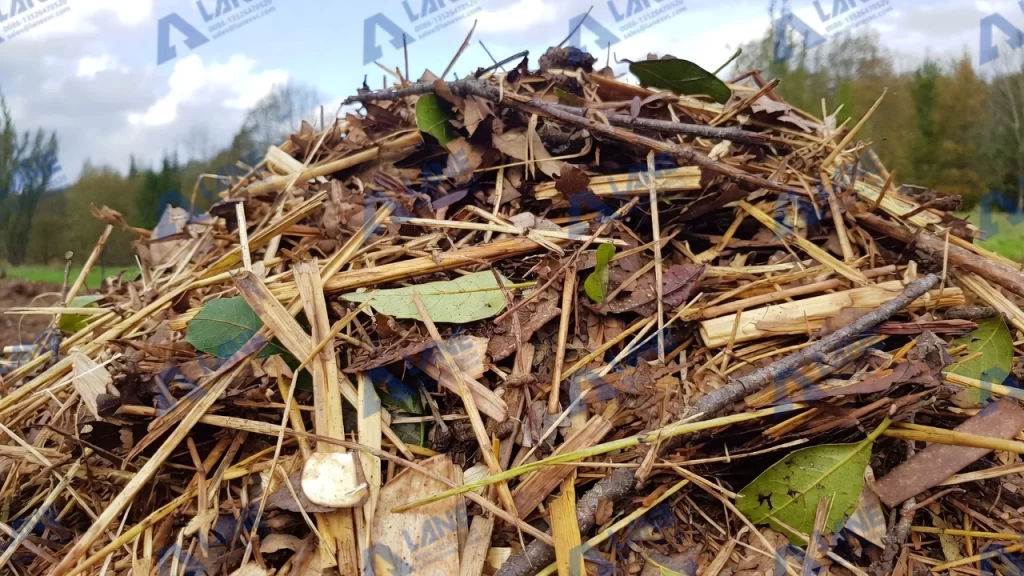
The production of high-quality soil amendment begins with proper raw material selection and preparation. LANE engineered and designed machines can accommodate a diverse range of raw materials.
Acceptable Raw Materials
Machines from LANE can process various agricultural wastes, including:
Initial Processing Steps
The production of soil amendment from agricultural waste begins with:
The heart of the soil amendment from agricultural waste production line is the fermentation process. This stage decomposes organic matter, kills pathogens and weed seeds, and stabilizes nutrients for long-term soil benefits.
LANE’s Fermentation Solutions
Crawler Compost Turner: LANE’s crawler compost turner is ideal for large-scale operations with large land. This machine:
Aerobic Fermentation Tank: For operations that require controlled environments, LANE offers vertical and horizontal aerobic fermentation tanks. This process follows these steps:
Proper fermentation produces soil amendment with enriched NPK content and optimal C/N ratios.
After fermentation, the material requires further processing to ensure uniformity and optimal particle size for subsequent granulation.
After fermentation, the composted humus is chunky and needs to be crushed to get a uniform size for better mixing and granulating. The crushing stage ensures that all components of the soil amendment from agricultural waste are uniformly sized for consistent application.
Horizontal Mixers
LANE’s horizontal mixing machines blend crushed materials with additives to create custom formulations and ensure even nutrient distribution. This step is essential when producing specialized formulations such as phosphorus-rich organic fertilizers that combine organic matter with phosphate rock powder.
This stage allows producers to customize their formulations and helps them create specialized, custom soil amendment from agricultural waste based on specific crop, soil type, or regional agricultural needs.
Granulation transforms mixed organic compost into uniform, easy-to-handle particles. Granulated soil amendment offers several practical advantages including ease of handling, controlled nutrient release, and compatibility with mechanized application.
LANE Granulation Equipment
Rotary Drum Granulators: This granulator produces uniform granules through tumbling action. It’s ideal for large-scale production of soil amendment from agricultural waste. The rotary motion builds layers of material onto nuclei, creating strong spherical granules.
Disc Granulators: For smaller operations or specialized products, LANE’s disc granulator offers precise control over size and shape.
Well-formulated granules exhibit favorable bulk density, wettability, and durability. These properties ensure that the soil amendment is effective in the field.
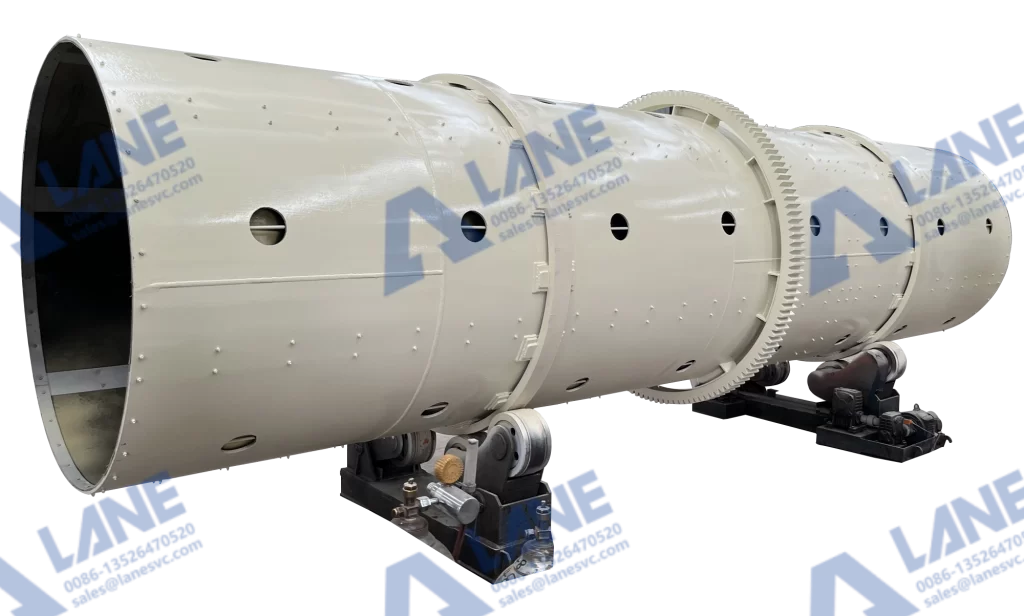
After granulation, the soil amendment from agricultural waste requires further processing to ensure stability, longevity, and uniform quality.
Granule size from 2–5mm is preferred for even distribution during field application.
The final stage of the production line focuses on quality control and preparing the product for market usage. LANE’s automatic packaging machines accurately weigh the final granulated fertilizer and efficiently bag the final product for storage and distribution. The packaging system ensures accurate weights, secure sealing, and attractive presentation for market sale.
LANE Heavy Industry integrates environmental protection measures into the soil amendment from agricultural waste production line.
Emission Control Systems
Energy Efficiency
LANE equipment is energy efficient. Our energy-saving design reduces operational costs while maintaining productivity.
LANE’s equipment incorporates energy-saving designs that reduce operational costs while maintaining productivity. The company’s commitment to sustainability extends beyond the products to the production process itself. All our machines carry ISO and CE certification. This guarantees the highest quality standards with warranty periods extending to 5 years after shipment.
Q1: What raw materials can be used to produce soil amendment from agricultural waste?
LANE’s production line processes animal feces, straw, weeds, leaves, rice chaff, wine grains, sawdust, sugarcane bagasse, vegetable waste, fruit peels, and various other agricultural byproducts. The versatility of the system allows producers to utilize locally available waste streams.
Q2: How long does it take to set up a complete production line?
For single machines, production time is approximately 7 days. For a complete soil amendment from agricultural waste production line, LANE’s production time is no more than 30 days.
Q3: Do you provide training for operating the production line?
Yes. LANE engineers instruct site workers on machine installation, workshop configuration, and production line operation. They conduct field tests and provide comprehensive training to ensure workers can operate the equipment effectively.
Q4: Can I produce different granule sizes with the same production line?
Absolutely. LANE’s production line is multifunctional, offering customizable ring mounds of different sizes, allowing you to easily adjust the size of your final soil amendment from agricultural waste granules.
Q5: What quality certifications do LANE machines have?
All LANE machines have passed ISO and CE certification, with warranty periods extending to 5 years after shipment date.
Q6: How do I choose the right production line for my needs?
Simply provide information about your raw materials, desired capacity (tons/hour), and preferred final particle size. LANE’s technical team will recommend the most suitable machines for your specific situation.
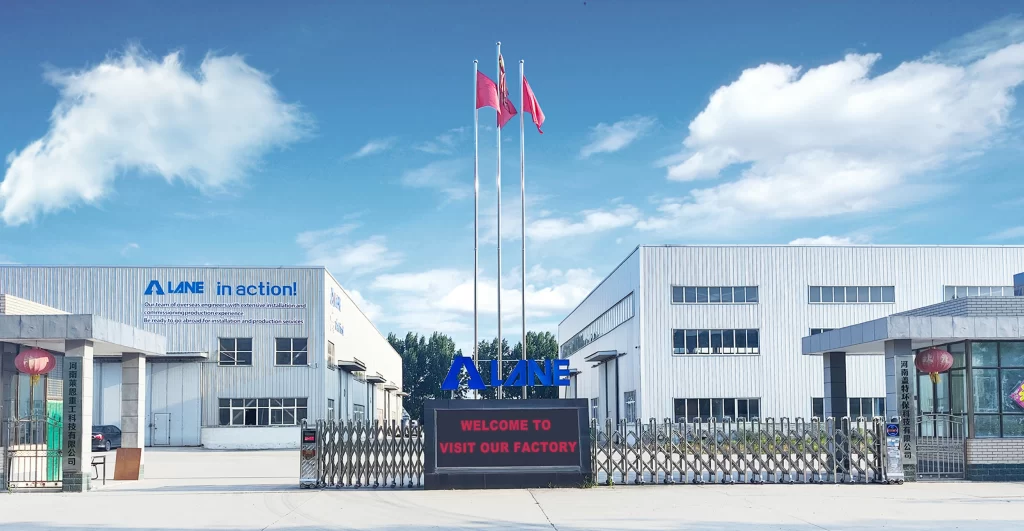
Henan Lane Heavy Industry Machinery Technology Co., Ltd.
Email: sales@lanesvc.com
Contact number: +86 13526470520
Whatsapp: +86 13526470520