
Table of Contents
The organic fertilizer industry in the Philippines is witnessing steady growth due to rising demand for sustainable agriculture. It is increasing the demand for organic fertilizer. For entrepreneurs and investors who are looking to capitalize on this trend, understanding the 3 T/H organic fertilizer production plant cost in Philippines is crucial for making informed decisions and planning a successful venture.
This article explores the production line offered by LANE Heavy Industry and provides insights into setup costs, machinery, and production efficiency. This article provides a detailed breakdown of the 3 T/H organic fertilizer production plant cost in Philippines along with production insights using machinery from LANE Heavy Industry.
LANE Heavy Industry Machinery Technology Co., Ltd. brings decades of experience to the Philippine market. We offer advanced state-of-the-art solutions for organic fertilizer production. Our 3 T/H production line represents the ideal entry point for small to medium-scale commercial operations.
Key Features of LANE’s 3 T/H System
The 3 T/H capacity is well-suited for Philippine operations. When evaluating the 3 T/H organic fertilizer production plant cost in Philippines, many investors find that this capacity offers an excellent balance between investment cost and production efficiency. This production line processes approximately 24 tons of finished fertilizer in an 8-hour shift. It’s enough to supply a substantial network of local farms while maintaining manageable raw material procurement logistics.
Understanding the production process is essential for calculating the 3 T/H organic fertilizer production plant cost in Philippines. LANE’s complete system encompasses every stage from raw material reception to finished product packaging.
Stage 1: Raw Material Preparation and Fermentation
The process begins with collecting organic materials. The raw materials are chicken manure, rice straw, coconut coir, and other agricultural wastes abundant in the Philippines. A compost turner aerates the windrows, accelerating decomposition and eliminating pathogens. We also offer fermentation tanks for enclosed and faster fermentation.
Stage 2: Crushing and Grinding
Fermented materials pass through LANE’s heavy-duty semi-wet crusher. They are engineered to handle fibrous Philippine agricultural wastes. This step is critical for granulation size consistency.
Stage 3: Mixing and Batching
Precise nutrient formulation requires thorough mixing. LANE’s horizontal mixers ensure uniform distribution of micronutrients and additives. It allows Philippine producers to create customized fertilizer blends tailored to local crop requirements.
The heart of any production line is the granulation system. LANE’s disc granulators or stirring pin granulators transform powdered compost into uniform, market-ready pellets. For the 3 T/H capacity, the rotary drum granulator offers superior throughput and pellet quality.
Fresh granules contain excess moisture that must be removed for storage stability and to prevent the granules from caking. LANE’s rotary dryers and coolers are energy-efficient machines. They ensure that the final product moisture content meets quality standards.
Stage 6: Screening and Polishing
After drying and cooling, the granules are sent to the screening machine. It separates on-size granules from overs and fines, which are recycled back into the process. This quality control step ensures consistent product appearance.
The final stage utilizes LANE’s automatic packaging scales, efficiently bagging finished fertilizer for distribution to Philippine farms and retailers.
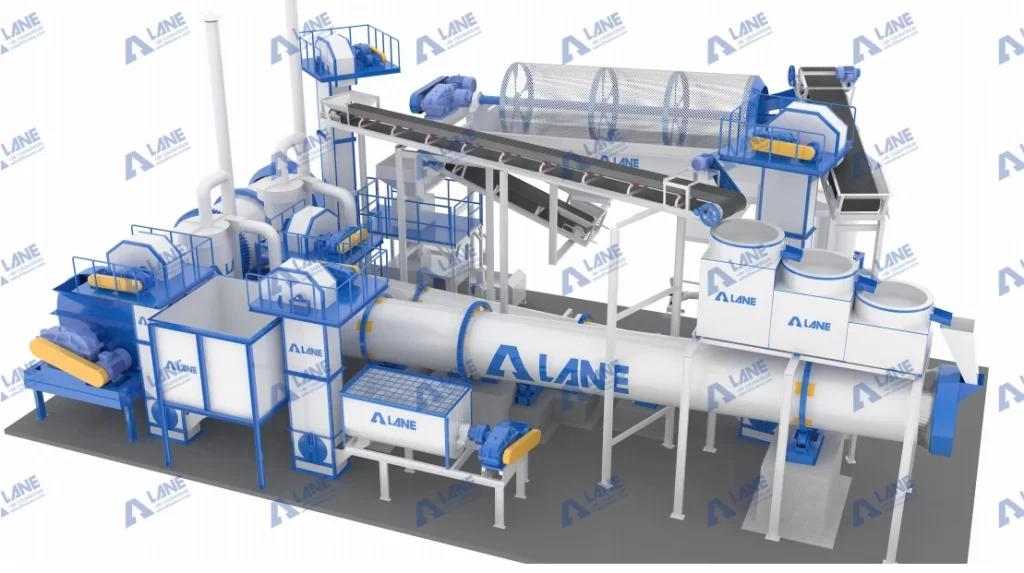
When evaluating the 3 T/H organic fertilizer production plant cost in Philippines, investors must consider both capital expenditure (CAPEX) and operating expenses (OPEX). Based on industry data and LANE’s equipment specifications, here’s a comprehensive breakdown.
Capital Expenditure (CAPEX) Breakdown
| Cost Component | Estimated Range (PHP) | Percentage of Total |
| Land and Site Preparation | 2,500,000 – 4,000,000 | 10-15% |
| Building and Civil Works | 3,500,000 – 5,500,000 | 15-20% |
| LANE Processing Equipment | 12,000,000 – 18,000,000 | 50-60% |
| Installation and Commissioning | 1,500,000 – 2,500,000 | 5-8% |
| Utilities and Electrical | 1,200,000 – 2,000,000 | 4-7% |
| Permits and Licensing | 300,000 – 500,000 | 1-2% |
| Total Estimated CAPEX | 21,000,000 – 32,500,000 | 100% |
The equipment portion represents the largest investment in the 3 T/H organic fertilizer production plant cost in Philippines. LANE’s comprehensive package includes all machinery from fermentation through packaging, ensuring compatibility and warranty coverage.
Operating Expenses (OPEX) – Monthly
| Expense Category | Estimated Monthly Cost (PHP) |
| Raw Materials (manure, crop residues) | 450,000 – 650,000 |
| Labor (8-12 personnel) | 240,000 – 360,000 |
| Electricity and Fuel | 180,000 – 250,000 |
| Equipment Maintenance | 50,000 – 80,000 |
| Packaging Materials | 120,000 – 180,000 |
| Transportation and Logistics | 100,000 – 150,000 |
| Administrative and Overhead | 80,000 – 120,000 |
| Total Monthly OPEX | 1,220,000 – 1,790,000 |
these are an estimate of the actual Operating Expenses (OPEX).
Raw material costs significantly influence the 3 T/H organic fertilizer production plant cost in Philippines. Fortunately, the Philippines offers abundant agricultural waste like rice hulls, coconut debris, and livestock manures. They are often available at minimal cost or even negative cost.
Several Philippines-specific factors affect the final investment required:
Based on current market prices and operational assumptions, the return on investment for the 3 T/H organic fertilizer production plant cost in Philippines are:
Revenue Potential
Profitability Timeline
With efficient operations and market penetration, producers typically achieve:
Producers who can secure contracts with agricultural cooperatives or government programs can achieve faster ROI.
Selecting the right equipment partner determines the success and equipment integrity of your 3 T/H organic fertilizer production plant cost in Philippines. LANE Heavy Industry offers distinct advantages for Philippine investors:
Proven Southeast Asian Experience
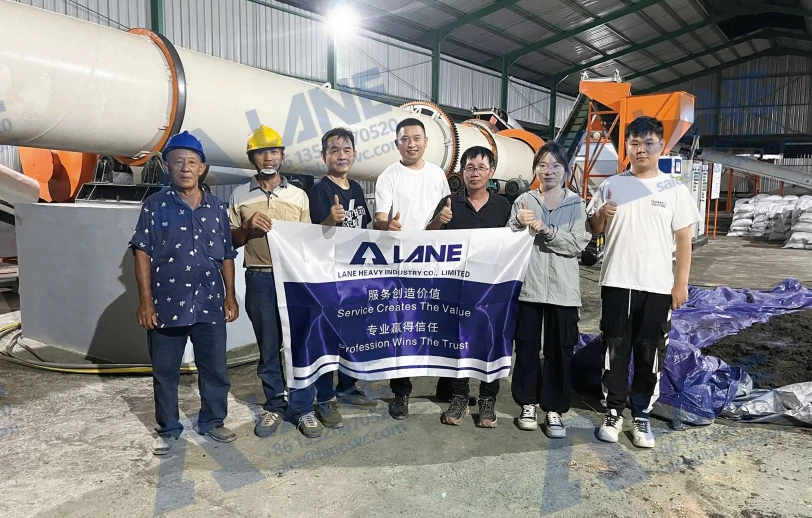
LANE has successfully implemented projects throughout Southeast Asia, including neighboring Indonesia. We addressed challenges common to tropical climates like high humidity, voltage fluctuations, and specialized raw material processing. This experience translates directly to Philippine conditions.
Comprehensive Support
From initial consultation through after-sales service, LANE provides:
Technology Integration
LANE’s commitment to innovation means Philippine producers benefit from:
Q1: What is the exact 3 T/H organic fertilizer production plant cost in Philippines?
A: The complete investment ranges from PHP 21 million to PHP 32.5 million, depending on location, building requirements, and level of automation. Contact LANE’s Philippine representatives for a customized quotation based on your specific needs.
Q2: How long does it take to set up the plant after purchasing equipment?
A: Typical timeline is 3-4 months from order to commercial operation, including equipment manufacturing (30-45 days), shipping (2-3 weeks), installation (3-4 weeks), and commissioning (1-2 weeks).
Q3: What raw materials work best in Philippine conditions?
A: Chicken manure from poultry operations, rice hulls and straw from agricultural areas, coconut coir and husks, and municipal green waste are all excellent feedstock options widely available throughout the Philippines.
Q4: Do I need special permits to operate an organic fertilizer plant?
A: Yes, registration with the Fertilizer and Pesticide Authority (FPA) is required, along with local business permits, environmental compliance certificates, and possibly DENR clearance depending on location.
Q5: Can LANE customize the 3 T/H line for specific Philippine raw materials?
A: Absolutely. LANE specializes in adapting equipment for local conditions, including modifications for high-fiber materials like coconut waste and rice straw.
Q6: What is the minimum land area required?
A: For a complete 3 T/H operation including raw material storage, fermentation area, processing building, and finished product storage, approximately 2,000-3,000 square meters is recommended.
Q7: How many workers are needed to operate the plant?
A: A 3 T/H line typically requires 8-12 personnel including operators, quality control staff, maintenance technicians, and administrative support, depending on automation level.
Q8: What after-sales support does LANE provide for Philippine customers?
A: LANE offers installation supervision, operator training, spare parts supply, and remote technical support. Regional service engineers can visit sites for major issues
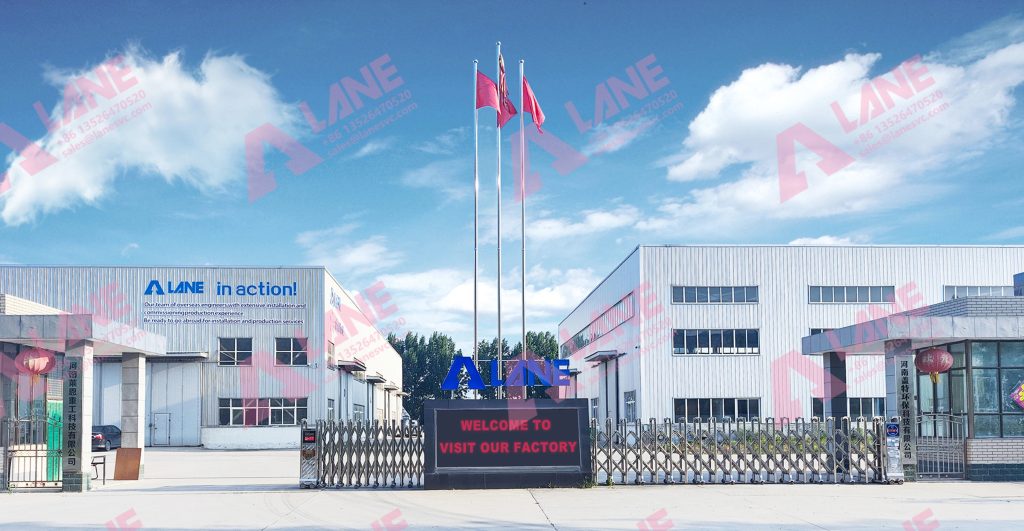
Henan Lane Heavy Industry Machinery Technology Co., Ltd.
Email: sales@lanesvc.com
Contact number: +86 13526470520
Whatsapp: +86 13526470520