
Fermentation is a core process that determines the quality, efficiency, and nutrient value of organic fertilizer. It is a process that transforms organic matter such as animal manure, crop residues, and food waste into stable, nutrient-rich, and plant-safe nutrients. The efficiency, quality, and process time of fermentation depend on the fermentation equipment and technology of the production line.
Aerobic and anaerobic fermentation are the most widely used fermentation routes. They both have their own unique technical characteristics and applicable scenarios. Choosing between them is not just a technical decision; it decides product output, energy balance, and the business model of your operation. LANE Heavy Industry designs and manufactures durable fermentation equipment for both pathways.
The fundamental difference between aerobic and anaerobic fermentation lies in the presence of oxygen.
Aerobic Fermentation (Composting): Aerobic fermentation refers to the process of decomposing and transforming organic matter into harmless and nutrient-rich organic fertilizer under the action of aerobic microorganisms in the presence of sufficient oxygen. This process depends on oxygen-loving microorganisms to break down organic matter. These microorganisms produce heat that reaches temperatures of 55-70°C, which removes pathogens and weed seeds from the organics. The final output is a stable humus material perfect for solid organic fertilizers and soil amendments.
Anaerobic Fermentation (Digestion): Anaerobic fermentation is a biological reaction process in which anaerobic microorganisms decompose organic matter in an oxygen-free environment. It produces organic fertilizer along with biogas. You can repurpose this biogas for energy production, but this fermentation cycle is longer and requires higher equipment sealing. This process produces a nutrient-dense slurry called digestate which can be processed into liquid or solid fertilizer.
Aerobic fermentation requires efficient and consistent oxygen supply, moisture control, and temperature management. This process can be done with a fermentation tank or with a compost turner.
The Role of the Compost Turner:
The role of the compost turner is versatile. A compost turner:
LANE offers a wide range of heavy-duty compost turners for continuous fermentation channels or large-scale windrow systems.
Wheel-Type Windrow Turner: This type of compost turner is ideal for narrow fermentation channels. It’s designed for farmers with a low budget and capacity requirements.
Crawler-Type Compost Turner: Built for large outdoor windrows. This machine features a drum with adjustable flails that lift, shred, and mix the material as it moves. The LANE crawler compost turner is equipped with a water spray system that helps with faster decomposition.
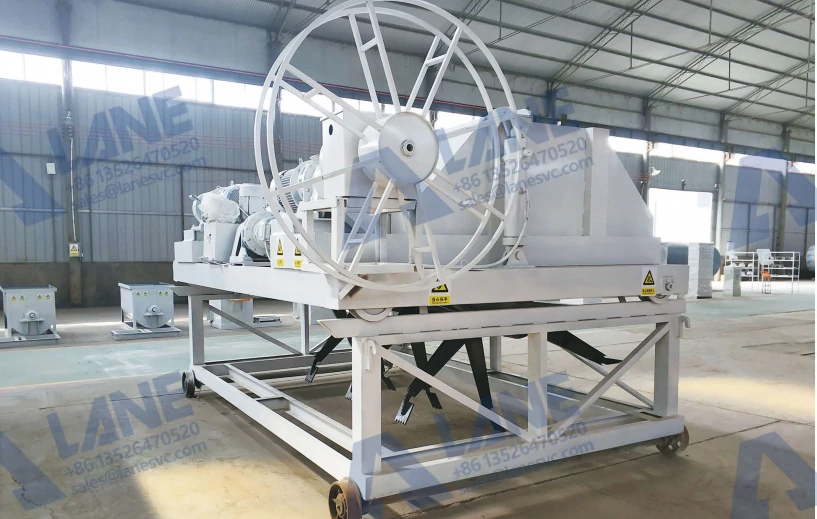
Fermentation Tank: LANE’s aerobic fermentation tank is equipped with automated watering and temperature monitoring systems. This creates a precisely controlled environment for optimal microbial activity and shorter fermentation cycles. The heavy agitation system helps with faster decomposition and removes any air pockets.
Anaerobic systems are a closed, controlled process. The core piece of equipment is the anaerobic digester.
The Sealed Anaerobic Digester:
This is a large, sealed tank where raw organic materials are heated and continuously mixed. It is engineered to maintain strict anaerobic conditions over a period of several weeks.
LANE’s Integrated Anaerobic Systems:
LANE Heavy Industry provides complete anaerobic digestion plants that are customized for your production line.
Complete Mix Digester Tanks: These tanks feature internal mechanical mixers to keep solids in suspension and ensure microbial consistency. This tank is constructed with high-strength steel and advanced insulation.
Biogas Handling & Utilization Package: The LANE digester system includes biogas storage, purification, and can integrate Combined Heat and Power (CHP) units.
Digestate Processing Unit: After digestion, the processing unit from LANE’s integrated line includes separators (screw press or decanter centrifuges) to split the digestate into solid and liquid fractions. Both solid and liquid can be refined into marketable fertilizer.
| Feature | Aerobic Fermentation Equipment | Anaerobic Fermentation Equipment |
| Primary Output | Stable solid compost/organic fertilizer. | Biogas (renewable energy) & digestate. |
| Process Speed | Relatively faster (weeks to months). | Slower (requires weeks of retention in digester). |
| Odor Control | Requires good management; can produce ammonia odors. | Excellent; contained system, biogas is scrubbed. |
| Pathogen/Weed Kill | High (via sustained thermophilic temperatures). | Moderate; may require post-digestion pasteurization. |
| Energy Balance | Energy consumer (for turning). | Energy producer (from biogas). |
| Space Requirement | Large area for windrows or channels. | More compact tank system, but requires ancillary units. |
| LANE Machinery Example | Crawler/Wheel-Type Compost Turner. | Complete Mix Digester with CHP Unit. |
Integrating Fermentation Equipment into Your Production Line
Your choice dictates the flow of your whole production line.
An aerobic focused line which uses LANE turners will follow a path of:
Pre-processing → Aerobic Fermentation (in windows/channels) → Crushing → Screening → Granulating → Drying/Cooling → Packaging.
An anaerobic-focused line with a LANE digester follows:
Pre-processing → Anaerobic Digestion → Biogas to Energy → Digestate Separation → [Solid Stream: Composting/Granulating] & [Liquid Stream: Filtering/Concentrating].
Hybrid models are also effective where digestate from anaerobic systems is composted aerobically to create superior final product.
Aerobic and anaerobic fermentation equipment have their own advantages and applicable scenarios in fertilizer production. The selection between aerobic and anaerobic fermentation equipment is a strategic choice between optimizing for a high-quality solid fertilizer (aerobic) or energy recovery and nutrient recycling (anaerobic). Both choice are valid and profitable.
The selection between aerobic and anaerobic fermentation equipment is a strategic choice between optimizing for a high-quality solid fertilizer (aerobic) or pursuing a circular economy model with energy recovery and nutrient recycling (anaerobic). Both pathways are valid and profitable, and the right partner can make all the difference. LANE Heavy Industry, with its professional technology and rich experience, provides high-quality and diversified fermentation equipment solutions for the fertilizer industry, which can meet the different needs of various enterprises.
Q1: Can I use both types of fermentation equipment in one line?
A: Absolutely. This is often a best-practice approach. The anaerobic digester handles wet waste and produces energy, while its digestate is stabilized and finished in an aerobic composting system using a compost turner. This combines the benefits of both technologies.
Q2: Which process is more cost-effective?
A: It depends on your inputs and outputs. Aerobic systems (like windrow turning) generally have a lower initial capital cost. Anaerobic systems have a higher upfront cost but can generate significant ROI through biogas energy production, offsetting utility costs and creating an additional revenue stream.
Q3: How does LANE Heavy Industry ensure the durability of its fermentation equipment?
A: LANE constructs its fermentation equipment from high-grade, corrosion-resistant materials (like SS304/316 for key parts). Critical components like turner drums, gearboxes, and digester mixers are designed for heavy, continuous-duty cycles, ensuring longevity and minimal downtime in demanding fertilizer production environments.
Q4: What feedstock is unsuitable for these fermentation systems?
A: Both systems require primarily organic feedstock. Inorganics (plastics, metals, glass) and persistent chemicals (certain pesticides, heavy metals) are harmful. Pre-processing (sorting, shredding) is crucial. Very lignified materials (like untreated wood) break down very slowly in either system.

For more details, please feel free to contact us.
Henan Lane Heavy Industry Machinery Technology Co., Ltd.
Email: sales@lanesvc.com
Contact number: +86 13526470520
Whatsapp: +86 13526470520