
Farmers and gardeners have relied on simple compost piles to recycle organic matter for centuries. This traditional method is slow, inconsistent, and vulnerable to environmental conditions. On the other hand, the world is now focused on sustainable agriculture and environmental protection. People are demanding more organic food made with high-quality organic fertilizer.
Enter the modern Aerobic Fermentation System. These fermentation systems represent an enhanced approach that transforms composting into a precise science. This system not only contains wastes generated from organic materials but also creates stable, high-quality, and pathogen-free organic fertilizer. Organic fertilizer created from agricultural and animal husbandry wastes not only enriches soil nutrients but also reduces environmental pollution caused by improper waste disposal.
By controlling the variables of the decomposition process, an Aerobic Fermentation System delivers a controlled, efficient, and reliable method for producing stable organic fertilizer. This article explains the core of the Aerobic Fermentation System and explores its components, working principle, and the advantages of this critical technology in sustainable agriculture.
An Aerobic Fermentation System is a controlled environment designed to optimize the natural decomposition of organic materials by microorganisms that require oxygen (aerobic). In this process, there is no risk of biogas production; aerobic fermentation focuses on creating solid, humus-like organic fertilizer.
An Aerobic Fermentation System manages variables like oxygen, temperature, moisture, and feedstock mixing for decomposition. This process accelerates fermentation and ensures a consistent, high-quality output. It is a controlled process that eliminates many drawbacks of traditional composting, such as odors, nutrient leaching, and pathogen survival.
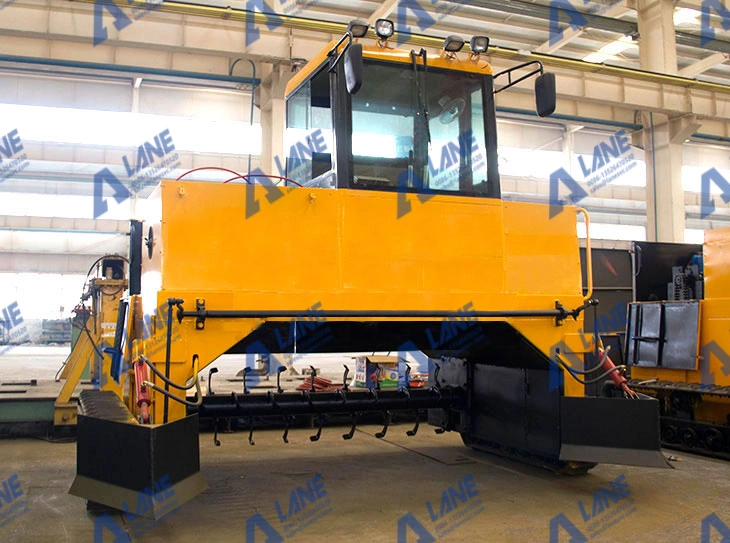
The magic of an Aerobic Fermentation System is its ability to create and maintain ideal conditions for microbial life. This process can be broken down into stages.
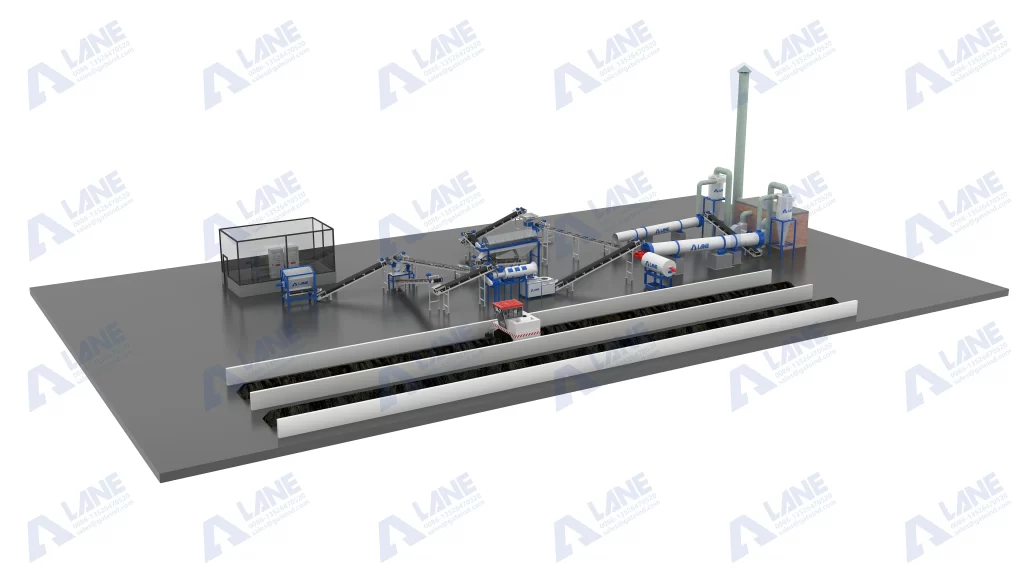
A modern Aerobic Fermentation System is more than a compost pile with a fan. The components in the system work in unison:
Implementing an Aerobic Fermentation System requires reliable engineering. This is where specialist manufacturers like Lane Machinery play a pivotal role. We design, manufacture, and engineer the hardware that brings the controlled process to life. From heavy-duty compost turners to custom-designed disk turners and fermentation tanks, we translate the principles of aerobic fermentation into practical operation.
Our equipment is designed to withstand the corrosive, high-mass environment of fermentation. This ensures longevity and minimal downtime, which is essential for the continuous flow of stable organic fertilizer that farmers can directly use or process further with a LANE granulation production line.
| Feature | Traditional Composting | Controlled Aerobic Fermentation System |
| Time | 3-6 months (seasonal) | 3-8 weeks (consistent) |
| Space | Requires large land area | Compact, in-vessel design for fermentation tank |
| Odor Control | Often problematic, especially anaerobic pockets | Effectively managed via aeration and biofilters |
| Pathogen/Weed Seed Elimination | Inconsistent, depends on heat penetration | Guaranteed through sustained thermophilic control |
| Labor | High (manual turning, monitoring) | Low (highly automated) |
| Consistency & Quality | Variable batch-to-batch | Highly uniform and predictable |
| Environmental Impact | Potential for leachate and methane | Minimal leachate, controlled emissions |
The final output from an Aerobic Fermentation System is a premium-quality organic powder fertilizer. This can be processed with a LANE crusher and LANE rotary screen for further refinement. After curing, the organic fertilizer becomes stable. Here, “stable” means it will not re-heat or tie up nitrogen when applied to soil.
Its nutrients are mineralized and readily available for plant uptake. This fertilizer is rich in organic matter, improving soil structure, water retention, and microbial biodiversity.
Q1: How much does an Aerobic Fermentation System cost?
A1: The cost of an Aerobic Fermentation System depends on scale and automation. It can range from a smaller in-vessel unit for limited space to crawler composting machines for large municipal facilities. It is a capital investment offset by long-term savings in waste disposal, fertilizer purchases, and the creation of a new revenue stream from selling the fertilizer.
Q2: Can it handle all types of organic waste?
A2: A well-designed Aerobic Fermentation System can process a wide mix of raw materials including manure, crop waste, food scraps, and biosolids. The key is achieving the right blend for the C:N ratio and moisture content. Certain materials require pre-shredding and crushing.
Q3: Is the process energy-intensive?
A3: While some equipment in the system requires energy to operate, the overall energy input is relatively low. The process is powered primarily by microbial activity. Systems are designed with energy efficiency in mind; LANE fermentation tanks use smart aeration cycles.
Q4: How does Lane Machinery’s equipment integrate into a full system?
A4: LANE machinery provides full systems, including machines and electronics. We are custom manufacturers. If you give us your requirements, we will use them to create the machine. Our machines are designed for a complete Aerobic Fermentation System solution.
For more details, please feel free to contact us.
Henan Lane Heavy Industry Machinery Technology Co., Ltd.
Email: sales@lanesvc.com
Contact number: +86 13526470520
Whatsapp: +86 13526470520