
In today’s aquaculture industry, feed manufacturing is becoming more technical, more automated, and more performance-driven than ever before. Producers are no longer satisfied with basic equipment; they want systems that are stable, adaptable, and easy to operate over the long term. This is why aqua feed production solutions are gaining attention across global markets, offering a complete production logic supported by proven mechanical equipment and intelligent control.
Modern aquaculture feed plants are built as integrated systems rather than isolated machines. Each section is designed to work smoothly with the next, reducing downtime and ensuring consistent feed quality. Below, we introduce a full aquatic feed production line in detail, following the standard process: raw material handling → crushing → batching and mixing → granulation → drying and cooling → coating → screening and packaging → automatic control, while clearly explaining the key machines used at each stage and how their functions differ.
Raw material handling is the foundation of the entire production line. Its purpose is to ensure that different ingredients enter the system cleanly, safely, and at a stable rate.
This section usually includes raw material silos, storage bins, bag dumping stations, belt conveyors, screw conveyors, and bucket elevators. Each machine plays a specific role in transporting materials such as corn, soybean meal, fish meal, and additives without segregation or contamination. Magnetic separators are installed to remove metal impurities, protecting downstream machines from damage.
Well-designed aqua feed production solutions emphasize smooth material flow at this stage, as unstable feeding often leads to production interruptions later.
Crushing is a critical step in aquatic feed production, especially for species with high digestibility requirements. In this production line, a vertical crusher is used instead of a traditional hammer mill.
The vertical crusher operates with vertically arranged crushing components, allowing materials to fall freely under gravity while being crushed. This design offers several advantages. First, it provides more uniform particle size distribution. Second, its structure reduces energy consumption and vibration during operation. Third, maintenance is simpler because wear parts are easy to replace.
Compared with traditional horizontal crushers, the vertical crusher produces less heat during grinding, which helps protect heat-sensitive nutrients. In advanced aqua feed production solutions, this type of crusher is often selected for its balance between efficiency and product quality.
After crushing, materials move into the batching and mixing section. Here, accuracy and uniformity are the main goals.
Automatic weighing systems use electronic load cells to measure each ingredient according to the formula. Micro-dosing units handle vitamins, minerals, and trace elements. Mixing is carried out using ribbon mixers or twin-shaft mixers, depending on capacity and uniformity requirements. Liquid addition systems introduce oils or enzymes during mixing to ensure even distribution.
This stage ensures that every batch entering the granulation process is nutritionally consistent, a key requirement for dependable aqua feed production solutions.
Granulation is the core forming step of the production line. Instead of a pellet mill, this line uses either a flat die granulator or a disc granulator, depending on product requirements.
The flat die granulator works by pressing material through a flat die using rotating rollers. Its structure is simple, compact, and easy to operate. Flat die granulators are suitable for medium-capacity production and offer low investment cost. They produce dense granules with good strength and are relatively easy to maintain.
The disc granulator, on the other hand, uses a rotating disc to roll powdered material into granules through continuous tumbling and layering. This method is especially suitable when uniform spherical granules are desired. Disc granulators allow flexible control over granule size by adjusting disc angle, speed, and moisture content.
The key differences between these two machines lie in granule shape, capacity, and application. Flat die granulators create more compact pellets through pressure, while disc granulators form round granules through rolling motion. In aqua feed production solutions, the choice between the two depends on feed characteristics, target species, and desired product appearance.
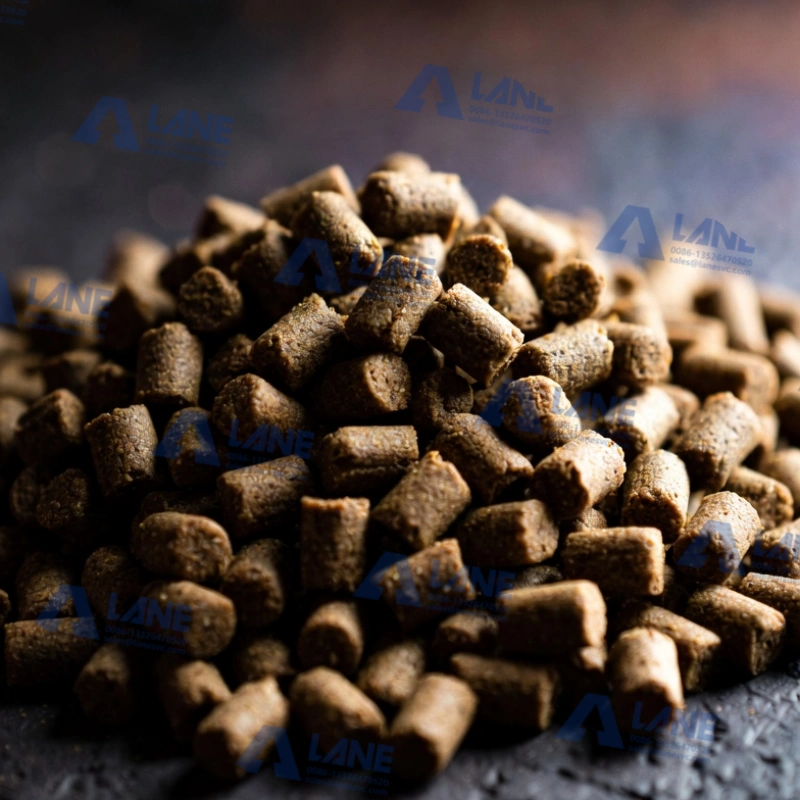
After granulation, the feed granules contain excess moisture and heat. Drying and cooling are essential to improve storage stability and prevent spoilage.
Belt dryers or rotary drum dryers are used to gradually reduce moisture content under controlled temperature conditions. Once dried, granules pass through a counterflow cooler, which lowers their temperature to near ambient levels without causing cracks.
This stage protects both physical strength and nutritional value, making it an essential part of professional aqua feed production solutions.
Coating is applied after drying and cooling to enhance palatability and energy content. Oils, attractants, or functional additives are applied evenly onto the granule surface.
Effective coating contributes directly to feeding efficiency and animal growth performance within aqua feed production solutions.
Before packaging, finished products must be screened to remove fines and broken granules. A rotary screener is used for this purpose.
The rotary screener consists of a rotating cylindrical screen that gently separates qualified granules from undersized particles. Compared with vibrating screens, rotary screeners generate less noise and cause less particle damage. They are especially suitable for fragile granules formed by disc granulators.
Clean screening improves product appearance and customer satisfaction, reinforcing the reliability of aqua feed production solutions.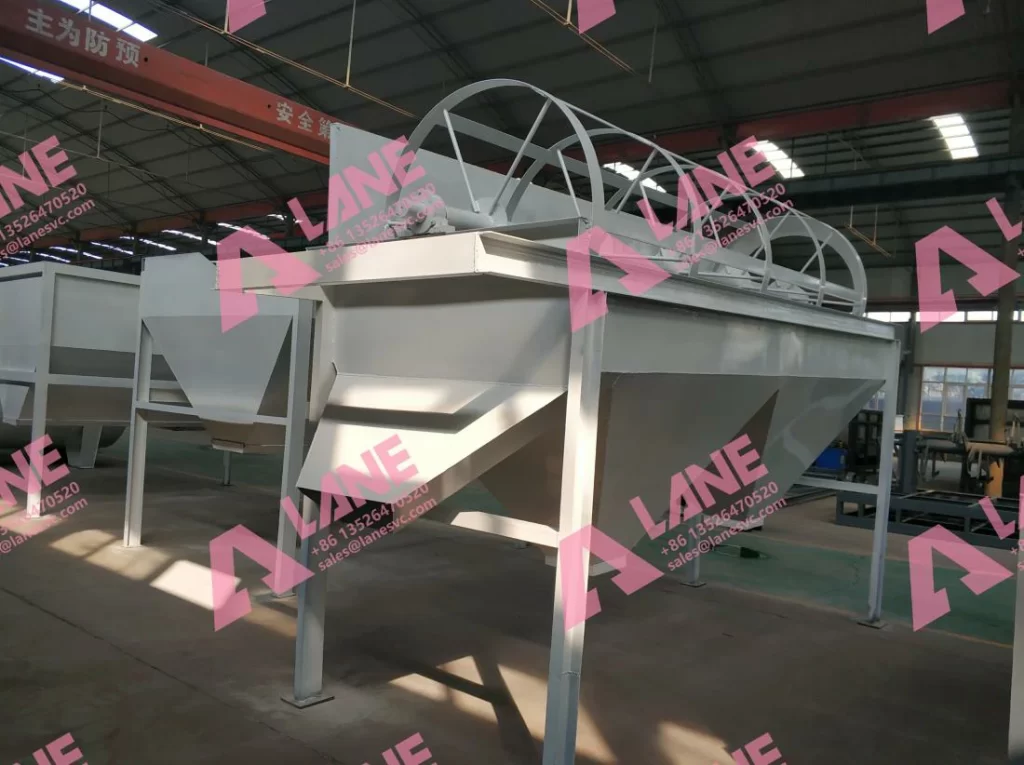
After screening, qualified granules enter the packaging section. Automatic weighing and packing machines fill bags with high precision, while sewing machines or heat sealers close them securely. For larger operations, palletizing systems can be added to improve logistics efficiency.
Neat, consistent packaging represents the final quality checkpoint in aqua feed production solutions, ensuring products are ready for transportation and sale.
Automation ties every section together. PLC control systems, touch screen interfaces, frequency converters, and monitoring software allow operators to control the entire line from a central location.
Automatic control reduces manual labor, improves repeatability, and enables real-time troubleshooting. Modern aqua feed production solutions rely heavily on automation to maintain efficiency as production scales up.
Granulation, drying, cooling, and material handling are not unique to feed production. These processes are also central to fertilizer manufacturing, which is where our experience adds strong value.
At LANE, our company has specialized in fertilizer machinery manufacturing in China for more than 20 years. Over time, we have developed a professional engineering team capable of designing, manufacturing, and installing complete production lines according to different requirements. We focus on system reliability rather than individual machines.
We provide full-service support, from installation and commissioning to long-term after-sales service. Whether it is maintenance, troubleshooting, or future upgrades, we remain involved to keep systems running at their best. Our equipment complies with ISO 9001 and CE international quality standards. While we are widely known for fertilizer production lines, NPK systems, organic fertilizer machines, and compound fertilizer equipment, the same engineering standards support integrated aqua feed production solutions built for durability and efficiency.
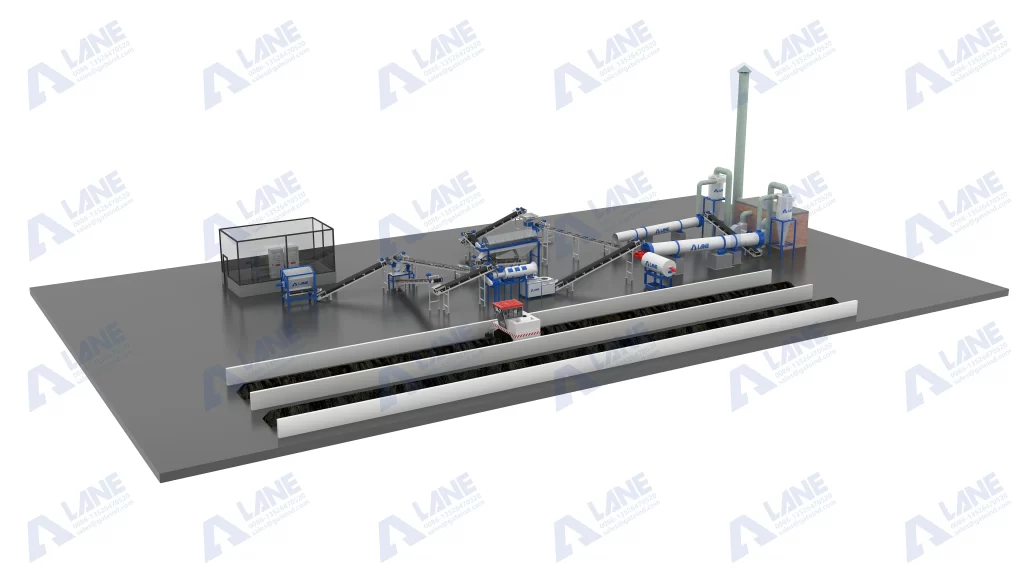
A feed production line is a long-term investment. Thoughtful equipment selection, flexible granulation options, and reliable automation determine how well the plant performs over time.
By integrating proven machines such as vertical crushers, flat die granulators, disc granulators, and rotary screeners into a complete system, aqua feed production solutions deliver stable output and adaptable performance for changing market demands.
For more details, please feel free to contact us.
Henan Lane Heavy Industry Machinery Technology Co., Ltd.
Email: sales@lanesvc.com
Contact number: +86 13526470520
Whatsapp: +86 13526470520