Choosing the Right Commercial Composting System for Your Business Size
The Business Case for Commercial Composting Systems
Agribusinesses worldwide are prioritizing sustainable agriculture. Sustainability was once a buzzword; now it’s a business imperative. For companies and farms that generate significant organic waste—from food scraps to biodegradable packaging—a commercial composting system turns a disposal problem into an environmental and financial asset. But composting is a complex system. Selecting a compost system should be based on your business size, waste volume, available space, and operational goals.
Composting diverts waste materials that would be sent to a landfill into nutrient-rich humus. LANE Heavy Industry, a leader in heavy machinery manufacturing, offers tailored production lines that align with diverse commercial composting needs, ensuring efficiency, scalability, and compliance with environmental standards.
Key Factors in Choosing a System
Selecting a commercial composting system requires careful consideration. It is not a one-size-fits-all decision.
- Daily/Weekly Waste Volume:This is your primary driver. How many tons of waste do you generate or can accrue?
- Available Space:Do you have acres of land for windrows, or do you have compact space and want an in-vessel unit?
- Waste Composition:Is it primarily food waste, yard trimmings, agricultural by-products, or a mix? This affects the Carbon-to-Nitrogen ratio mix and pre-processing steps.
- Regulatory & Odor Control Needs:Urban or enclosed sites often require fully contained systems with advanced biofiltration.
- Labor & Automation:You must consider your manpower. Some systems require more manpower while others are highly automated.
- Budget & ROI Goals: You must also consider your budget for machinery expenses, capital costs, operational expenses, and potential revenue from compost sales.
System Types & Scalability by Business Size
- Small to Medium Enterprises: Groceries, Small-Sized Farms
- Typical Need: Processing 50 kg to 1 ton of waste weekly.
- Recommended Systems: In-Vessel Composters (IVC). This is an enclosed, space-efficient system that offers excellent odor and pest control, making it ideal for businesses with limited space and close neighbors.
- Benefits:Fast turnaround (compost in weeks), minimal leachate risk, and a tidy appearance. Perfect for on-site processing of kitchen and prep waste.
- Large Enterprises & Industrial Facilities: Food Processing Plants, Large Farms
- Typical Need: Processing 1 to 20+ tons of waste weekly.
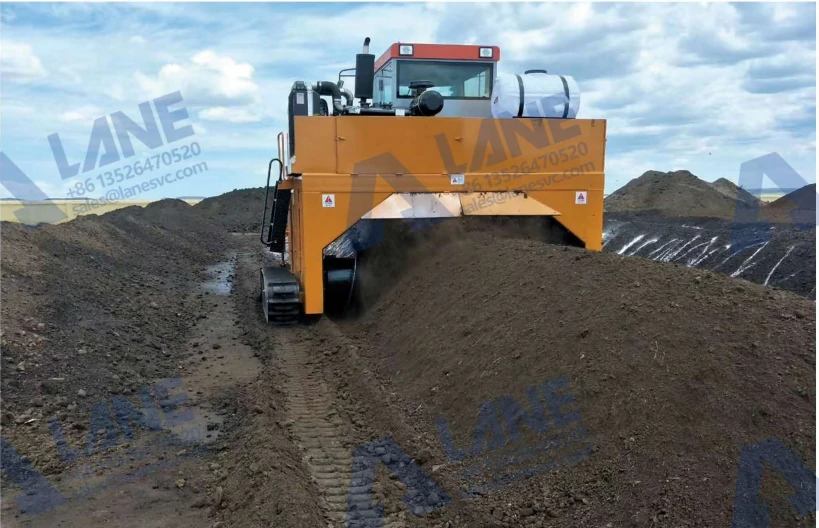
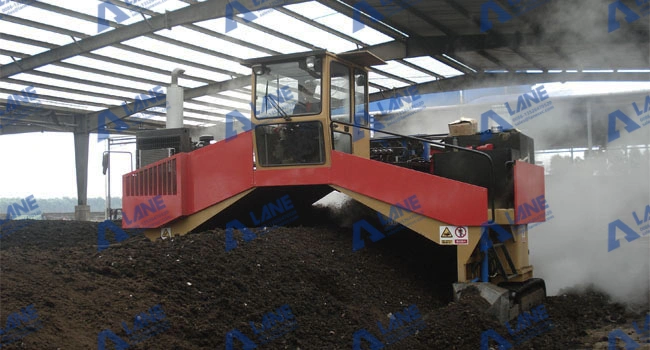
- Recommended Systems: Large Fermentation Tanks or Windrow Turners. Larger fermentation tanks provide controlled, high-throughput processing. For businesses with ample land, crawler compost turners for windrows with forced aeration offer a cost-effective solution for massive volumes of yard or agricultural waste.
- Benefits: High capacity, improved process control for consistent quality, and the ability to handle diverse feedstocks.
Introducing LANE Heavy Industry’s Scalable Solutions
At LANE Heavy Industry Machinery, we engineer commercial composting systems that grow with your ambitions. Our modular approach ensures your production line grows with you.
- For SMEs:For small businesses, LANE offers rotary drum composters and horizontal drum composters. Our compact, fully enclosed in-vessel systems are designed for simplicity and reliability. They have automated aeration and heating cycles, require minimal operator intervention, and are perfect for producing consistent, high-quality compost on-site. They turn your food waste into a resource within weeks.
- For Large Enterprises:LANE Crawler Composting System and LANE Vertical Fermentation Tank. For higher-volume needs, our industrial-scale commercial composting systems offer robust performance. The vertical fermentation system is equipped with stirring, odor control, oxygen input, and a spray tower to control every detail of the fermentation process. For operations with suitable space, our engineered crawler compost turner can process large compost piles efficiently.
- For Processors & Municipalities:The LANE Disk Turner with Integrated Processing Line. This is a complete, automated solution featuring pre-shredders, mixers, aeration control systems, and curing bays. It is designed for maximum output and operational efficiency. It represents the pinnacle of large-scale organic waste recovery technology.
The Implementation Process
Success with a commercial composting system depends on proper planning.
- Conduct a Waste Audit:Precisely quantify and qualify your waste stream.
- Site Assessment:Our LANE engineers can help evaluate space, utility access, and logistics.
- System Design & Selection:Choose the model that matches your audit results and growth projections.
- Installation & Commissioning:Professional setup and calibration are crucial. LANE offers installation supervision services.
- Staff Training & Protocol Development: We ensure your team can operate and maintain the system effectively.
- Monitoring & Optimization: Track key metrics like temperature, moisture, and final compost quality to ensure peak performance.
Investing in the right commercial composting system is a strategic move for any waste-generating business. LANE Heavy Industry’s production lines offer flexible, durable, and efficient solutions for small, medium, and large operations. You can achieve sustainability, save costs, and contribute to a circular economy.
FAQ: Common Questions on Commercial Composting Systems
Q1: What is the typical payback period for a commercial composting system?
A1: The ROI timeline varies based on system cost, local waste disposal fees, and compost value. Many businesses see a payback within 2-5 years through avoided landfill costs and potential product revenue.
Q2: Do commercial composting systems create odors?
A2: Properly designed and managed systems minimize odors. Enclosed in-vessel systems, like those from LANE, with integrated biofilters, actively treat exhaust air, making them suitable for sensitive environments.
Q3: Can I compost biodegradable plastics in these systems?
A3: Caution is advised. Most industrial composting standards require specific conditions (temperature, time) to break down certified compostable plastics. Always check the product’s certification (e.g., BPI, OK Compost) and ensure your system can maintain the required parameters. Contamination from non-compostable plastics is a major operational challenge.
Q4: How much space do I need for an on-site system?
A4: Space needs range dramatically. A small in-vessel unit for a restaurant may only need 20-30 sq. meters, including working area. Large windrow systems for a farm may require acres. A LANE consultant can provide exact specifications based on your chosen model.
Q5: What kind of maintenance do these systems require?
A5: Regular maintenance includes inspecting and cleaning aeration systems, checking motors and drives, and ensuring moisture sensors are calibrated. LANE systems are built for durability and come with comprehensive service and support plans.
Q6: How do I handle the finished compost?
A6: Options include using it on-site for landscaping, selling or donating it to local farms, gardeners, or landscape companies, or using it in erosion control. The compost can become a new revenue stream or a tool for community engagement.