
Composting is the core process of organic fertilizer production. agricultural and animal husbandry wastes, municipal solid wastes and other materials are decomposed with the help of microbes to create stable, nutrient-rich nutrient source for plants. traditional composting takes 6 to 24 months to complete. It contains pathogens and weed seed which has the risk to contaminate your field.
A marketable product hinges on one critical process: aerobic fermentation. A proper aeration equipment can reduce the fermentation time to weeks from months. fermentation equipments are the very core of the organic production line. Selecting and integrating the right fermentation equipments will reduce your fermentation time and help you create premium organic fertilizer. LANE Heavy Industry, as a professional machinery manufacturer, has developed a series of fermentation equipments that adapts to different production needs.
Fermentation equipments refers to the specialized machinery designed to create, control and optimize the aerobic decomposition of organic materials. It manages the essential variables for microbial life: oxygen, temperature, and moisture.
Without proper equipment composting is unpredictable. Open air piles are labor intensive, slow, prone to odors and result in an inconsistent, pathogen-ridden product. Professional fermentation equipments from LANE solves this problem by:
Accelerating the Process: Reducing composting time from months to weeks.
Ensuring Uniformity: Produces fully fermented homogenous product every batch.
Controlling Environmental Factors: It minimizes odors, leachate, and greenhouse gas emissions.
Achieving Sanitization: Properly maintained compost pile where temperatures (55-70°C)
Maintaining high temperatures (55-70°C) long enough to eliminate pathogens and weed seeds.
The choice of fermentation equipments depends on scale, feedstock, and available space. Here are the main types of fermentation equipments.
3.1. Fermentation Tanks (In-Vessel Systems)
Fermentation tank are enclosed tanks where materials are fed in, aerated and discharged after fermentation is done. Everything is controlled in this system. LANE Heavy Industry’s in-vessel systems feature integrated aeration floors and real-time monitoring for precision composting.
3.2. Fermentation Tunnels
It’s a hybrid approach; tunnels are long enclosed chambers where material is placed in floors. Compost turner is used to move the pile or Forced aeration and temperature probes are used for precise control. This fermentation equipment is excellent for medium to large-scale plants.
3.3. Windrow Turners
For larger operations, windrow composting is a cost-effective method. Here, the fermentation equipment is mobile. Self-propelled or crawler compost turners drive over the windrow rows, mechanically lifting, mixing, and aerating the material. LANE offers a range of turners like crawler compost turner, towed turner, self-propelled turner and disk turner. These machine ensures efficient oxygen infusion and moisture regulation.

Modern fermentation equipment have more then simple turning. try to look for these features.
Intelligent Aeration Systems: blowers linked to temperature sensors to optimize microbial activity.
Durable Construction: High-strength, corrosion-resistant steel to withstand corrosive environments.
Efficient Turning Mechanisms: has hammer, flails or augers for thorough mixing and particle size reduction.
Automation & IoT Ready: PLC control system allows for remote monitoring of temperature, oxygen levels and machine health.
Integrated Deodorization: ports and systems to connect to biofilters or scrubbers for air treatment.
fermentation equipment is one of the pieces of a synchronized organic fertilizer production line. Raw materials are first pre-processed (shredded, sorted, and moisture-adjusted) before entering the fermentation machinery. After the active fermentation cycle, the matured compost is conveyed to secondary processing stages like crushing, screening, grading, and packaging.
A well-designed line from LANE ensures seamless material flow to and from the fermentation stage,
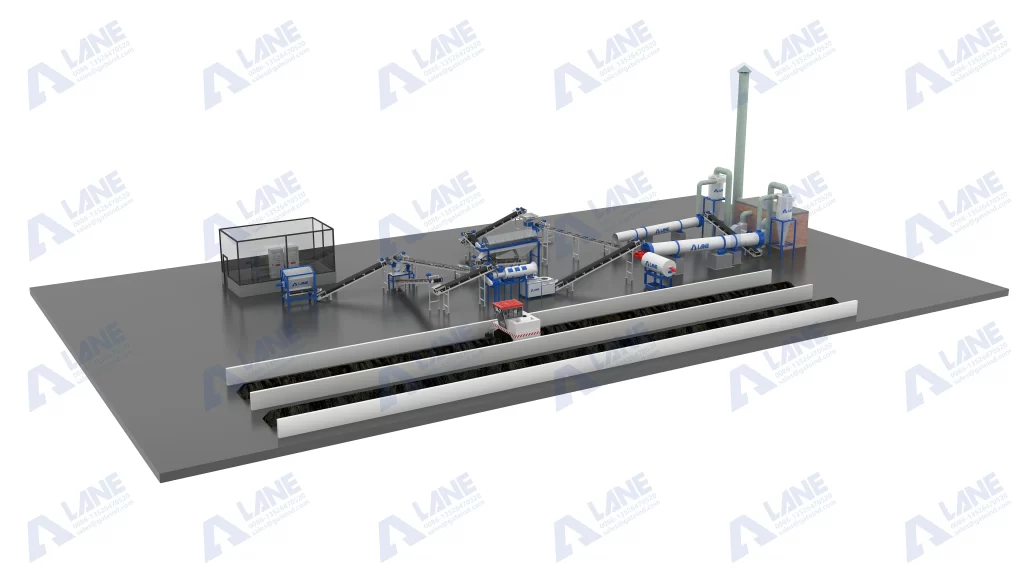
The investment in high-quality fermentation equipment yields substantial returns:
Higher Quality Fertilizer: Produces stable, mature compost with consistent nutrient profiles.
Increased Capacity & Faster Turnover: Processes more material per year.
Reduced Labor Costs: Automation minimizes manual turning and monitoring.
Regulatory Compliance: Easily meets environmental and product safety standards.
Enhanced Profitability: higher quality fertilizer sell faster in the market and large quantity means you can make more product. if you factor in the lower labor cost then you are making large profit.
Selecting your fermentation equipments is about choosing the right manufacturer. An industry leader like LANE Heavy Industry offers:
Custom-Engineered Solutions: We create custom equipment to your specific raw materials and output.
Turnkey Production Lines: It provides not just fermenter, but the entire integrated system.
Proven Durability & Performance: Our fertilizer machinery is build for 24/7 industrial operation.
Comprehensive Support: We provide installation, training to maintenance and spare parts to you.
Q1: What is the typical fermentation cycle time with industrial equipment?
A: With properly controlled fermentation equipment, the active composting phase can be reduced to 10-15 days for in-vessel/tunnel systems, and 3-6 weeks for windrow systems with regular turning, depending on the feedstock.
Q2: Can this equipment handle different types of raw materials?
A: Yes, professional fermentation machinery from LANE is designed to process various materials, including manure, crop straw, food waste, and sludge. The line is often customized based on your primary feedstock mix.
Q3: How do you control odor during fermentation?
A: Advanced fermentation equipment controls odor by maintaining optimal aerobic conditions (reducing anaerobic pockets) and can be integrated with negative-air systems that channel exhaust gases through deodorizing biofilters or scrubbers.
Q4: Is the fermentation process automated?
A: Modern systems feature high levels of automation. Temperature and oxygen sensors can automatically trigger aeration fans or turning schedules, with data accessible via control panels or remotely.
Q5: What is the ROI on investing in a full production line with this equipment?
A: While varying by project, the return on investment is typically swift (1-3 years) due to significant increases in processing speed, product quality, and market price, alongside reductions in labor and environmental management costs.
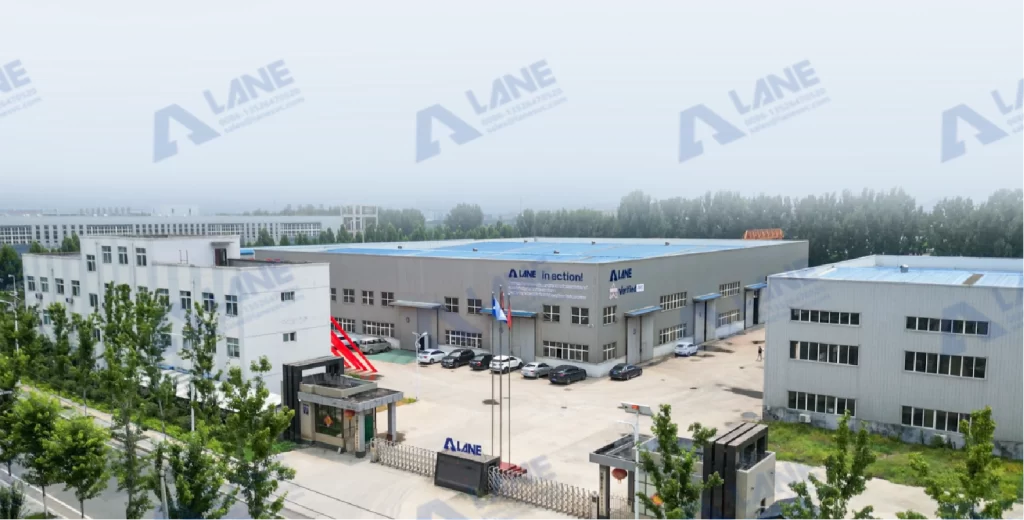
For more details, please feel free to contact us.
Henan Lane Heavy Industry Machinery Technology Co., Ltd.
Email: sales@lanesvc.com
Contact number: +86 13526470520
Whatsapp: +86 13526470520