
Introduction: The Imperative for Efficient sheep manure composting
Sheep manure is a valuable organic resource. It is a rich source of organic matter, nitrogen, phosphorus, potassium, and other nutrients. However, raw sheep manure can cause nutrient burn, ammonia release, and pathogen transfer. After scientific composting treatment, sheep manure can improve soil structure, enhance soil fertility, and promote the healthy growth of crops.
With the development of the sheep breeding industry, the output of sheep manure is increasing year by year. This creates a lot of organic resource which is often sent to the landfill. The aerobic sheep manure composting process solves this problem. Effective sheep manure composting is the essential biological process that stabilizes nutrients present in the manure, eliminates pathogens and weed seeds, and transforms this raw waste into a safe, potent, and marketable soil amendment.
Understanding the Core Technologies
| Factor | Lane Turner System | In-Vessel Fermentation Tank |
| Process Time | 5-12 weeks (weather-dependent) | 2-4 weeks (primary phase) |
| Space Needed | Large (for windrows, turning lanes, curing) | Compact (tank footprint is small) |
| Capital Cost | Moderate to High (for turner + pad) | Very High (tank + complex controls) |
| Operational Cost | Lower (fuel, labor for turning) | Higher (energy for aeration, automation) |
| Labor Requirement | Periodic, hands-on operation | Lower, more monitoring-focused |
| Weather Dependence | High (rain, cold slow process) | None (fully enclosed system) |
| Odor & Emission Control | More challenging; requires management | Excellent (captured and treated) |
| Leachate Management | Possible during rainfall; pad required | Fully contained, collected |
| Process Control | Good, but influenced by operator & weather | Excellent and automated |
| Final Compost Quality | High quality, but can be variable | Very high quality and highly consistent |
Process Time & Throughput: The LANE fermentation tank is the clear winner when it comes to speed. It completes the intensive thermophilic phase in weeks, ensuring rapid and efficient Sheep Manure compost processing. LANE turner systems are slower but can handle large volumes simultaneously by extending windrow length, making them suitable for consistent Sheep Manure compost production.

Space & Cost: Windrow systems demand significant land and a prepared pad but offer a better cost-to-volume ratio for large-scale, open-air operations. Fermentation tanks have a high initial investment but a minimal spatial footprint, ideal for sites with space constraints or proximity to sensitive neighbors.
Environmental Control: This is a major strength for the fermentation tank. The fermentation tank is an enclosed system that contains odors, vectors, and leachate, making it a superior choice for urban or environmentally sensitive areas. Windrow turner systems require careful site selection and management to mitigate these issues.
Labor & Management: LANE compost turners require an operator for active machine work. Fermentation tank systems involve more monitoring of computer controls and managing input/output logistics.
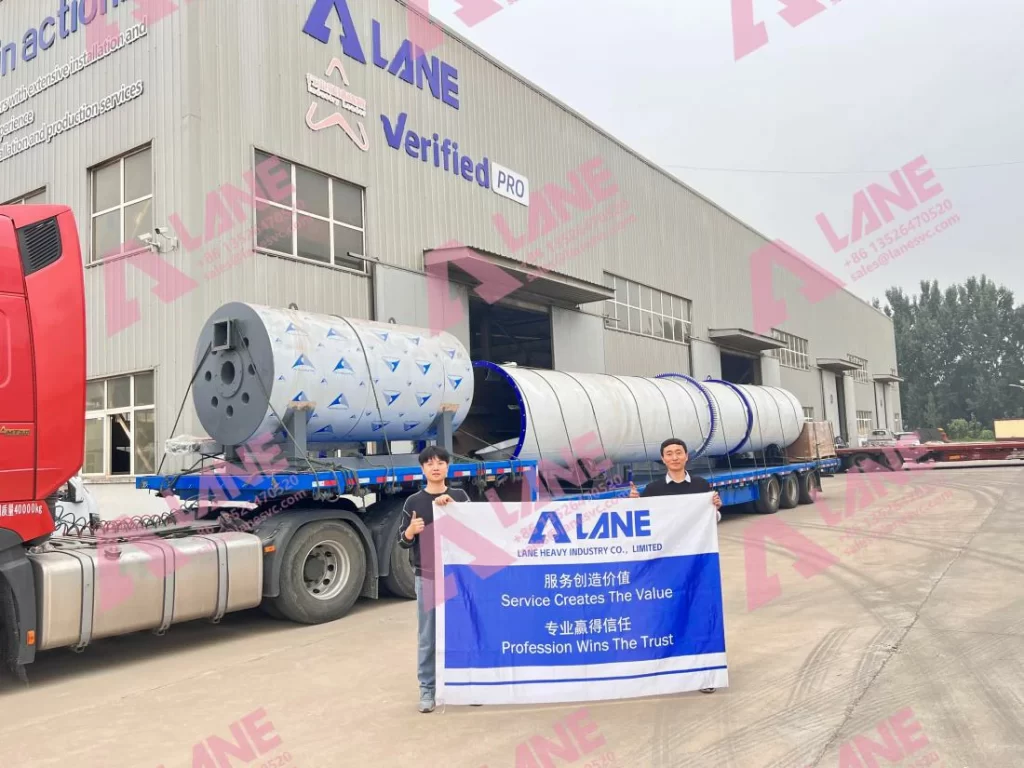
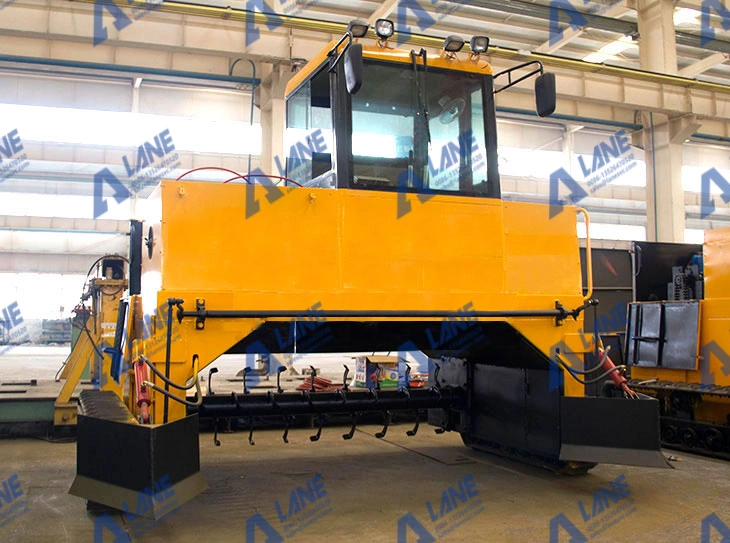
For operations suited to the windrow method, LANE Heavy Machinery provides industrial-grade compost turners designed for durability and efficiency. Our machines feature thorough Sheep Manure compost mixing and a hydraulic engine for continuous operation. Investing in a LANE turner transforms an open windrow operation from a labor-intensive chore into an efficient, mechanized process, ensuring high-quality Sheep Manure compost production.
For producers with limited space or who require a contained solution, LANE offers integrated In-Vessel Fermentation systems. Our systems feature heavy-duty, durable agitation systems and practical designs that can handle the dense, fibrous nature of sheep manure, ensuring reliable processing and mixing within the tank.
Choose a LANE Compost Turner if:
Choose an In-Vessel Fermentation Tank if:
Sheep Manure compost is an important way to recycle sheep breeding waste. The LANE Turner and In-Vessel Fermentation Tank are two commonly used aerobic composting technologies, each with its own advantages and disadvantages. The choice is not about which technology is universally better, but which is optimal for a specific operational context.
The Lane Turner has the advantages of low investment and operation costs, and strong adaptability to medium and large-scale composting operations. The In-Vessel Fermentation Tank has the advantages of high composting efficiency, good harmless treatment effect, and small environmental impact, and is suitable for different scales of composting operations.
By understanding the advantages of these two machines, farmers and agribusinesses can make an informed decision about their choice. This decision directly impacts profitability, sustainability, and the production of organic fertilizer.
Q1: Can I start sheep manure composting with a lane turner on a dirt pad?
A1:You can, but it’s not recommended. A compacted, asphalt, or concrete pad is recommended to prevent leachate seepage into groundwater. It provides a stable surface for the heavy turner and allows for clean collection of any runoff.
Q2: Which system produces a higher quality compost?
A2: Both can produce excellent quality, mature compost which meets regulatory standards. The fermentation tank delivers more consistent quality batch-to-batch due to precise control. LANE windrow compost quality is highly dependent on operator skill and monitoring but can also achieve equal biological maturity with proper management.
Q3: How do I handle the strong ammonia smell when starting Sheep Manure compost?
A3: Ammonia smell indicates excess nitrogen and insufficient carbon. The universal solution for both systems is to ensure an optimal Carbon-to-Nitrogen (C:N) ratio (target 25-30:1). The best carbon sources in this situation are dry, bulky straw or shredded wood. In a windrow turning system, turning more frequently initially can help volatilize and dissipate ammonia. In a fermentation tank, the exhaust air is filtered through a biofilter.
Q4: Is an In-Vessel system truly “zero-odor”?
A4: It is not 100% odor-free during loading and unloading. However, a properly designed and operated fermentation tank is equipped with biofilters or scrubbers that treat the exhaust air, making it the best choice for odor-sensitive locations.
Q5: For a 500-head sheep farm, which system is more cost-effective?
A5: For this scale, a LANE compost turner system is typically more cost-effective. The volume of manure justifies the pad construction and machine investment, and the operational cost is lower. A fermentation tank requires a high capital investment; at this scale, it is not recommended unless the site location is an area with stringent environmental regulations or very high land costs.
For more details, please feel free to contact us.
Henan Lane Heavy Industry Machinery Technology Co., Ltd.
Email: sales@lanesvc.com
Contact number: +86 13526470520
Whatsapp: +86 13526470520