
Healthy soil is the foundation of bountiful harvests. But the pursuit of higher yields has made our soils lose their nutrient value and loss of microbial life. Over-reliance on chemical fertilizers has left many farmlands depleted of organic matter. This created a cycle of increasing dependency on synthetic input on our soils.
But where there is a problem there is a solution. Strategic use of sustainable soil amendments for farms is shifting that dependency. LANE Heavy Industry, a leader of sustainable production line solutions, has created a production line that not only helps farmers with sustainable farming but also helps them make profits.
This article will explore how integrating LANE production line for sustainable soil amendment for farms with targeted soil amendments can revitalize farmland, boost yields, and secure long-term agricultural sustainability.
A sustainable soil amendments for farms is any organic material added to the soil to improve its physical, chemical, and biological properties. This method focuses on long-term benefits and minimal negative environmental impact.
Source & Lifecycle: The raw materials for the sustainable soil amendments for farms should ideally be locally sourced, renewable. If it is a by-product of another process then it’s helping you create a closed waste loop. Examples include composted manure from your own livestock, locally produced biochar, or certified food waste compost.
Soil Ecosystem Focus: Soluble and synthetic fertilizers directly feed the plants but sustainable amendments feed the soil. They boost organic matter, which acts as a sponge for water and nutrients. It provides habitat for crucial microbes, fungi, and earthworms.
Long-Term Function: The goal of sustainable soil amendments for farms is not to use it as a quick fix for the plants. Its goal is maintaining and boosting soil structure, water infiltration and retention, and nutrient cycling capacity.
Types of Sustainable Amendments
There are a few types of sustainable soil amendments for farms. Those are:
Compost and organic fertilizer: The poster child of sustainability. High quality compost and organic fertilizer introduce stable organic matter and a vast, diverse population of beneficial microorganisms. Those microorganisms slowly release nutrients.
Biochar: The charcoal produced through pyrolysis (heating biomass in a low-oxygen environment) is used as sustainable soil amendments for farms. Its structure acts like a coral reef in the soil, it provides a permanent home for microbes and fungi. It increases the soil’s ability to retain water and nutrients. It stores carbon for centuries, making it a powerful climate-smart amendment.
Cover Crops & Green Manures: Growing and terminating cover crops like legumes, rye, or clover is a sustainable practice. They add organic matter, fix atmospheric nitrogen, break up compaction with their roots, and protect bare soil from erosion.
Mineral Amendments: Minerals like gypsum or slow-release rock phosphates address deficiency of soil without causing salinity or runoff issues. You have to apply them by testing your soil.
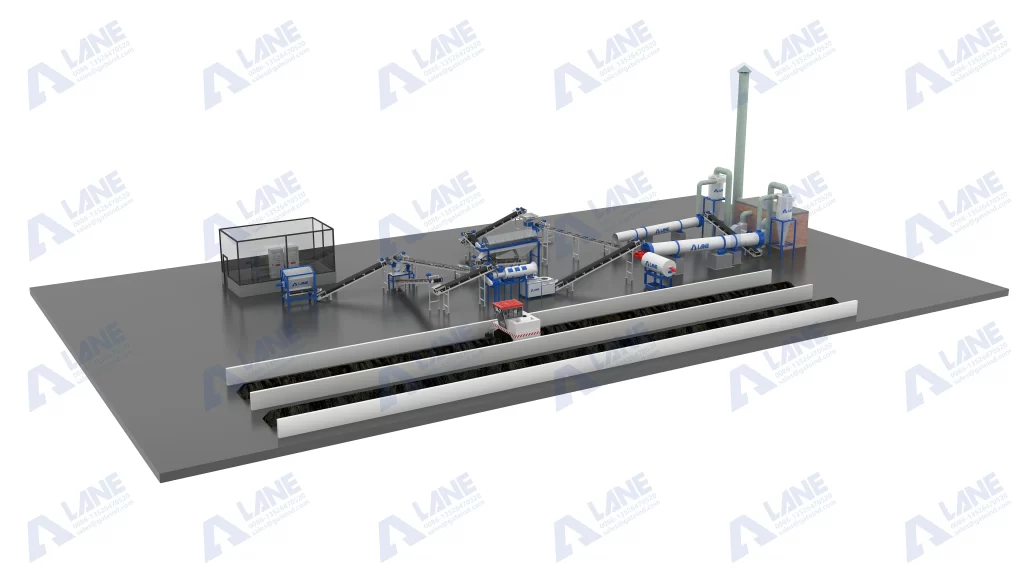
The production line created by LANE is designed for a closed-loop, on-farm amendments system that can help you with Localized, Aerobic, Nutrient-Enhanced sustainable soil amendments for farms.
Localized: The raw materials should come from the farm itself or local sources. The raw materials can be manure, crop residues, bedding, approved local food waste. This eliminates transport emissions and costs.
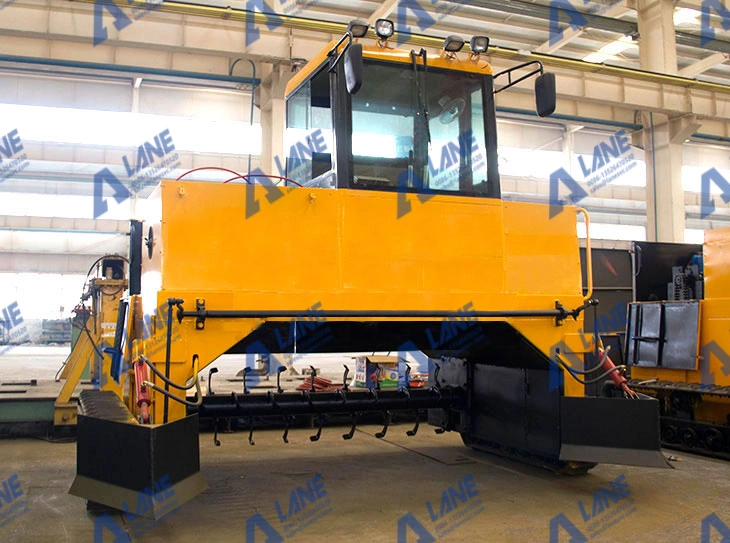
Aerobic process: In this process the production line maximizes value. With the help of LANE fermentation tank, the feedstocks like wet manure undergo fermentation process and create a nutrient-rich liquid digestate. The remaining solids are composted with LANE crawler composting machine. Creating both liquid fertilizer raw material and compost for sustainable soil amendments for farms.
Nutrient-Enhanced: During this process, specific mineral amendments or biochar can be added based on soil test data, which creates a custom-tailored sustainable soil amendments for farms.
Test the soil: You have to test the soil first. Don’t do guesswork. You have to test soil for pH level, NPK levels and organic matter percentage.
Source of Raw materials: You have to check the local availability of raw material. Can you create a composting system or organic fertilizer production line?
Calculate Real Cost: Consider your long-term ROI of a sustainable soil amendments for farms. Factor in reduced irrigation needs, lower synthetic fertilizer bills over time, improved crop resilience.
Apply with Care: Timing and method are important for farmers. Apply compost or biochar before planting seasons. You have to understand the fact that biological amendments work on a season-to-years’ timeline, not a days-to-weeks.
Observe and Adapt: Monitor any changes in the soil structure. Always keep an eye on water penetration, crop vigor, and yield and keep records.
LANE Heavy Industry Co.,Ltd builds customized systems that can create sustainable soil amendments for farms from organic raw materials. Our production line helps you with reduced input costs, better drought and flood resilience, higher quality produce.

For more details, please feel free to contact us.
Henan Lane Heavy Industry Machinery Technology Co., Ltd.
Email: sales@lanesvc.com
Contact number: +86 13526470520
Whatsapp: +86 13526470520