
Many small and medium-scale livestock farms are stuck in a difficult position: feed costs are rising, raw materials fluctuate in quality, and traditional feeding methods lead to inconsistent animal growth. However, one machine is quietly transforming the economics of small farms—the feed pellet mill for small farms.
But why does this machine matter so much today? What materials can it actually process? And how do different types of pellet mills meet different needs on small and medium-size farms?
This article explores real-world raw materials such as corn meal, crop residues, grass, and forage, explaining exactly how a farm can turn these materials into high-quality feed pellets—using the right feed pellet mill for small farms.
What Makes a Feed Pellet Mill for Small Farms So Different From Large Industrial Models?
Small farms rarely produce feed on a massive scale. Their needs are different:
They often work with mixed raw materials (corn, wheat bran, soybean meal, forage, grass, straw).
Their storage space is limited.
Their daily production is smaller and more flexible.
Electricity access and power limitations vary.
Feed recipes may change seasonally.
A feed pellet mill for small farms is therefore designed to be compact, lower-power, easy-to-install, and simple to operate—while still producing dense, nutritious pellets suitable for poultry, pigs, goats, sheep, and rabbits.
Large industrial pellet mills focus on output above 5 tons per hour. But most small farms need just 200–1500 kg/hour. This scale shapes the entire design of the smaller machines.
What Raw Materials Are Suitable—and How Are They Converted Into Pellets?
To stay focused on one practical scenario, let’s imagine a medium-scale poultry and goat farm with about 600 animals combined.
The farm produces or purchases raw materials such as:
Crushed corn (main energy source)
Soybean meal or cottonseed cake (protein base)
Rice husk, wheat bran (fiber)
Fresh alfalfa or dried forage
Mineral premixes and vitamins
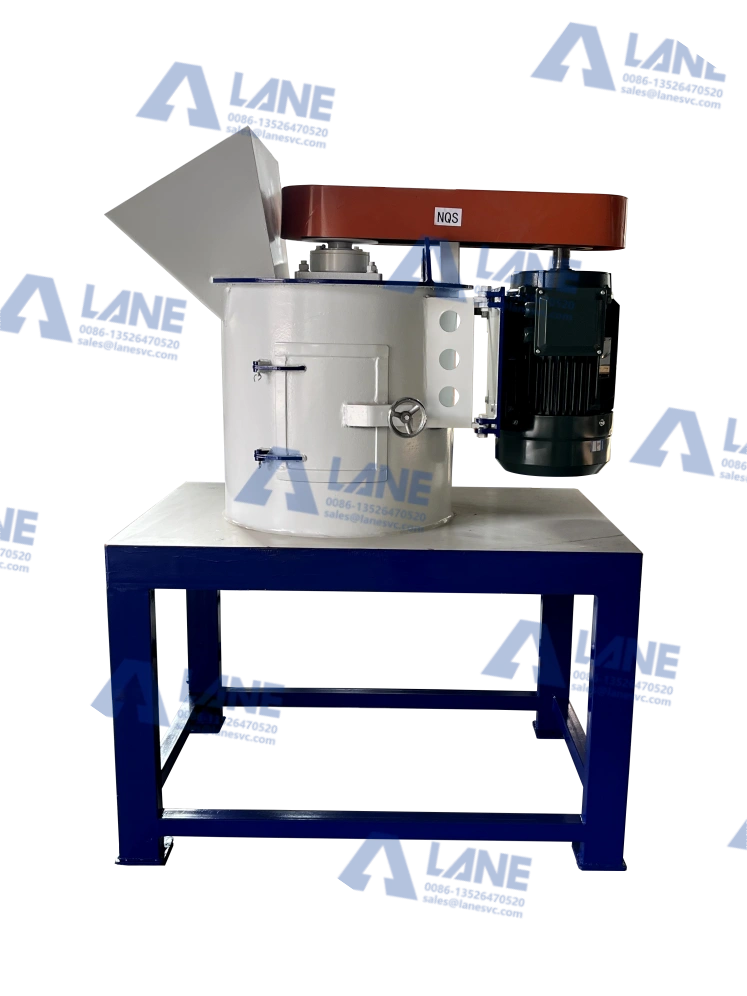
A feed pellet mill for small farms can transform these powders, fibers, and fine materials into dense pellets in three major stages:
Stage 1: Grinding and Mixing
Raw corn kernels must be crushed by a hammer mill. Forage or dried grass must be chopped into 2–5 mm pieces.
Then everything is blended in a horizontal or vertical mixer.
This ensures that every pellet contains a uniform nutrient profile—one of the biggest advantages of using a feed pellet mill for small farms.
Stage 2: Pelletizing
The mixed powder enters the pellet mill’s conditioner, where a controlled amount of steam or hot water is introduced to increase softness and digestibility.
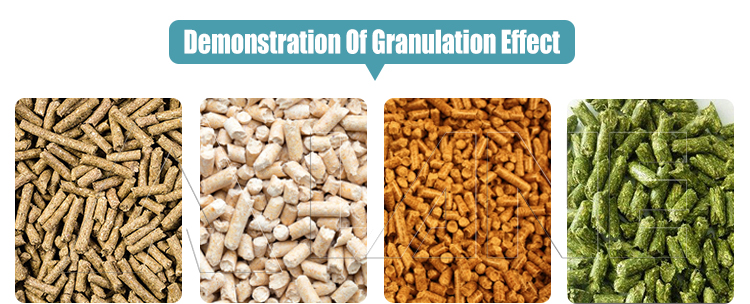
Then the material is pressed through a die. The die hole size depends on the target animal:
2–3 mm for chickens
3–4 mm for ducks(normal situation)
4–6 mm for goats and sheep
6–8 mm for larger livestock
This is where the heart of the feed pellet mill for small farms makes a difference. A stable drive system, accurate die pressure, and balanced rollers determine:
Pellet hardness
Durability
Feed conversion ratio
Energy consumption
Stage 3: Cooling, Screening, and Packaging
Fresh pellets are hot and slightly soft. They must be cooled to room temperature to stabilize shape.
Finally, fine powder is screened out and returned to the pellet mill.
Small farms often package manually in 25–50 kg bags, but automatic scales are available.
Not all small farms have the same needs. Below are the 4 most common machine types and the situations where each shines.
Each section includes one occurrence of the keyword feed pellet mill for small farms as required.
If your farm is located near stable electricity and you produce 200–1200 kg of feed per hour, the feed pellet mill for small farms with a flat-die electric motor is ideal. It is compact, affordable, and low-maintenance. Farmers who want to start small and grow gradually rely heavily on this type.
Some farms are located in remote areas with unstable or expensive electricity.
A diesel-powered feed pellet mill for small farms is the perfect solution. It offers mobility and independence, allowing you to produce feed anywhere—even in open fields during grass harvest season.
If you already own a tractor, you can attach a PTO-driven pellet mill.
This type of feed pellet mill for small farms is extremely energy-efficient—it uses the tractor as the engine. It’s commonly found in mixed farming areas where fields and livestock areas are close together.
For farms approaching 1–2 tons per hour and looking for more professional pellet quality, a small ring-die feed pellet mill for small farms becomes the next step.
It has higher pellet density, lower powder rate, and longer lifespan—ideal for farms that sell pellets commercially.
This article focuses on one scenario: a farm that produces feed primarily from corn, soybean meal, and chopped forage.
Different raw materials influence machine choice in the following ways:
Requires stronger rollers and a die designed to resist fiber clogging.
Diesel or ring-die models work best.
Need temperature-controlled conditioning to avoid nutrient damage.
Flat-die electric models with optional steam conditioning are suitable.
Easy to pelletize and compatible with nearly all feed pellet mill for small farms types.
If the farm grows its own corn and forage, integrating grinder → mixer → pellet mill simplifies workflow.
Small farms benefit from pellets far more than they expect. Pellets:
Improve feed conversion ratio by 10–15%
Reduce wastage caused by wind, spilling, and selective feeding
Increase digestion rate
Allow precise nutrition control
Simplify transport and storage
Prevent nutrient segregation
Every time a farmer uses a feed pellet mill for small farms, they gain more control over feed quality and animal growth.
Real-World Example: A 500-Bird Poultry Operation
Let’s illustrate with a concrete case.
A medium-size chicken farm produces:
Daily requirement: 400–600 kg feed
Raw materials: corn (60%), soybean meal (25%), bran (10%), premix (5%)
Electricity stable at 380V
The ideal solution: a 22–30 kW electric flat-die feed pellet mill for small farms
Results after switching to pellet production:
Feed cost reduced by 18%
Growth rate improved by 9%
Mortality decreased due to more stable nutrition
Feed storage time extended
This example shows how significant the change can be.
Although Lane Machinery is globally recognized for fertilizer machinery, their engineering capability, manufacturing standards, and production-line experience extend naturally into pelletizing systems—including selecting and configuring a feed pellet mill for small farms.
Lane’s advantages include:
20+ Years of Machine Manufacturing Experience
Their long-standing specialization in machinery—especially fertilizer equipment—gives them deep insight into material behavior, pelletizing mechanics, and production-line automation.
Professional Engineering Team
Lane engineers design complete systems: grinders, mixers, conveyors, pellet mills, coolers, packers—fully customized to the farm’s raw materials and output requirements.
Full Installation & After-Sales Support
From setup to troubleshooting, they provide end-to-end service ensuring the pelletizing system runs stably year-round.
ISO 9001 & CE Certified Quality
All machines meet strict international standards.
Factory-Direct Pricing
As a manufacturer, Lane provides competitive pricing without intermediaries.
Experience Across Fertilizer and Pelletizing Lines
Their work with fertilizer granulation systems gives them an advantage in understanding how materials behave under pressure—directly relevant to choosing the right feed pellet mill for small farms.
Whether you raise poultry, goats, pigs, or rabbits, a feed pellet mill for small farms offers control, consistency, and cost savings. It helps transform variable raw materials into uniform pellets that boost growth and reduce waste.
And with Lane Machinery’s engineering expertise, certified quality, and full-service support, choosing and operating the right pellet mill becomes much easier.
For more details, please feel free to contact us.
Henan Lane Heavy Industry Machinery Technology Co., Ltd.
Email: sales@lanesvc.com
Contact number: +86 13526470520
Whatsapp: +86 13526470520